Consequences to Our Planes of Existence by Bree M. Lewandowski
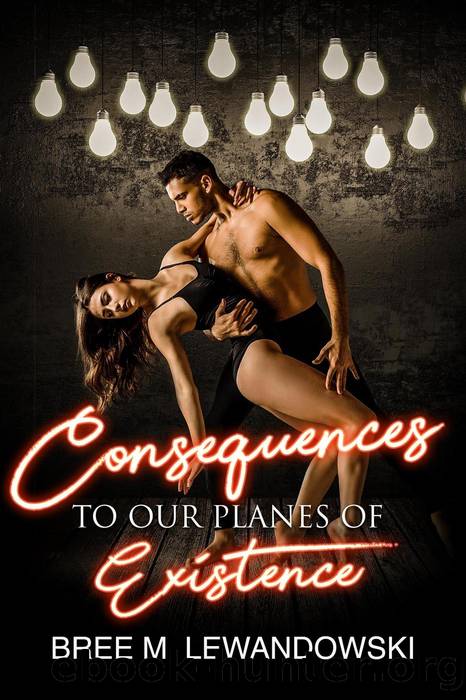
Author:Bree M. Lewandowski
Language: eng
Format: epub
Publisher: Bree M. Lewandowski
Published: 2021-04-18T00:00:00+00:00
CHAPTER SEVEN
George Balanchine premiered Agon to New York audiences in 1957, set to music by Stravinsky at a point in his musical career when he moved away from diatonic idioms to twelve-tone technique. Choreography took inspiration from French court dances like saraband, galliard, and bransle, popular in the seventeenth century. In Balanchineâs hands, no motion or turn of the foot would be wasted or danced without emotion; however, the ballet had no plot. Nor did it need one. Not the way Balanchine used movement. Audience members would create their own stories from what they saw under the lights, thereby making each performance personally powerful and ever-changing.
Agon was to be part of Autumnâs sequence in the production. Not the tumbling leaves and pumpkin spiced season of mainstream media, but the blustering, brilliant, time of year when both snow and rain fought for power, summer clinging and winter breaching.
The costume department decided on minimalistic costuming, whether by suggestion or preference, no one knew. However, the effect would be impactful. The women tight-less and in black, long sleeve leotards, scarves around their waists, denoting the color of the season while men wore black dance shorts only, scarves tied around their wrists.
Eight dancers instead of the expected twelve, Diana would dance the quartets and pas de deux, with Demetrio.
The assured man whose smile affected her body temperature did not play sly games during rehearsal. Alongside her he stood, seemingly unaware of her presence. Instead, his focus was on the guest teacher that had been invited for rehearsals, his specialty Balanchineâs ballets.
Not overly familiar with Agon, Dianaâs attention should have been focused on learning the choreography except Joâs dire predictions were hard to shake, especially given the âorganicâ nature of the show. Dancing with Demetrio, hands in his, her body on his, stopping and restarting, nodding to critiques expressed, it was nice to feel held. Steadied. To feel assurance when she had so little.
And the sound of his breath, feeling his muscles flex in a liftânothing was gonna happen tonight, but that did not mean she couldnât enjoy him right now.
âYou!â
The guest choreographer clapped and pointed to Diana.
âThey told me I got the best of the best. Get your head out of your ass.â
She nodded.
Thereâs a speech about having thick skin given to actors, writers, and artists. Ballet is truly an art; however, this speech is not preached often enough in dance class. Young men and women are told they are their own worst critic but itâs not true. The worst critic is the choreographer standing stage left, arms folded, zero emotion across his face, seeing how good you could be. When you fail, he wonât stand for it, and itâs your fault for not ascending to the promise of perfection every dancer chases.
Younger, the criticism is flavored as tough love. Older and a professional, the criticism is unfiltered and abusive.
Younger, Diana had left rehearsals with tears in her eyes. Now, she nodded and moved back into position. If the choreographer said it looked like shit, then it did.
Download
This site does not store any files on its server. We only index and link to content provided by other sites. Please contact the content providers to delete copyright contents if any and email us, we'll remove relevant links or contents immediately.
Ruthless King by Meghan March(26819)
Beautiful Disaster by McGuire Jamie(25333)
The Deal by Elle Kennedy(19880)
Cuffed (Everyday Heroes Book 1) by K. Bromberg(19491)
The Hating Game by Sally Thorne(19276)
The Secret History by Donna Tartt(19092)
Untraceable by Lindsay Delagair(17379)
American King (New Camelot #3) by Sierra Simone(15895)
Always and Forever, Lara Jean by Jenny Han(14922)
Ready Player One by Cline Ernest(14677)
Sad Girls by Lang Leav(14423)
Fifty Shades Freed by E L James(13243)
Red by Erica Spindler(12576)
Never With You (The Never Series Book 6) by Anie Michaels(11468)
The Betrayed by Jana Deleon(11370)
Still Me by Jojo Moyes(11266)
Scorched - Book Four - The Surrender Series by Anne Melody(11012)
Most of All You by Mia Sheridan(9508)
The Break by Marian Keyes(9368)
