Theory of Social Involvement by Aigbe Sunday A.;
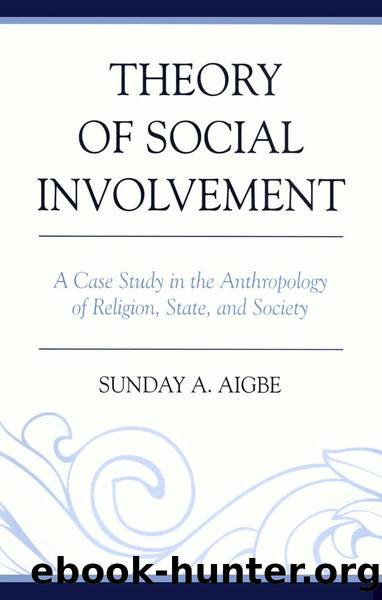
Author:Aigbe, Sunday A.;
Language: eng
Format: epub
ISBN: 9780761865292
Publisher: University Press of America, Incorporated
Power is not only intoxicating, it has the potentiality to create an insatiable propensity to ask for more of it in the individual or group of individuals who have already tasted it. Colonial masters like Clifford, Richard, McPherson and Lyttleton after whom the Constitutions were named wanted to maintain their status quo. But Nigerian nationalists wanted freedom for Nigeria in all ramifications. For them, freedom included a full possession of the power they had shared with the Colonial masters.
Independence and the First Republic
The Nigerians who dominated the political scene before and after Independence include Nnamdi Azikiwe, A. Tafawa Balewa, Obafemi Awolowo, Ahmadu Bello, Aminu Kano and Anthony Enahoro. Azikiwe, an Ibo from the East, got his doctorate in Political Science from and lectured in the United States before he returned to Africa. He contributed to several nationalist newspapers, and the formation of the Constitutions. When Nigeria got her independence, he became the first President on the platform of National Council of Nigeria and the Cameroons (NCNC) which was mostly an Ibo (Eastern) party, (Azikiwe 1970). Tafawa Balewa, a Northerner, became the first Prime Minister of Nigeria on the platform of Northern Peopleâs Congress (NPC) which was mostly dominant in the North. Behind him was Ahmadu Bello, the Sardauna of Sokoto, who wielded enormous religious and political power. The Ahmadu Bello University is named after him. He and Balewa were Muslims. He is remembered for his statement that the Prime Minister Balewa was âhis lieutenant in Lagosâ (Oyinbo 1971: 34; Post 1963: 38ft). Awolowo, a Yoruba from Western Nigeria, was educated in London as a lawyer. He contributed to the formation of the Constitution, and in 1960 he became the leader of the opposition party on the platform of the Action Group (AG), a party which was mostly dominant in the West (Awolowo 1960). These and many others were the political think tanks of Nigeria at the wake of Independence. Their political philosophies and struggles can be read from references cited above.
We need to mention at this point that by 1960 there was big shift in the political mood of the nation. At the turn of the century the British watch word was indirect rule. For the Nigerian political elites, their pre-occupation was nationalism. The challenge was great on both sides. But the mood both of the British and particularly of the Nigerians changed when the former granted lndependence to the latter on October 1, 1960. The Prime Minister was reported to say on that day that âWe are grateful to the British officers whom we have known, first as masters, and then as leaders, and finally as partners, but always as friendsâ (Oyinbo 1971: 2).
And the socio-cultural and political climate in Nigeria, with those words, underwent a radical shift: from oppression to freedom, from colonialism to nationality, and from indirect rule to direct rule. There were mottos like âUnity is Strength,â âUnity and Faith,â and âLiberty and Peaceâ in government and party seals and emblems to express the dominant mood of both the people and the politicians.
Download
This site does not store any files on its server. We only index and link to content provided by other sites. Please contact the content providers to delete copyright contents if any and email us, we'll remove relevant links or contents immediately.
Spell It Out by David Crystal(36109)
Life for Me Ain't Been No Crystal Stair by Susan Sheehan(35800)
Cecilia; Or, Memoirs of an Heiress — Volume 1 by Fanny Burney(32544)
Cecilia; Or, Memoirs of an Heiress — Volume 2 by Fanny Burney(31940)
Cecilia; Or, Memoirs of an Heiress — Volume 3 by Fanny Burney(31928)
The Great Music City by Andrea Baker(31915)
Professional Troublemaker by Luvvie Ajayi Jones(29648)
The Secret History by Donna Tartt(19041)
We're Going to Need More Wine by Gabrielle Union(19033)
Twilight of the Idols With the Antichrist and Ecce Homo by Friedrich Nietzsche(18619)
All the Missing Girls by Megan Miranda(15941)
Cat's cradle by Kurt Vonnegut(15331)
Pimp by Iceberg Slim(14481)
Bombshells: Glamour Girls of a Lifetime by Sullivan Steve(14050)
For the Love of Europe by Rick Steves(13890)
Talking to Strangers by Malcolm Gladwell(13344)
Norse Mythology by Gaiman Neil(13343)
Fifty Shades Freed by E L James(13231)
The Social Justice Warrior Handbook by Lisa De Pasquale(12185)
