The World as Idea: A Conceptual History (Routledge Studies in Social and Political Thought) by Charles P. Webel
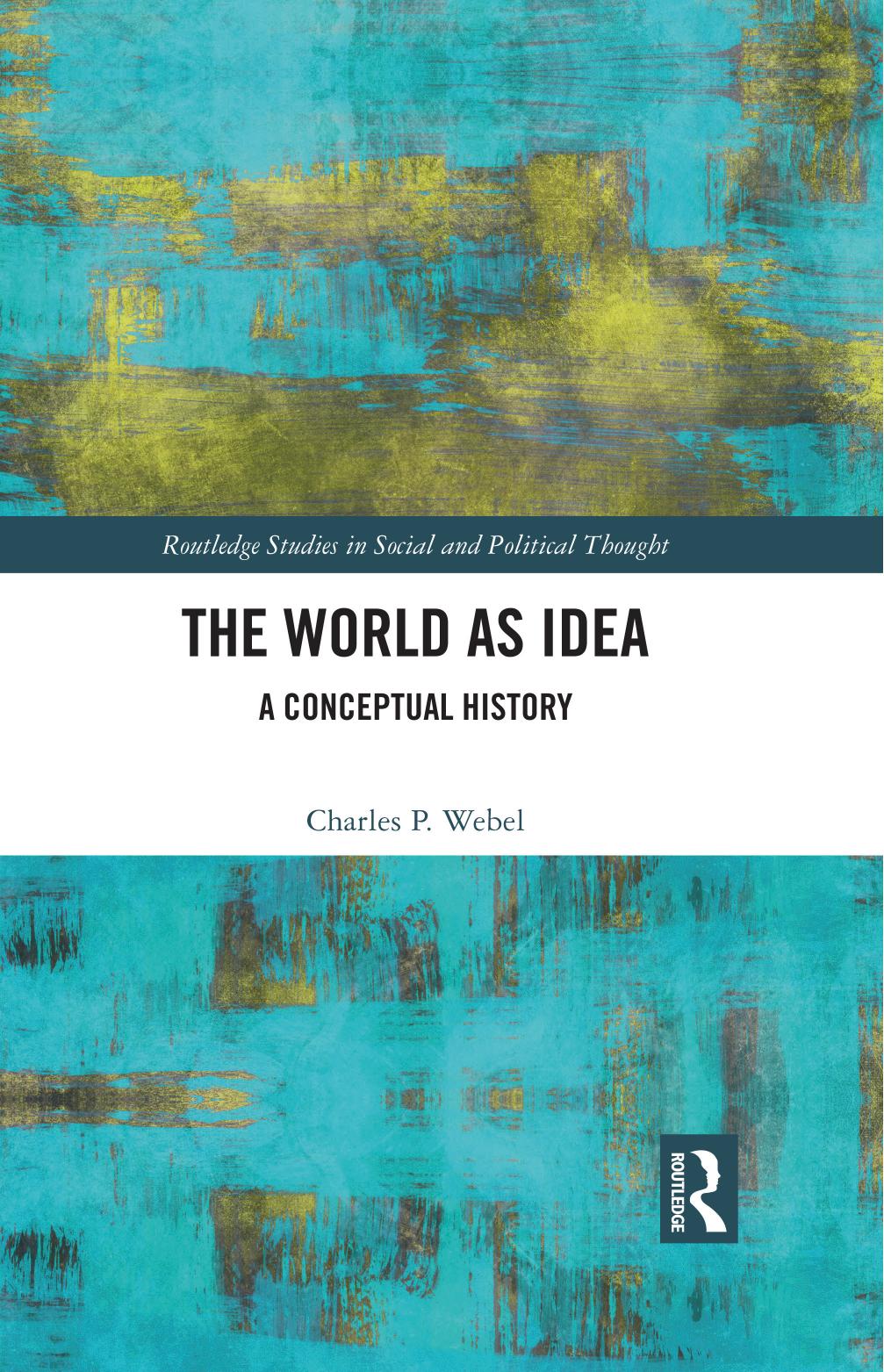
Author:Charles P. Webel [Webel, Charles P.]
Language: eng
Format: epub, pdf
Tags: Social Science, Political Science, General, History & Theory
ISBN: 9781317746713
Google: jkxDEAAAQBAJ
Amazon: B09GJZHVDY
Goodreads: 59956321
Publisher: Routledge
Published: 2021-11-03T00:00:00+00:00
Kantâs interest in physics, cosmology, and natural philosophy began early. His first published work, Thoughts on the True Estimation of Living Forces (1749) was an inquiry into some foundational problems in physics, and it entered into the âvis vivaâ (âliving forcesâ) debate between Leibniz and the Cartesians regarding how to quantify force in moving objects. One of Kantâs most lasting scientific contributions came from his early work in cosmology, Universal Natural History and Theory of the Heavens (1755), in which Kant proposed a mechanical explanation of the formation of the solar system and the galaxies in terms of the principles of Newtonian physics. He claimed that at the beginning of creation, all matter was spread out more or less evenly and randomly in a kind of nebula (a gaseous interstellar cloud). This has come to be what would later be known as the Kant-Laplace theory. A year later, Kant wrote the Physical Monadology (1756), which dealt with other foundational questions in physics and, notably, used Leibnizâs key idea of the âmonads.â Kantâs more developed philosophy of science is contained in Metaphysical Foundations of Natural Science (1786), whose central concern, according to Kant âis with Natureâthe whole world that we can know about through our senses,â Kant, Metaphysical Foundations of Natural Science, ed., Jonathan Bennett, 2017, available at: www.earlymoderntexts.com/assets/pdfs/kant1786.pdf, p. 1. In his Critique of Pure Reason, Kant elaborated on the relationship between nature and the world: We have two expressions, world and nature, which sometimes coincide. The former signifies the mathematical sum-total of all appearances and the totality of their synthesis, alike in the great and in the small ⦠This same world is entitled nature when it is views as a dynamical whole ⦠the unity in the existence of appearances.
(Op. cit., 392 (A 419, B 447))
Download
The World as Idea: A Conceptual History (Routledge Studies in Social and Political Thought) by Charles P. Webel.pdf
This site does not store any files on its server. We only index and link to content provided by other sites. Please contact the content providers to delete copyright contents if any and email us, we'll remove relevant links or contents immediately.
Spell It Out by David Crystal(36114)
Life for Me Ain't Been No Crystal Stair by Susan Sheehan(35808)
Cecilia; Or, Memoirs of an Heiress — Volume 1 by Fanny Burney(32554)
Cecilia; Or, Memoirs of an Heiress — Volume 2 by Fanny Burney(31951)
Cecilia; Or, Memoirs of an Heiress — Volume 3 by Fanny Burney(31935)
The Great Music City by Andrea Baker(31922)
Professional Troublemaker by Luvvie Ajayi Jones(29652)
The Secret History by Donna Tartt(19066)
We're Going to Need More Wine by Gabrielle Union(19040)
Twilight of the Idols With the Antichrist and Ecce Homo by Friedrich Nietzsche(18629)
All the Missing Girls by Megan Miranda(15972)
Cat's cradle by Kurt Vonnegut(15343)
Pimp by Iceberg Slim(14494)
Bombshells: Glamour Girls of a Lifetime by Sullivan Steve(14062)
For the Love of Europe by Rick Steves(13967)
Norse Mythology by Gaiman Neil(13356)
Talking to Strangers by Malcolm Gladwell(13356)
Fifty Shades Freed by E L James(13236)
The Social Justice Warrior Handbook by Lisa De Pasquale(12190)
