Fading Out Black and White by Lisa Simone Kingstone
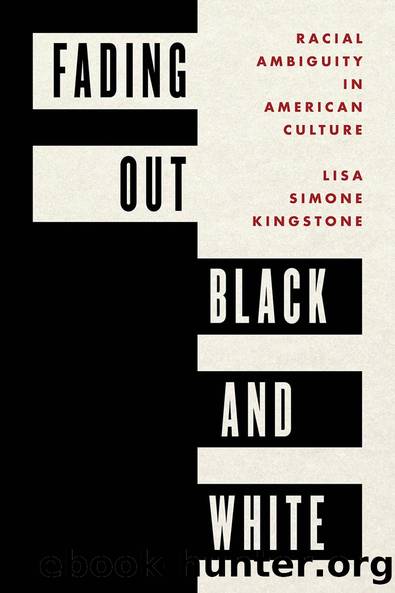
Author:Lisa Simone Kingstone [Kingstone, Lisa Simone]
Language: eng
Format: epub
ISBN: 9781786602558
Barnesnoble:
Goodreads: 42864295
Publisher: RLI
Published: 2018-08-30T00:00:00+00:00
107Chapter 5
Really Black
Black-ish and the Black Sitcom as Racial Barometer
In this chapter, I turn to the black family sitcom that, like the doll industry, found destructive ways to disseminate mostly harmful incarnations of the black family in shows like Amos ânâ Andy, Sanford and Son, and Thatâs My Mama. Like its cultural older sibling film, black characters in black sitcoms and their antecedents were key propaganda to sustain the stereotypes of black inferiority that justified inequality. Like the title of Donald Bogleâs Toms, Coons, Mulattoes, Mammies and Bucks, black sitcoms have chosen from the groups on this racist menu. Many of these stereotypes were invented after emancipation. When reconstruction promised freed slaves land and possibilities, white people were threatened and the campaign to create the notion of the N*gger was strengthened. Through cartoons, posters, radio, and finally TV, these negative tropes about blackness were pervasive.
However, since the 1980s that has been changing; black directors began to have agency through opportunities as writers and directors to alter the detrimental narratives about blackness, which allowed for later shows like The Fresh Prince of Bel-Air and The Cosby Show. I turn here to a close reading of four seasons of the show Black-ish to reveal the unmasking of racial performance and the command of these stereotypes though humor. The show looks at the role of stereotypes today when both black and white people have become aware of their constructedness. How do white people tiptoe around them for fear of being called a racist while at the same time have their thinking influenced by them?
In particular, I explore how Black-ish attempts to unveil any last vestiges of the binary by exposing how black and white characters address it directly with their conversations, arguments, debates and self-reflection (in the form of narration). In addition, the show expands the definition of blackness to include a world beyond survival and racism. Because it takes poverty out of 108the equation, it can address the complexity of life for black people who have achieved financial success. A new challenge comes of how to hold on to their blackness, which begs the question, âWhat defines this blackness I am trying to hold on to?â
In the 1812 Brothers Grimm fairy tale âSnow White,â the evil stepmother harangues her magic mirror daily by asking, âWho is the fairest of them all?â This color contest reflects the fear white people have of losing their whiteness. Such a prized commodity was this whiter skin that parents would warn their girls to stay out of the sun or they would get dark. Some desperate nineteenth-century white mothers gave their daughters arsenic, as a beauty treatment, to create a deathlike pallor. For black people, there have been some who tried to chemically or surgically remove their black skin, but many others have merely spent a small fortune on lightening creams and pills to achieve lighter if not white skin. Ironically today, the contest for many is no longer who is the fairest, but âwho is the blackest of them all.
Download
This site does not store any files on its server. We only index and link to content provided by other sites. Please contact the content providers to delete copyright contents if any and email us, we'll remove relevant links or contents immediately.
Spell It Out by David Crystal(36110)
Life for Me Ain't Been No Crystal Stair by Susan Sheehan(35804)
Cecilia; Or, Memoirs of an Heiress — Volume 1 by Fanny Burney(32548)
Cecilia; Or, Memoirs of an Heiress — Volume 2 by Fanny Burney(31947)
Cecilia; Or, Memoirs of an Heiress — Volume 3 by Fanny Burney(31932)
The Great Music City by Andrea Baker(31917)
Professional Troublemaker by Luvvie Ajayi Jones(29651)
The Secret History by Donna Tartt(19053)
We're Going to Need More Wine by Gabrielle Union(19034)
Twilight of the Idols With the Antichrist and Ecce Homo by Friedrich Nietzsche(18624)
All the Missing Girls by Megan Miranda(15958)
Cat's cradle by Kurt Vonnegut(15338)
Pimp by Iceberg Slim(14488)
Bombshells: Glamour Girls of a Lifetime by Sullivan Steve(14057)
For the Love of Europe by Rick Steves(13915)
Norse Mythology by Gaiman Neil(13349)
Talking to Strangers by Malcolm Gladwell(13349)
Fifty Shades Freed by E L James(13233)
The Social Justice Warrior Handbook by Lisa De Pasquale(12187)
