The Modern Embroidery Movement by Cynthia Fowler
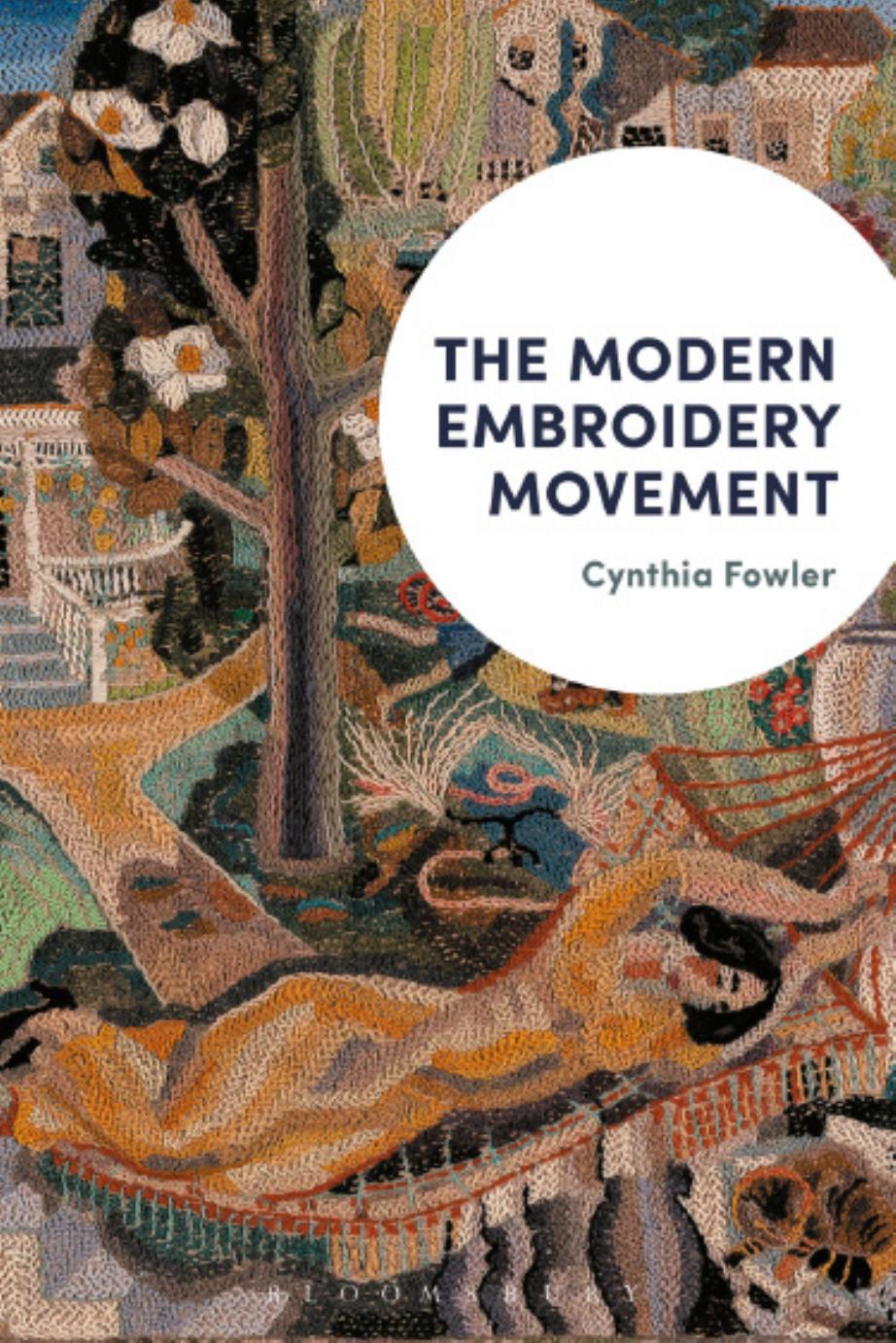
Author:Cynthia Fowler
Language: eng
Format: epub, pdf
Publisher: Bloomsbury UK
Image not available in this edition
Figure 6.6 Marguerite Zorach, Nude Reclining (1922)—Oil on canvas, 29 × 30 ¼"—Courtesy of the National Museum of Women in the Arts, Washington, DC—Gift of Wallace and Wilhelmina Holladay—Photograph by Lee Stalsworth.
Figure 6.7 Marguerite Zorach, Blue Cinerarias (ca. 1932)—Oil on canvas, 46 × 38 in.—Zorach Collection, LLC—Image courtesy of Gerald Peters Gallery, New York.
For her embroidery The Circus: New York, Zorach turned her attention to popular culture. During the 1920s and 1930s, the circus was a very popular form of entertainment in America. In 1919, when the Ringling Brothers (RB) circus company merged with its competitor Barnum and Bailey (BB) to form the largest American circus, the new organization proclaimed itself “The Greatest Show on Earth” and for the next two decades orchestrated spectacular shows performed to sold-out audiences across the country. Zorach and her family would have had plenty of opportunities to attend circus performances on a regular basis.26 The combined Ringling Brothers and Barnum and Bailey (RBBB) Circus debuted at Madison Square Garden in 1919, and held annual shows in Manhattan and various locations in Brooklyn in the years that followed.27 Zorach’s interest in the circus was something she shared with many other artists from this time period. By the end of the 1920s, so many artists had represented the circus that in 1929 the Whitney Studio Galleries held an exhibition on the subject, The Circus in Paint, which included the works of thirty-one American artists. Designed to replicate the circus experience, the gallery space itself was decorated with balloons and featured sawdust-covered floors and canvas ceilings that simulated circus tents, while large containers of peanuts were placed in every room.28 Critic William McCormick described the exhibition as “the artistic tour de force of the season.”29 Henry McBride, who also reviewed the show, mused “that spectator is an idiot who does not start in immediately to collecting circus pictures.”30
Living in New York, Zorach would have been reminded of the circus by posters regularly plastered around the city as advertisements. Circus posters emphasized the frenzied atmosphere created when multiple acts were performed simultaneously. With titles like “The Greatest Acts from Every Country in the World,” these posters depicted a dazzling array of circus performers, both men and women, carrying out acts requiring skill, strength, and agility. In many circus posters from this period, no single act was spotlighted. Instead, the circus as a whole was portrayed as a spectacular array of acts performed simultaneously to create a stimulating, if not overwhelming, experience for its viewers. Zorach’s circus embroidery shows an affinity with circus posters in that it too represents the circus as a spectacle of competing acts. It was based on a painting Zorach created five years earlier, more generally titled The Circus (Figure 6.8). In both the painting and embroidery, a tiger trainer in the center ring is surrounded by three additional acts: a female dog trainer with two hounds gracefully jumping through the hoops she holds; a male acrobat performing a somersault; and three female trapeze artists flying through the air above other members of the troupe.
Download
The Modern Embroidery Movement by Cynthia Fowler.pdf
This site does not store any files on its server. We only index and link to content provided by other sites. Please contact the content providers to delete copyright contents if any and email us, we'll remove relevant links or contents immediately.
The Great Music City by Andrea Baker(33723)
Aircraft Design of WWII: A Sketchbook by Lockheed Aircraft Corporation(32385)
Call Me by Your Name by André Aciman(20738)
The Secret History by Donna Tartt(19477)
The Art of Boudoir Photography: How to Create Stunning Photographs of Women by Christa Meola(18772)
Shoot Sexy by Ryan Armbrust(17856)
Plagued by Fire by Paul Hendrickson(17542)
Portrait Mastery in Black & White: Learn the Signature Style of a Legendary Photographer by Tim Kelly(17108)
Adobe Camera Raw For Digital Photographers Only by Rob Sheppard(17097)
Photographically Speaking: A Deeper Look at Creating Stronger Images (Eva Spring's Library) by David duChemin(16801)
Ready Player One by Cline Ernest(15153)
Pimp by Iceberg Slim(14805)
Bombshells: Glamour Girls of a Lifetime by Sullivan Steve(14223)
The Goal (Off-Campus #4) by Elle Kennedy(13969)
Art Nude Photography Explained: How to Photograph and Understand Great Art Nude Images by Simon Walden(13152)
Kathy Andrews Collection by Kathy Andrews(12101)
The Priory of the Orange Tree by Samantha Shannon(9367)
The remains of the day by Kazuo Ishiguro(9227)
Thirteen Reasons Why by Jay Asher(9132)
