Fugitive Man by Cromwell Robert;
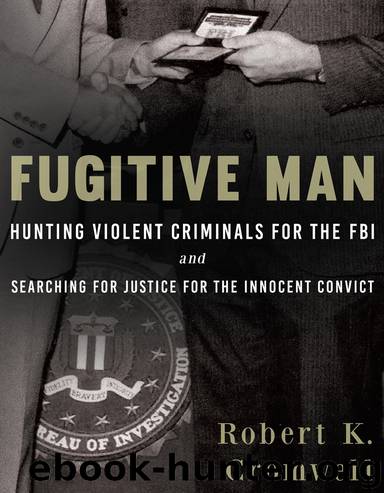
Author:Cromwell, Robert;
Language: eng
Format: epub
ISBN: 978-1-63505-241-1
Publisher: MCP Books
CHAPTER EIGHTEEN
INTELLIGENCE DEVELOPMENT UNIT
As Chief of the Criminal Intelligence Development Unit, I quickly ascertained we were an FBI program without resources. The strength of any program in the FBI is directly related to the level of its funding, known then as Funded Staffing Level (FSL), it equates to agents, support personnel, and money in the field dedicated to the program. The criminal intelligence side of the FBI in the mid to late ‘90s had a zero FSL. Without FSL, the program had very little influence and could accomplish little. Section Chief Jack Hunt was way ahead of his time in his vision of the way criminal, including counterterrorism, intelligence handling should ideally function, but he had very little support from senior FBI leaders, who apparently did not recognize the import of trained competent analysts for the Bureau’s criminal and counterterrorism cases.
It was really an uphill battle. The Foreign Counterintelligence Division (FCI) side of the FBI was significantly more advanced than the Criminal Division (which included the Counterterrorism Section) when it came to the quality of their analysts. Within the criminal side of the house, the only trained analysts, for the most part, were those working with the Organized Crime Information System (OCIS) and they were focused on organized crime. The FCI Division had long sought out real analysts, analysts with appropriate training and job skills to provide case analysis beyond a mere regurgitation of what was already known.
For reasons I’ll never understand, during those times in the late 90’s, the FCI Division did little to help the Criminal Division develop training for our analysts, nor share useful training material. There were some exceptions, but for the most part, we were on our own within the FBI. So, we turned to the military and the DEA for help. In 1989, General Colin Powel established Joint Task Force 6 in Fort Bliss, Texas. (It was initially a counter-drug operation, but was subsequently renamed Joint Task Force North and in 2004 was given counterterrorism as an additional focus.)
While the FBI did not provide standard training for criminal and counterterrorism analysts before 9/11, JTF6 and the DEA graciously provided limited training for FBI criminal analysts in Miami, El Paso, Los Angeles, and Phoenix. Uniform training for criminal/counterterrorism analysts eluded the FBI until after the events of 9/11.
A good analyst takes the data gathered by an agent and conducts research through numerous government and public sector databases to fill in any intelligence gaps, as well as to validate or condense the data. The analyst then dissects all information with the use of analytic tools and determines if there is actionable intelligence for the agent/ officer. Potentially significant investigations should feature an analyst teamed with the case agent from the start. The FCI side of the house had long been accomplishing that.
On the criminal side, we suffered with a legacy of analysts who were good secretaries or clerks who had been promoted to the Intelligence Research Specialist (analyst) position. Many of them were quite competent, but were not trained by the FBI in what was expected from an analyst.
Download
This site does not store any files on its server. We only index and link to content provided by other sites. Please contact the content providers to delete copyright contents if any and email us, we'll remove relevant links or contents immediately.
Hit Refresh by Satya Nadella(9118)
When Breath Becomes Air by Paul Kalanithi(8422)
The Girl Without a Voice by Casey Watson(7880)
A Court of Wings and Ruin by Sarah J. Maas(7809)
Do No Harm Stories of Life, Death and Brain Surgery by Henry Marsh(6931)
Shoe Dog by Phil Knight(5255)
The Rules Do Not Apply by Ariel Levy(4953)
A Higher Loyalty: Truth, Lies, and Leadership by James Comey(4946)
Hunger by Roxane Gay(4920)
Tuesdays with Morrie by Mitch Albom(4765)
Everything Happens for a Reason by Kate Bowler(4729)
The Immortal Life of Henrietta Lacks by Rebecca Skloot(4571)
Millionaire: The Philanderer, Gambler, and Duelist Who Invented Modern Finance by Janet Gleeson(4461)
How to Change Your Mind by Michael Pollan(4354)
All Creatures Great and Small by James Herriot(4305)
The Money Culture by Michael Lewis(4188)
Man and His Symbols by Carl Gustav Jung(4120)
Elon Musk by Ashlee Vance(4118)
Tokyo Vice: An American Reporter on the Police Beat in Japan by Jake Adelstein(3976)
