To Explain the World The Discovery of Modern Science (H) by Steven Weinberg
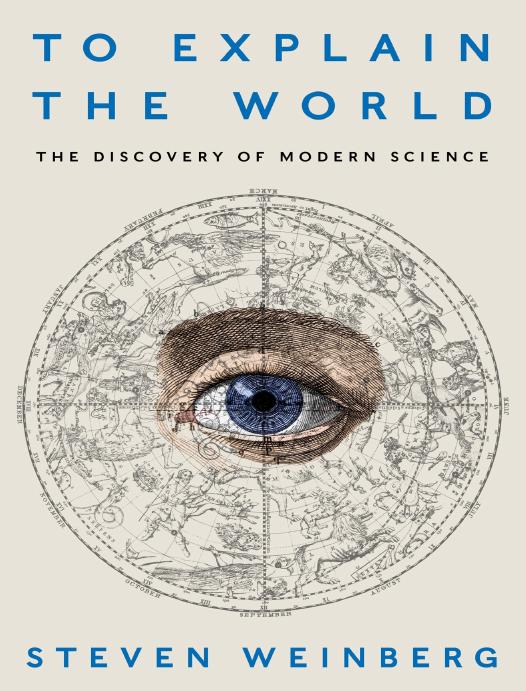
Author:Steven Weinberg [Weinberg, Steven]
Language: eng
Format: epub, mobi, pdf
ISBN: 9780062346650
Publisher: HarperCollins Publishers
Published: 2015-02-17T05:00:00+00:00
b/R
φ (Descartes)
φ (recalculated)
0.1
5° 40'
5° 44'
0.2
11° 19'
11° 20'
0.3
17° 56'
17° 6'
0.4
22° 30'
22° 41'
0.5
27° 52'
28° 6'
0.6
32° 56'
33° 14'
0.7
37° 26'
37° 49'
0.8
40° 44'
41° 13'
0.9
40° 57'
41° 30'
1.0
13° 40'
14° 22'
The inaccuracy of some of Descartes’ results can be set down to the limited mathematical aids available in his time. I don’t know if he had access to a table of sines, and he certainly had nothing like a modern pocket calculator. Still, Descartes would have shown better judgment if he had quoted results only to the nearest 10 minutes of arc, rather than to the nearest minute.
As Descartes noticed, there is a relatively wide range of values of the impact parameter b for which the angle φ is close to 40°. He then repeated the calculation for 18 more closely spaced rays with values of b between 80 percent and 100 percent of the drop’s radius, where φ is around 40°. He found that the angle φ for 14 of these 18 rays was between 40° and a maximum of 41° 30'. So these theoretical calculations explained his experimental observation mentioned earlier, of a preferred angle of roughly 42°.
Technical Note 29 gives a modern version of Descartes’ calculation. Instead of working out the numerical value of the angle φ between the incoming and outgoing rays for each ray in an ensemble of rays, as Descartes did, we derive a simple formula that gives φ for any ray, with any impact parameter b, and for any value of the ratio n of the speed of light in air to the speed of light in water. This formula is then used to find the value of φ where the emerging rays are concentrated.* For n equal to 4/3 the favored value of φ, where the emerging light is somewhat concentrated, turns out to be 42.0°, just as found by Descartes. Descartes even calculated the corresponding angle for the secondary rainbow, produced by light that is reflected twice within a raindrop before it emerges.
Descartes saw a connection between the separation of colors that is characteristic of the rainbow and the colors exhibited by refraction of light in a prism, but he was unable to deal with either quantitatively, because he did not know that the white light of the sun is composed of light of all colors, or that the index of refraction of light depends slightly on its color. In fact, while Descartes had taken the index for water to be 4/3 = 1.333 . . . , it is actually closer to 1.330 for typical wavelengths of red light and closer to 1.343 for blue light. One finds (using the general formula derived in Technical Note 29) that the maximum value for the angle φ between the incident and emerging rays is 42.8° for red light and 40.7° for blue light. This is why Descartes saw bright red light when he looked at his globe of water at an angle of 42° to the direction of the Sun’s rays. That value of the angle φ is above the maximum value 40.
Download
To Explain the World The Discovery of Modern Science (H) by Steven Weinberg.mobi
To Explain the World The Discovery of Modern Science (H) by Steven Weinberg.pdf
This site does not store any files on its server. We only index and link to content provided by other sites. Please contact the content providers to delete copyright contents if any and email us, we'll remove relevant links or contents immediately.
| Africa | Americas |
| Arctic & Antarctica | Asia |
| Australia & Oceania | Europe |
| Middle East | Russia |
| United States | World |
| Ancient Civilizations | Military |
| Historical Study & Educational Resources |
Room 212 by Kate Stewart(5211)
The Crown by Robert Lacey(4886)
Endurance: Shackleton's Incredible Voyage by Alfred Lansing(4872)
The Iron Duke by The Iron Duke(4430)
The Rape of Nanking by Iris Chang(4286)
Joan of Arc by Mary Gordon(4181)
Killing England by Bill O'Reilly(4069)
Say Nothing by Patrick Radden Keefe(4066)
I'll Give You the Sun by Jandy Nelson(3526)
Shadow of Night by Deborah Harkness(3442)
Hitler's Monsters by Eric Kurlander(3417)
Eleanor & Park by Rainbow Rowell(3287)
Blood and Sand by Alex Von Tunzelmann(3264)
Mary, Queen of Scots, and the Murder of Lord Darnley by Alison Weir(3261)
Darkest Hour by Anthony McCarten(3192)
Margaret Thatcher: The Autobiography by Thatcher Margaret(3139)
Book of Life by Deborah Harkness(3006)
Red Famine: Stalin's War on Ukraine by Anne Applebaum(2986)
The One Memory of Flora Banks by Emily Barr(2921)
