Good Strategy/Bad Strategy:The difference and why it matters
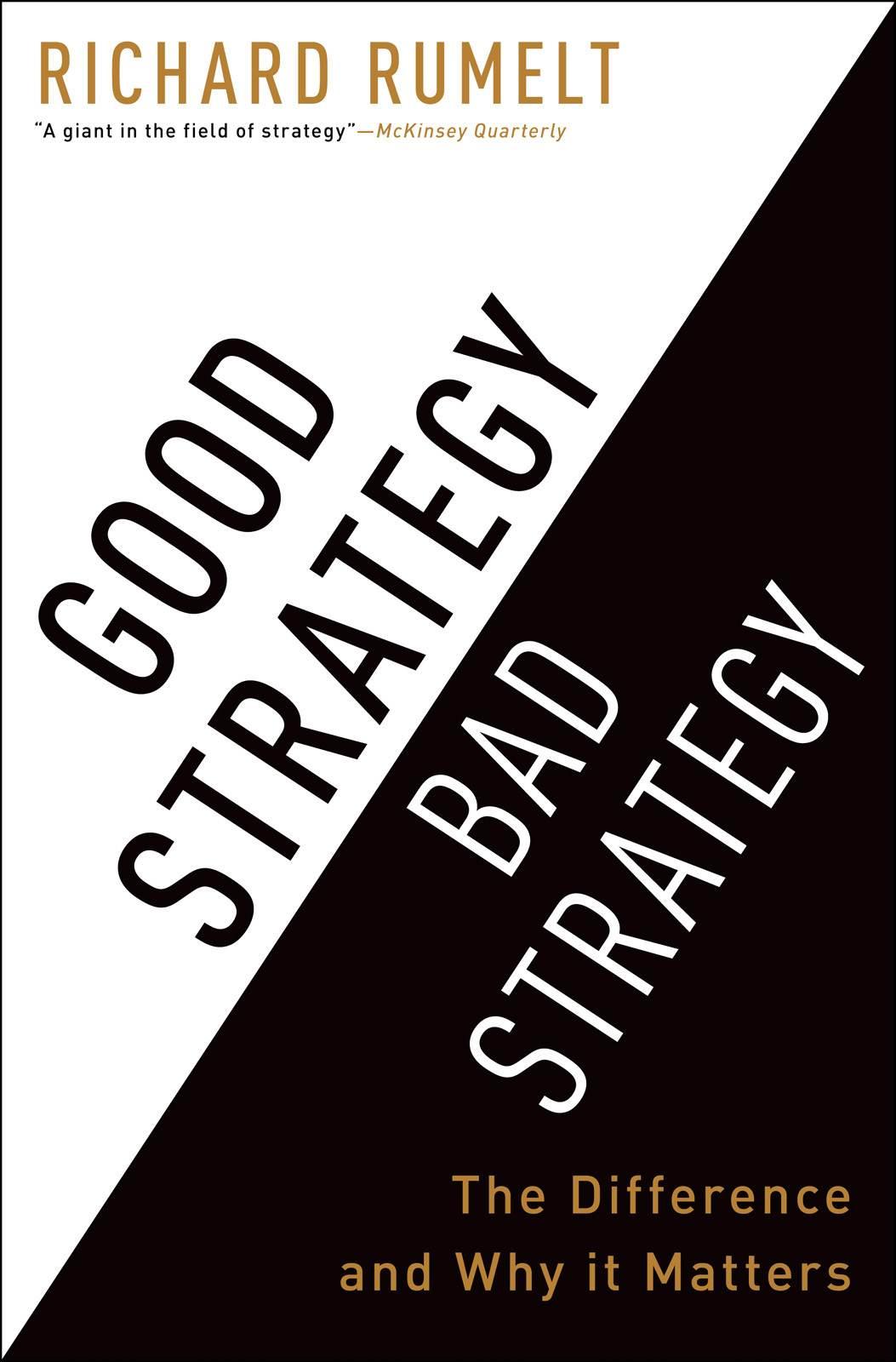
Author:Rumelt, Richard [Rumelt, Richard]
Language: eng
Format: mobi
Publisher: Profile Books
Published: 2011-06-08T16:00:00+00:00
COMPETITIVE ADVANTAGE IN BUSINESS
The term “competitive advantage” became a term of art in business strategy with Michael Porter’s 1984 insightful book of that title. Indeed, Warren Buffett has said that he evaluates a company by looking for “sustainable competitive advantage.”
The basic definition of competitive advantage is straightforward. If your business can produce at a lower cost than can competitors, or if it can deliver more perceived value than can competitors, or a mix of the two, then you have a competitive advantage. Subtlety arrives when you realize that costs vary with product and application and that buyers differ in their locations, knowledge, tastes, and other characteristics. Thus, most advantages will extend only so far. For instance, Whole Foods has an advantage over Albertsons supermarkets only for certain products and only among grocery shoppers with good incomes who place a high value on organic and natural foods.
Defining “sustainability” is trickier. For an advantage to be sustained, your competitors must not be able to duplicate it. Or, more precisely, they must not be able to duplicate the resources underlying it. For that you must possess what I term an “isolating mechanism,” such as a patent giving its holder the legally enforceable right to monopolize the use of a technology for a time.2 More complex forms of isolating mechanisms include reputations, commercial and social relationships, network effects,* dramatic economies of scale, and tacit knowledge and skill gained through experience.
As an example, Apple’s iPhone business is protected by the Apple and iPhone brand names, by the company’s reputation, by the complementary iTunes service, and by the network effects of its customer group, especially with respect to iPhone applications. Each of these resources has been crafted by Apple executives and put in place as part of a program for building a sustained competitive advantage. These resources are scarce in that competitors find it difficult, if not impossible, to create comparable resources at a reasonable cost.
Claims in advertising or sales pitches that a particular IT system or product or training program will provide a competitive advantage are misusing the term since an “advantage” on sale to all comers is a contradiction in terms.
Download
This site does not store any files on its server. We only index and link to content provided by other sites. Please contact the content providers to delete copyright contents if any and email us, we'll remove relevant links or contents immediately.
Hit Refresh by Satya Nadella(9140)
The Compound Effect by Darren Hardy(8975)
Change Your Questions, Change Your Life by Marilee Adams(7786)
Nudge - Improving Decisions about Health, Wealth, and Happiness by Thaler Sunstein(7711)
The Black Swan by Nassim Nicholas Taleb(7136)
Deep Work by Cal Newport(7089)
Rich Dad Poor Dad by Robert T. Kiyosaki(6644)
Daring Greatly by Brene Brown(6519)
Principles: Life and Work by Ray Dalio(6459)
Playing to Win_ How Strategy Really Works by A.G. Lafley & Roger L. Martin(6316)
Man-made Catastrophes and Risk Information Concealment by Dmitry Chernov & Didier Sornette(6022)
Big Magic: Creative Living Beyond Fear by Elizabeth Gilbert(5778)
Digital Minimalism by Cal Newport;(5767)
The Myth of the Strong Leader by Archie Brown(5511)
The Slight Edge by Jeff Olson(5420)
Discipline Equals Freedom by Jocko Willink(5391)
The Motivation Myth by Jeff Haden(5214)
The Laws of Human Nature by Robert Greene(5213)
Stone's Rules by Roger Stone(5089)
