Empires of Faith: The Fall of Rome to the Rise of Islam, 500-700 (Oxford History of Medieval Europe) by Peter Sarris
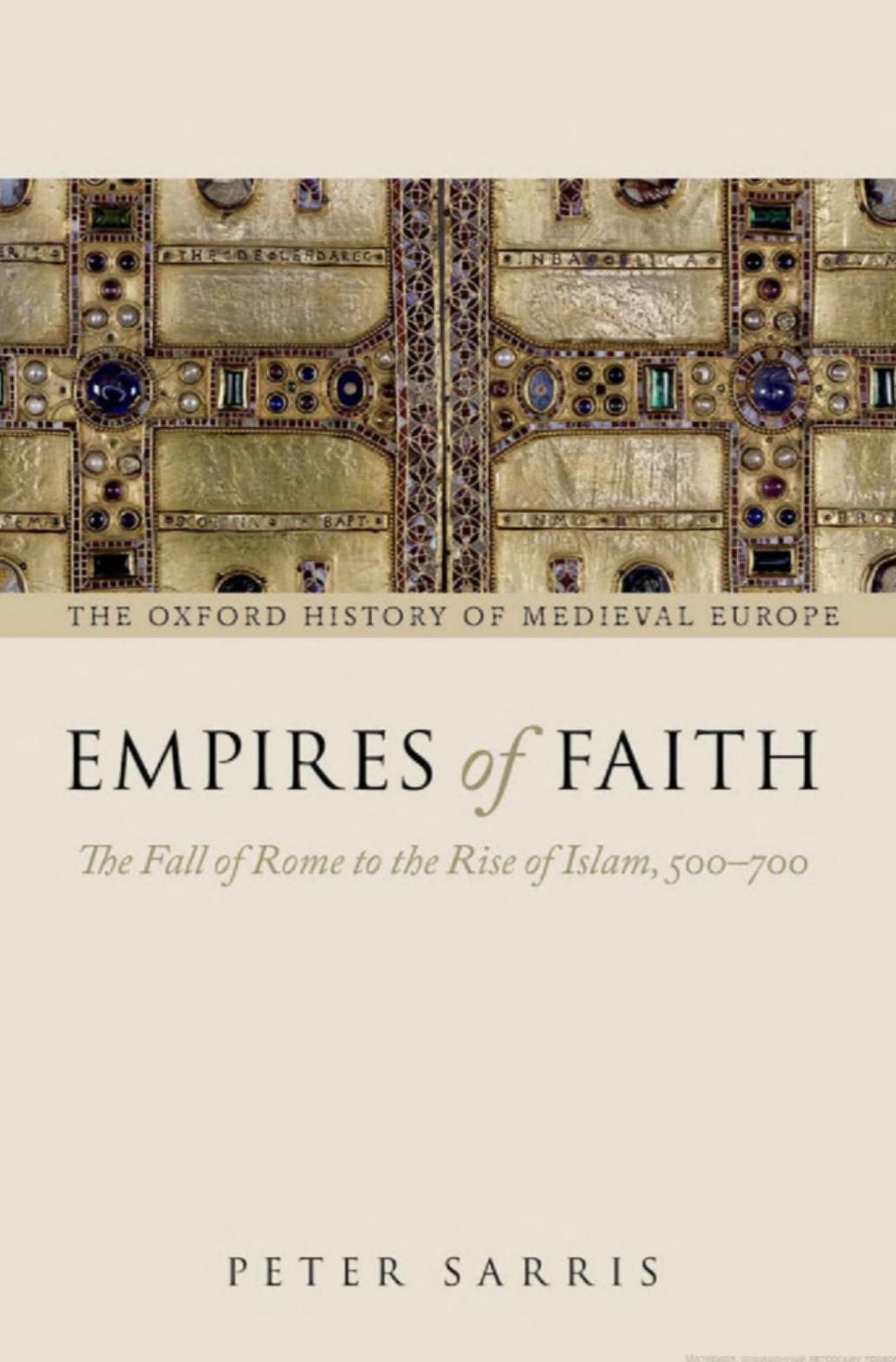
Author:Peter Sarris [Sarris, Peter]
Language: eng
Format: epub, mobi, pdf
Publisher: Oxford University Press
Published: 2011-10-27T04:30:00+00:00
7.3 MOUNTING SOCIAL TENSIONS
AND MILITARY REVOLT
In spite of the obvious temptation to go to war, external factors dictated that relations between Maurice and Khusro II remained amicable. The Emperor took advantage of the situation to redeploy significant sections of the East Roman field army to the Danube, where they were able to take battle to the Slavs and Avars with increasing success (see Chapter Five). The Roman authorities had come to appreciate that even the hardiest of their nomadic foes were obliged to make camp in the harsh Balkan winter. Accordingly, if the Roman army could extend the campaigning season into these most inhospitable of months, they had a chance of inflicting real pain on their troublesome northern neighbours. Accordingly, the 590s witnessed what one historian has described as the most impressive show of Roman force on the Danube since the days of Marcus Aurelius.52 These campaigns, however, are likely to have done little to address the situation further south in the empire’s Balkan territories, where Slav settlement continued apace, and may even have been intensified by the successful Roman campaigns to the north. Khusro, likewise, had other concerns: the final crushing of Vahram and his supporters in their traditional clan abode of Media, and the subsequent rebellion in c.599 of the nobleman Bestam, who drew his support from the same area, and who, like Vahram, was able to claim Arsacid descent.
The peace that ensued between Rome and Persia in the 590s was not, however, necessarily a blessing to the inhabitants of the frontier zone. The lords and princes of the Caucasus had a long-standing interest in maximising their own political autonomy by playing the two great empires off against one another, defecting from Persia to Rome and Rome to Persia as objective political circumstances demanded (as the Laz had done in the 520s, 530s, and 540s). The Armenian History would look back on the years of ‘peace’ in the 590s as an age of unmitigated tyranny: Maurice is reported, for example, to have forcibly resettled Armenian men-at-arms and their households on the plains of Thrace, helping to secure the defences of the land approaches to Constantinople while taming the potentially rebellious highlands of the East.53
Prospects were little better for the dissident Christian populations of Syria and Mesopotamia. With greater military security on the empire’s eastern frontier, the vehemently pro-Chalcedonian Maurice and his entourage no longer needed to fear the political implications of alienating the region’s large anti-Chalcedonian congregations. As a result, under the supervision of the Emperor’s nephew, Bishop Domitian of Melitene, large numbers of Miaphysite clergy were removed from post and their churches handed over to bishops and clerics more minded to toe the imperial line.54 This was the closest the Chalcedonian authorities would ever come to an age of persecution. Khusro II, by contrast, was careful to court Miaphysite sentiment in the frontier zone, patronising the shrine of St Sergius at Sergiopolis, a major cultic site for the anti-Chalcedonian Arab tribesmen of the desert fringe.55
Rising Christological tensions were matched by mounting social tensions across the territories of the Roman Near East.
Download
Empires of Faith: The Fall of Rome to the Rise of Islam, 500-700 (Oxford History of Medieval Europe) by Peter Sarris.mobi
Empires of Faith: The Fall of Rome to the Rise of Islam, 500-700 (Oxford History of Medieval Europe) by Peter Sarris.pdf
This site does not store any files on its server. We only index and link to content provided by other sites. Please contact the content providers to delete copyright contents if any and email us, we'll remove relevant links or contents immediately.
| Africa | Americas |
| Arctic & Antarctica | Asia |
| Australia & Oceania | Europe |
| Middle East | Russia |
| United States | World |
| Ancient Civilizations | Military |
| Historical Study & Educational Resources |
Room 212 by Kate Stewart(5125)
The Crown by Robert Lacey(4817)
Endurance: Shackleton's Incredible Voyage by Alfred Lansing(4784)
The Iron Duke by The Iron Duke(4358)
The Rape of Nanking by Iris Chang(4214)
Joan of Arc by Mary Gordon(4115)
Killing England by Bill O'Reilly(4005)
Say Nothing by Patrick Radden Keefe(3988)
I'll Give You the Sun by Jandy Nelson(3448)
Shadow of Night by Deborah Harkness(3370)
Hitler's Monsters by Eric Kurlander(3343)
Mary, Queen of Scots, and the Murder of Lord Darnley by Alison Weir(3210)
Blood and Sand by Alex Von Tunzelmann(3205)
Eleanor & Park by Rainbow Rowell(3178)
Darkest Hour by Anthony McCarten(3133)
Margaret Thatcher: The Autobiography by Thatcher Margaret(3083)
Book of Life by Deborah Harkness(2939)
Red Famine: Stalin's War on Ukraine by Anne Applebaum(2934)
The One Memory of Flora Banks by Emily Barr(2864)
