Do No Harm by Anil Ananthaswamy
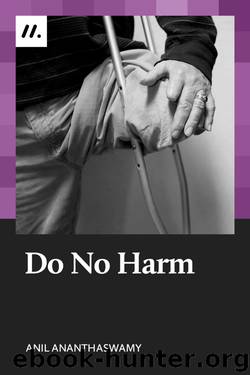
Author:Anil Ananthaswamy [Ananthaswamy, Anil]
Language: eng
Format: epub
Publisher: MATTER Publishing, Inc
Published: 2012-11-14T00:00:00+00:00
§
Visceral negative reactions are common when people first hear about voluntary amputations. Twelve years ago, when media attention to the condition was at its height, bioethicist Arthur Caplan, then of the University of Pennsylvania, called it “absolute, utter lunacy to go along with a request to maim somebody.”
More than a decade later, there is still argument in the pages of academic journals about the ethics of voluntary amputations. Is it analogous to other body-modifying cosmetic surgeries, such as breast reduction? Some bioethicists say no, since amputation entails a permanent disability. Others point out that cosmetic surgery can also be disabling, as when breast reduction results in the inability to breastfeed. Or should BIID be compared to anorexia nervosa as the best, if somewhat imperfect, analogy, because both involve body-image discrepancies? According to this line of argument, amputations should be denied just as anorexics are sometimes fed against their will. The retort to this is that anorexics are clearly delusional about their bodies, as objective measures can show their body weight to be dangerously low. There is no such objective measure of a BIID patient’s internal feeling of bodily mismatch.
The debate continues, partly because BIID is not a medically recognised disorder. There’s also a lack of data about how voluntary amputations affect the lives of patients. Yet David’s surgeon, an orthopaedic specialist, has made up his mind.
Dr Lee — which is not his real name — is in his mid-40s, friendly, with an easy laugh. He seems at peace with his secret practice. When a BIID patient first approached him four years ago, he had had his doubts, so he researched the condition as thoroughly as he could and communicated with the patient for several months before deciding to do the amputation. He knew he would be risking his medical license. A religious man, he and his wife even prayed on it, eventually putting some of the onus of the decision on higher powers. “God, if you think this is not right, then put some hindrance,” he remembers thinking. “I don’t know what it is, but put some hindrance.” So far things have gone smoothly, and he’s taking that as divine sanction.
Dr Lee is convinced that what he does is ethical. He has no doubt that BIID patients are suffering deeply. On the question of whether to amputate to relieve their pain, he invokes the WHO’s definition of health: a state of complete physical, mental and social well-being and not merely the absence of disease or infirmity. As far as he can tell, people with BIID are not healthy, there is no non-surgical cure in sight, and no evidence that psychotherapy helps. Michael First, in his 2005 survey of 52 BIID patients, reported that 65 percent of them had seen psychotherapists, but it had no effect on their desire for amputation (though it’s also true that half of them did not tell their psychotherapists about such desires).
Of course, there’s also the question of whether BIID sufferers are psychotic or delusional. Again, the scientists who have studied these individuals say that they are neither.
Download
This site does not store any files on its server. We only index and link to content provided by other sites. Please contact the content providers to delete copyright contents if any and email us, we'll remove relevant links or contents immediately.
| Administration & Medicine Economics | Allied Health Professions |
| Basic Sciences | Dentistry |
| History | Medical Informatics |
| Medicine | Nursing |
| Pharmacology | Psychology |
| Research | Veterinary Medicine |
Periodization Training for Sports by Tudor Bompa(8278)
Why We Sleep: Unlocking the Power of Sleep and Dreams by Matthew Walker(6729)
Paper Towns by Green John(5195)
The Immortal Life of Henrietta Lacks by Rebecca Skloot(4593)
The Sports Rules Book by Human Kinetics(4398)
Dynamic Alignment Through Imagery by Eric Franklin(4223)
ACSM's Complete Guide to Fitness & Health by ACSM(4062)
Kaplan MCAT Organic Chemistry Review: Created for MCAT 2015 (Kaplan Test Prep) by Kaplan(4015)
Introduction to Kinesiology by Shirl J. Hoffman(3778)
Livewired by David Eagleman(3778)
The Death of the Heart by Elizabeth Bowen(3626)
The River of Consciousness by Oliver Sacks(3607)
Alchemy and Alchemists by C. J. S. Thompson(3526)
Bad Pharma by Ben Goldacre(3429)
Descartes' Error by Antonio Damasio(3283)
The Emperor of All Maladies: A Biography of Cancer by Siddhartha Mukherjee(3166)
The Gene: An Intimate History by Siddhartha Mukherjee(3100)
The Fate of Rome: Climate, Disease, and the End of an Empire (The Princeton History of the Ancient World) by Kyle Harper(3069)
Kaplan MCAT Behavioral Sciences Review: Created for MCAT 2015 (Kaplan Test Prep) by Kaplan(2988)
