COVID-19 Conspiracy Theories by Bodner John; Welch Wendy; Brodie Ian
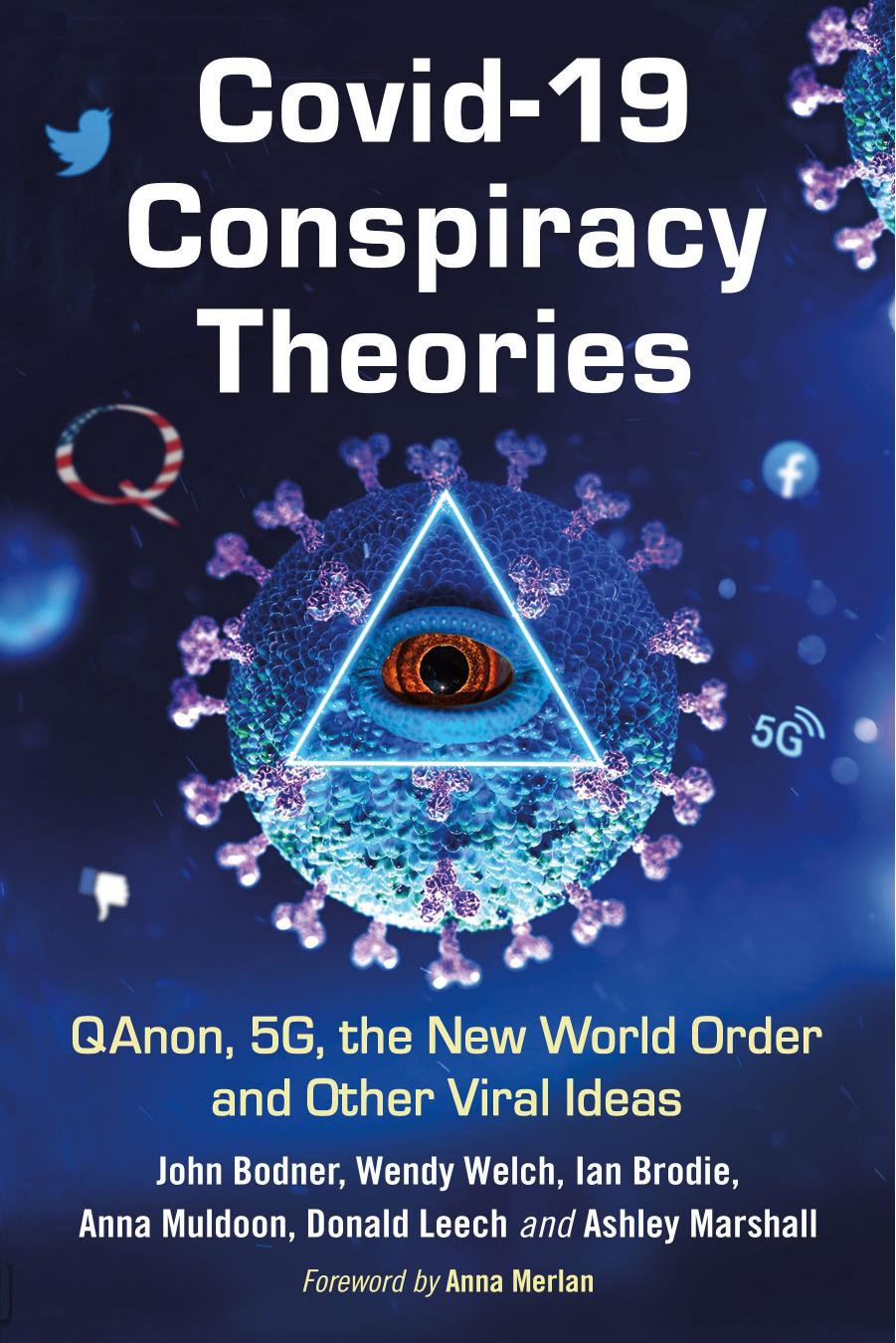
Author:Bodner, John; Welch, Wendy; Brodie, Ian
Language: eng
Format: epub, pdf
Publisher: McFarland & Company, Incorporated Publishers
Published: 2020-11-09T00:00:00+00:00
The great falling away
If the age of the Antichrist were nigh, manifested in a New World Order, then the Second Comingâthe return of Jesus to select the righteous who have remained trueâmust be immanent. Apocalyptic thinking pervades American culture, and not only among faith communities.8 The use of Armageddon, the Second Coming, or the Great Tribulation in mainstream entertainment began an accelerating shift in the early 2000s, from âthis is scary and real and importantâ to âthis is silly,â something on par with believing in the monster under your bed. Christians and Muslims soon saw amoralistic portrayals of events they held sacred, which fueled belief that making fun of these events was a precursor to their arrival; a great falling away from faith is also predicted before the Second Coming in both faiths.
From Raptured by Ernest Angley in 1950 to the Left Behind series (LaHaye and Jenkins 1995â2007), Christian literature considering the implications of the Apocalypse has focused on biblical interpretation and addressing world events as signs of the times. This genre provided moral lessons based on the assumption that readers were already familiar with Christian Apocalyptic themes. Secular science fiction focused on the end of the world had existed long before 2000, but began to merge with themes such as OWG/NWO in the beginning of the 21st century.
Shortly after the start of the new millennium, a proliferation of literature from outside the evangelical worldview began taking amoralistic approaches to those sacred themes. The protagonist in the BBC Âfive-part series The Last Enemy (Berry 2008) was a slowly waking pawn in a government using âtotal information awarenessâ technology. What is perhaps most interesting about the series is that its discussion of ethics surrounding microchipping humans was grounded not in religion but privacy. No moral or eschatology implications existed to being a participant in a cashless society based on a unique Âbody-embedded identifier (aka a Mark). The same proved true of Suzanne Weynâs teen fiction series, starting in 2004 with The Bar Code Tattoo, followed by The Bar Code Rebellion (2006) and The Bar Code Prophecy (2012). The moral center of objection is that the tattoo moves from choice to mandate, ushering in unethical and secretive eugenics that furthers a divide between rich and poor society members.
Enter Tom Perrottaâs 2011 novel, The Leftovers, in which the disappearance of about 3 percent of the worldâs population has no moralistic overtones whatsoever. In Perottaâs world, people of all faiths and ages, including pagans and atheists, simply vanish. Everyone else is left behind to figure it out and keep going. The tone of the series (a cult forms of people who smoke constantly, believing their lives have no meaning since they have been disdained by God) amplified a growing sense of disdain for earnestly held beliefs, which evangelicals could begin to point to, alongside proliferation of other fiction and nonfiction treatments of The Second Coming outside ÂChristian-specific markets. By the time The Leftovers premiered as an HBO series on June 29, 2014 (created by
Download
COVID-19 Conspiracy Theories by Bodner John; Welch Wendy; Brodie Ian.pdf
This site does not store any files on its server. We only index and link to content provided by other sites. Please contact the content providers to delete copyright contents if any and email us, we'll remove relevant links or contents immediately.
| Administration & Medicine Economics | Allied Health Professions |
| Basic Sciences | Dentistry |
| History | Medical Informatics |
| Medicine | Nursing |
| Pharmacology | Psychology |
| Research | Veterinary Medicine |
Periodization Training for Sports by Tudor Bompa(8366)
Why We Sleep: Unlocking the Power of Sleep and Dreams by Matthew Walker(6807)
Paper Towns by Green John(5269)
The Immortal Life of Henrietta Lacks by Rebecca Skloot(4660)
The Sports Rules Book by Human Kinetics(4478)
Dynamic Alignment Through Imagery by Eric Franklin(4305)
ACSM's Complete Guide to Fitness & Health by ACSM(4109)
Kaplan MCAT Organic Chemistry Review: Created for MCAT 2015 (Kaplan Test Prep) by Kaplan(4072)
Livewired by David Eagleman(3845)
Introduction to Kinesiology by Shirl J. Hoffman(3829)
The Death of the Heart by Elizabeth Bowen(3695)
The River of Consciousness by Oliver Sacks(3662)
Alchemy and Alchemists by C. J. S. Thompson(3574)
Bad Pharma by Ben Goldacre(3490)
Descartes' Error by Antonio Damasio(3354)
The Emperor of All Maladies: A Biography of Cancer by Siddhartha Mukherjee(3227)
The Gene: An Intimate History by Siddhartha Mukherjee(3155)
The Fate of Rome: Climate, Disease, and the End of an Empire (The Princeton History of the Ancient World) by Kyle Harper(3108)
Kaplan MCAT Behavioral Sciences Review: Created for MCAT 2015 (Kaplan Test Prep) by Kaplan(3044)
