Administration and Organization of War in Thirteenth-Century England by David S. Bachrach
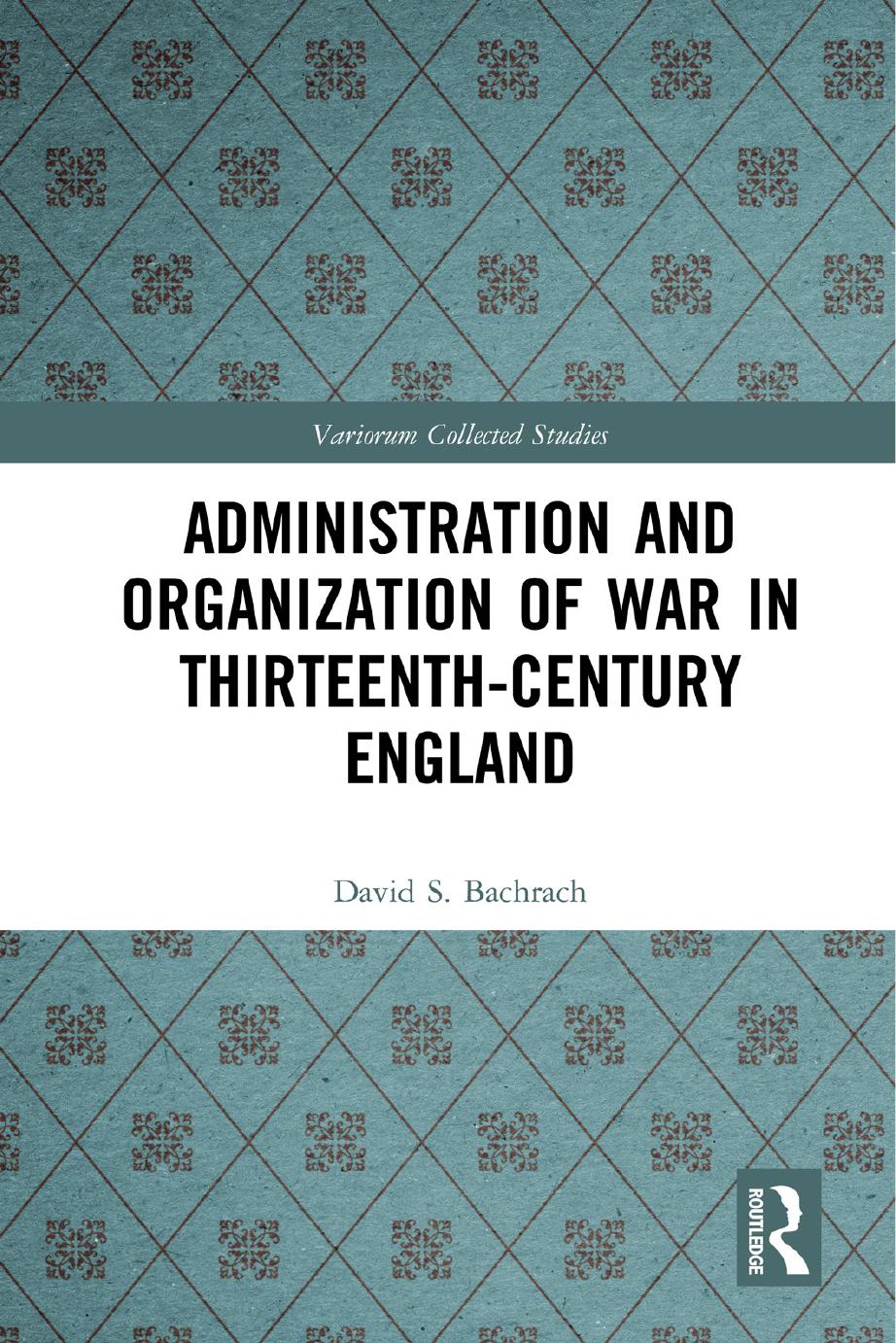
Author:David S. Bachrach [Bachrach, David S.]
Language: eng
Format: epub, pdf
Tags: History, General
ISBN: 9781000051216
Google: ixPWDwAAQBAJ
Publisher: Routledge
Published: 2020-03-11T21:19:22+00:00
The Second Welsh War (1282â1284)
The apparent success of the logistical operations in 1277 led royal planners again to use two independent systems to obtain supplies for the royal army. As had been done five years earlier, the royal government sent clerks and other officials from the court to oversee the purchase of supplies directly from producers at the county level using the royal right of purveyance. On 14 April 1282, for example, the Chancery sent a letter to the sheriff of Essex noting that John Maidstone was being sent to his county to acquire 1,500 quarters of wheat and 2,000 quarters of oats, peas, cheese, and other food supplies to be taken to the port of Winchelsea for transport to the royal army.35 At approximately 500 modern pounds to the quarter, the rate fixed by the royal government in 1296, this amounted to 1,750,000 pounds or 875 tons of supplies.36 The Chancery order required the sheriff to second one of his own men to the service of John Maidstone to help him in his work, and to use the kingâs revenues within the county to pay for the food supplies. In the present context, it is important to note that the sheriff and his man also were to find the transport necessary to get the supplies to Winchelsea.37 Similar orders were sent to the sheriffs of Surrey, Sussex, Kent, and Southampton.38 Some of the costs for the purchase and transport of these supplies can be traced through the pipe rolls for the war years. Sheriff Roger Springhouse of Shropshire, for example, was credited at the Exchequer for £17 he spent on the purchase and transport of grain (frumentum) from Shropshire to the royal army at Aberconway in Wales, a distance of 140 kilometers from the county seat at Shrewsbury.39
35. Welsh Rolls, 217.
36. Concerning the weight of the quarter, see Ronald Edward Zupko, British Weights and Measures: A History from Antiquity to the Seventeenth Century (Madison, WI, 1977), 22. Michael Prestwich, âVictualling estimates for English Garrisons in Scotland during the early Fourteenth Centuryâ, The English Historical Review 82 (1967), 536â543, here 537, suggests a quarter weight of 380 pounds of 16 ounces each.
37. Welsh Rolls, 117. For a brief overview of the logistical operations for the Second Welsh War of 1282â1284, see Prestwich, War, Politics and Finance, 119â120.
38. Welsh Rolls, 217.
39. National Archives E372/28 6r.
In addition to mobilizing the efforts of his sheriffs, the kingâs men also continued to exploit royal control over those church lands that the government held in the absence of duly elected abbots and bishops. On 10 April 1282, therefore, the Chancery ordered the royal administrators at Winchester to procure 1000 quarters of wheat, 600 quarters of oats, and 200 quarters of barley. Again, the locally based officials were responsible for transporting all of this grain to Chester for shipment to the royal army.40
40. CCR 1279â1288, 150.
However, in addition to requiring royal officials at the local level to purchase and ship supplies to troops in Wales and
Download
Administration and Organization of War in Thirteenth-Century England by David S. Bachrach.pdf
This site does not store any files on its server. We only index and link to content provided by other sites. Please contact the content providers to delete copyright contents if any and email us, we'll remove relevant links or contents immediately.
| Africa | Americas |
| Arctic & Antarctica | Asia |
| Australia & Oceania | Europe |
| Middle East | Russia |
| United States | World |
| Ancient Civilizations | Military |
| Historical Study & Educational Resources |
Room 212 by Kate Stewart(5211)
The Crown by Robert Lacey(4886)
Endurance: Shackleton's Incredible Voyage by Alfred Lansing(4871)
The Iron Duke by The Iron Duke(4430)
The Rape of Nanking by Iris Chang(4285)
Joan of Arc by Mary Gordon(4181)
Killing England by Bill O'Reilly(4069)
Say Nothing by Patrick Radden Keefe(4066)
I'll Give You the Sun by Jandy Nelson(3526)
Shadow of Night by Deborah Harkness(3442)
Hitler's Monsters by Eric Kurlander(3417)
Eleanor & Park by Rainbow Rowell(3287)
Blood and Sand by Alex Von Tunzelmann(3264)
Mary, Queen of Scots, and the Murder of Lord Darnley by Alison Weir(3261)
Darkest Hour by Anthony McCarten(3192)
Margaret Thatcher: The Autobiography by Thatcher Margaret(3139)
Book of Life by Deborah Harkness(3006)
Red Famine: Stalin's War on Ukraine by Anne Applebaum(2986)
The One Memory of Flora Banks by Emily Barr(2921)
