Murder in Boston by Ken Englade
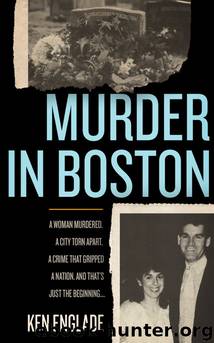
Author:Ken Englade [Englade, Ken]
Language: eng
Format: epub
ISBN: 9781626815018
Publisher: Diversion Books
Published: 2014-11-11T00:00:00+00:00
Chapter 14
Throughout metro Boston, it seemed, the reaction to these new developments was universal: shock and disbelief. The public, unaware that Matthew was going to speak to the authorities, still thought of Chuck as a brave survivor, a heroic victim of inner-city crime. The initial shock, however, quickly gave way to widespread anger. People who had followed developments in the case avidly through the media, who had shed tears when they heard Chuck’s eulogy for his dead wife, who had shed more tears when the infant Christopher died, who suffered when news of Chuck’s second operation was disseminated, felt frustrated and cheated. One Boston psychologist, who had no direct connection to the case, said that when his clients came to see him about their own problems, they were much more interested in spending their expensive and valuable time talking about how outraged they were by Chuck’s apparent deception.
The people of Boston, it appeared, felt they had a stake in Chuck’s future, and when it looked as though everything he said had been a lie, they were left with terrible feelings of resentment and pain. They were looking for someone to tell them not just what had happened, but why. They hungered for an explanation of how such a clean-cut family man like Chuck—and he had certainly been portrayed in that fashion by the media up till then—could have done what the media was now saying he did. For the Boston media, the explanation was simple: Chuck was an archfiend, the worst kind of monster, and the kind that was hardest to detect. He was, as the media were later to classify him, a sociopath, one of the tribe whose infamous members included John Wayne Gacy, Ted Bundy, and Jeffrey McDonald.
The Herald was the first to promote this new and interesting angle. Chuck’s body had no sooner been pulled from the water than reporter Susan Brink rang Jack Levin, a sociologist at Northeastern University who has attained a considerable amount of fame from books and appearances on talk shows. She asked for an instant psychological diagnosis. Most experts, when called by a reporter begging for a quote, feel obligated to say something. Levin, not surprisingly, complied. Chuck, he said, referring to the call to state police, “playacted that dramatic sequence of events over the telephone.” From that moment on, Levin asserted, Chuck had one goal in mind: fool the police and the public.
Without ever actually labeling Chuck a sociopath (which for all practical purposes is synonymous with the older, less acceptable term psychopath), Levin strongly implied that he was one. Others, in later days, would not be so delicate. They would speak openly of “that sociopath who killed his wife and himself,” with no way to prove any of the three statements. Presumably basing his comments about Chuck on what he had learned through the media, Levin launched into an explanation to keep the Herald’s reading public happy. “Sociopaths,” he said, “don’t have the capacity for remorse, for empathy. They’re very manipulative, very concerned about how they present themselves.
Download
This site does not store any files on its server. We only index and link to content provided by other sites. Please contact the content providers to delete copyright contents if any and email us, we'll remove relevant links or contents immediately.
| Anthropology | Archaeology |
| Philosophy | Politics & Government |
| Social Sciences | Sociology |
| Women's Studies |
The Great Music City by Andrea Baker(33770)
Cecilia; Or, Memoirs of an Heiress — Volume 1 by Fanny Burney(32726)
Cecilia; Or, Memoirs of an Heiress — Volume 2 by Fanny Burney(32090)
Cecilia; Or, Memoirs of an Heiress — Volume 3 by Fanny Burney(32068)
We're Going to Need More Wine by Gabrielle Union(19180)
All the Missing Girls by Megan Miranda(16748)
For the Love of Europe by Rick Steves(14949)
Pimp by Iceberg Slim(14805)
Bombshells: Glamour Girls of a Lifetime by Sullivan Steve(14226)
Norse Mythology by Gaiman Neil(13580)
Talking to Strangers by Malcolm Gladwell(13562)
Fifty Shades Freed by E L James(13362)
Mindhunter: Inside the FBI's Elite Serial Crime Unit by John E. Douglas & Mark Olshaker(9535)
Crazy Rich Asians by Kevin Kwan(9425)
The Lost Art of Listening by Michael P. Nichols(7624)
Enlightenment Now: The Case for Reason, Science, Humanism, and Progress by Steven Pinker(7444)
The Four Agreements by Don Miguel Ruiz(6929)
Bad Blood by John Carreyrou(6750)
Weapons of Math Destruction by Cathy O'Neil(6487)
