A Short History of the Russian Revolution by Swain Geoffrey;
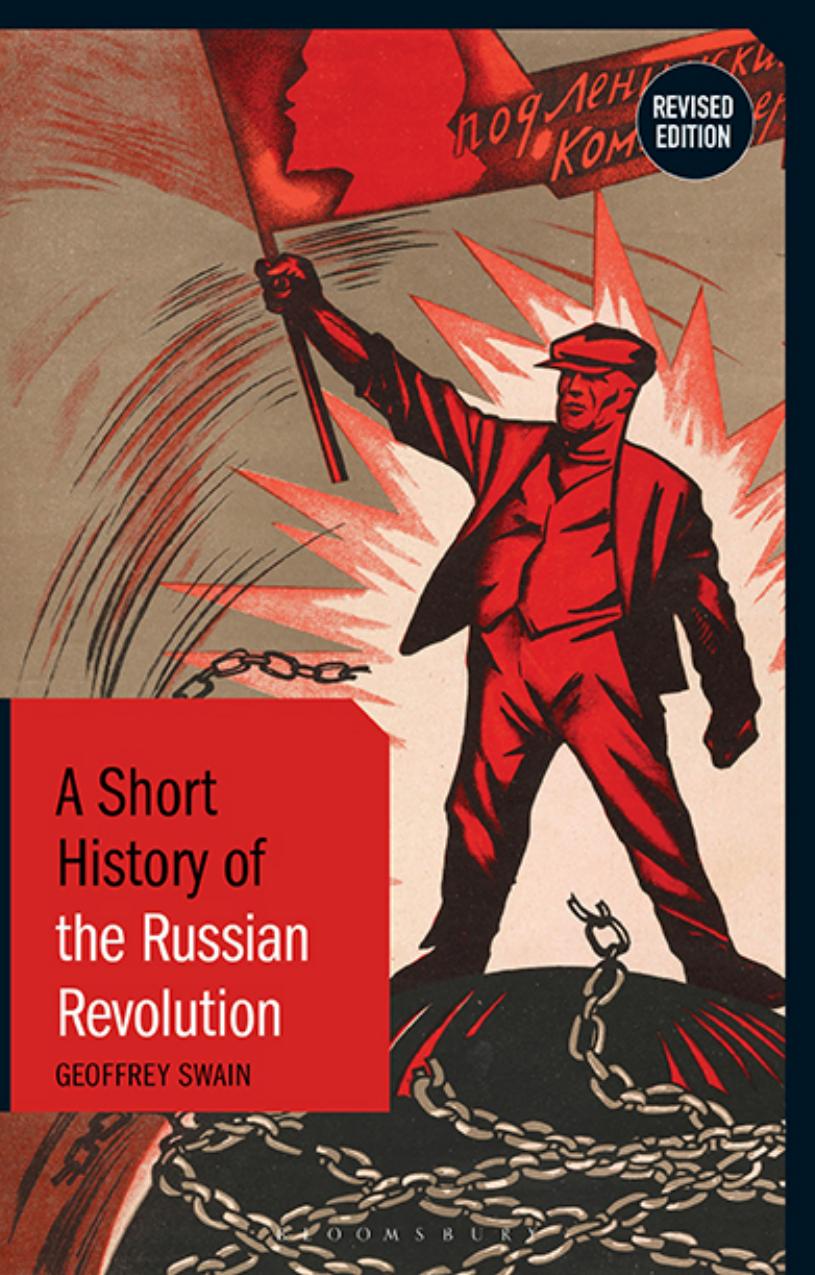
Author:Swain, Geoffrey;
Language: eng
Format: epub, pdf
Publisher: I.B.Tauris
INDUSTRIAL CRISIS
As Steve Smith has commented, ‘the revolutionary process of 1917 can only be understood in the context of a growing crisis of the economy […] a crisis in the economy underpinned the crisis in politics’. By September the output of manufactured goods throughout Russia had fallen by 40 per cent since the start of the year, and for many employers closing factories seemed the only option: between March and July, 568 textile and food-processing plants closed. Skilled workers in war-related industries had more success in defending their jobs; only 3 per cent of metal workers were unemployed in October.14 During the first three months of revolution, price rises of over 40 per cent were matched by wage increases of over 50 per cent; but from July onwards, even though nominal wages continued to rise dramatically, their real value began to decline significantly as inflation took hold.15 By the autumn, the supply situation was again acute. In February the government had set the bread ration at 500 grams per day; by October it had been reduced to 300 grams. During those months the state price for bread rose 230 per cent, while black-market prices skyrocketed. The black market, however, meant avoiding the daily bread queue, which could take 4–5 hours a day. In this rapidly worsening situation it was often the intervention of the factory committees that restored an element of stability. At the end of August, the management of the Putilov Works called for 10,000 redundancies: the factory committee demanded talks and reduced the redundancies to 3,200 by agreeing to accept a reduced level of redundancy pay and mediation from the Soviet; it was also agreed that all redundancies would be voluntary, after Bolshevik pressure put a stop to a move by some members of the factory committee to meet the redundancies by concentrating the dismissals on women. Nevertheless, as summer turned to autumn the Putilov Works was effectively operating at only one-third capacity and that was only maintained after another initiative by the factory committee – it was the factory committee which set about ensuring production by modifying the coke boilers so that they could use wood. Workers from the Pipe Factory, and from many other factories in the capital, were sent to southern Russia to scout for cargoes of coal stranded in railway sidings which could be brought to the capital.16
As the economic situation worsened, so the factory committees gained in influence. Although by the end of May the Bolsheviks had control of the Petrograd Trade Union Council, at the national level the trade unions were firmly under Menshevik control and unwilling to take up the radical demands emanating from the factory floor. The factory committees were not circumscribed in this way. The First Conference of Petrograd Factory Committees was held from 30 May to 3 June and asserted the right of factory committees to check company accounts. There was then a lull in activity until a second Conference was held on 7–12 August, a third Conference
Download
A Short History of the Russian Revolution by Swain Geoffrey;.pdf
This site does not store any files on its server. We only index and link to content provided by other sites. Please contact the content providers to delete copyright contents if any and email us, we'll remove relevant links or contents immediately.
| Africa | Americas |
| Arctic & Antarctica | Asia |
| Australia & Oceania | Europe |
| Middle East | Russia |
| United States | World |
| Ancient Civilizations | Military |
| Historical Study & Educational Resources |
The Sympathizer by Viet Thanh Nguyen(4470)
The Rape of Nanking by Iris Chang(4286)
World without end by Ken Follett(3525)
Ants Among Elephants by Sujatha Gidla(3508)
Blood and Sand by Alex Von Tunzelmann(3264)
Japanese Design by Patricia J. Graham(3238)
The Queen of Nothing by Holly Black(2705)
City of Djinns: a year in Delhi by William Dalrymple(2600)
India's Ancient Past by R.S. Sharma(2506)
Foreign Devils on the Silk Road: The Search for the Lost Treasures of Central Asia by Peter Hopkirk(2500)
Tokyo by Rob Goss(2490)
Inglorious Empire by Shashi Tharoor(2477)
In Order to Live: A North Korean Girl's Journey to Freedom by Yeonmi Park(2419)
Tokyo Geek's Guide: Manga, Anime, Gaming, Cosplay, Toys, Idols & More - The Ultimate Guide to Japan's Otaku Culture by Simone Gianni(2416)
India's biggest cover-up by Dhar Anuj(2391)
The Great Game: On Secret Service in High Asia by Peter Hopkirk(2383)
Goodbye Madame Butterfly(2300)
Batik by Rudolf Smend(2230)
Living Silence in Burma by Christina Fink(2102)
