This Is Your Mind on Plants by Michael Pollan
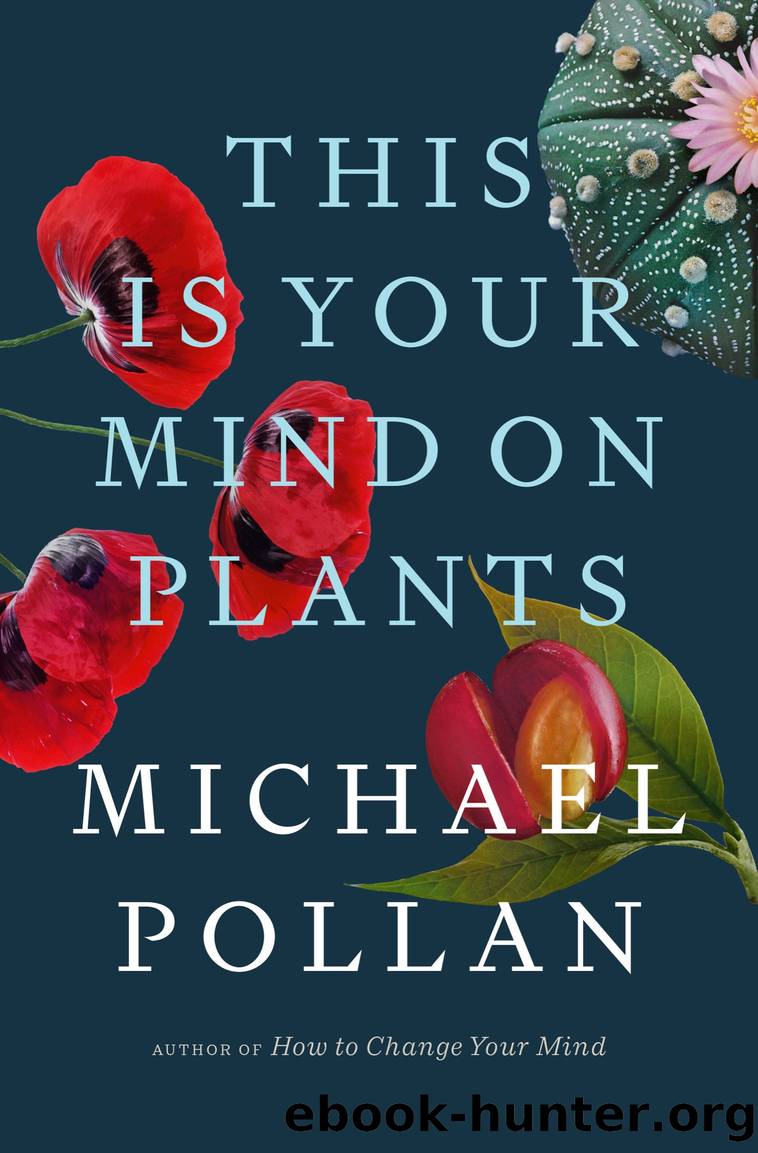
Author:Michael Pollan [Pollan, Michael]
Language: eng
Format: epub
Publisher: Penguin Publishing Group
Published: 2021-07-06T00:00:00+00:00
* * *
â
Our story about the cup of âconcentrated sunshineâ does seem to be darkening, and Iâm afraid it will darken further before it is over. A case can be made that coffee and tea did make a substantial, positive contribution to the advance of quote-unquote âcivilizationâ in the West, if by that we mean the various blessings of culture and capitalism, including the arts and sciences and the standard of living. But just as consumers of caffeine eventually must pay a biological price for the energy supplied by their drug of choice, an economic and even moral price has been paid as well. Almost from the start, the blessings of coffee and tea in the West were inextricably bound up with the sins of slavery and imperialism, in a global system of production organized with such brutal rationality that it could only have been fueled byâwhat else?âcaffeine itself.
Coffee and tea, as commodities produced in the global South to be consumed in the North, entangled all who drank them in an intricate new web of international economic relationsâspecifically colonialism and imperialism. The spice tradeâanother vibrant market in plant stimulantsâpreceded the caffeine trade by a few centuries, but it was minuscule by comparison and, on the consuming end, mainly involved the affluent.
By the end of the eighteenth century, tea was being consumed daily by just about everyone in England; it became the most important commodity traded by the British East India Company, accounting for an estimated 5 percent of the nationâs gross national product. âIt appears a very strange thing,â David Davies, an English cleric, observed in the late 1700s, âthat the common people of any European nation should be obliged to use, as part of their daily diet, two articles imported from opposite sides of the earth.â
The two articles Davies had in mind were tea and sugar, which became paired in England soon after teaâs introductionâsomewhat surprisingly, since tea in China was never sweetened. No one knows exactly why the practice took root, but the tea imported by Great Britain tended to be bitter and, as a hot beverage, could readily absorb large amounts of sugar. In fact, one of the principal uses of sugar in Britain was as a sweetener of tea, and the custom drove a substantial increase in sugar consumptionâwhich in turn drove an expansion of slavery to run the sugar plantations of the Caribbean. (An estimated 70 percent of the slave trade supported sugar production.) Coffee was even more directly implicated in the institution of slavery, especially in Brazil, where coffee growers imported large numbers of slaves from Africa to work on their plantations. How many tea and coffee drinkers in Europe had any idea that their sober and civilized habit rested on the back of such brutality?
The British East India Companyâs tea trade with China bore a moral stain of another kind. Since the company had to pay for tea in sterling, and China had little interest in English goods, England began running a ruinous trade deficit with China.
Download
This site does not store any files on its server. We only index and link to content provided by other sites. Please contact the content providers to delete copyright contents if any and email us, we'll remove relevant links or contents immediately.
Unwinding Anxiety by Judson Brewer(72970)
The Art of Coaching by Elena Aguilar(53156)
The Fast Metabolism Diet Cookbook by Haylie Pomroy(21125)
Rewire Your Anxious Brain by Catherine M. Pittman(18628)
Healthy Aging For Dummies by Brent Agin & Sharon Perkins RN(17032)
Talking to Strangers by Malcolm Gladwell(13336)
The Art of Thinking Clearly by Rolf Dobelli(10400)
Mindhunter: Inside the FBI's Elite Serial Crime Unit by John E. Douglas & Mark Olshaker(9305)
Crazy Rich Asians by Kevin Kwan(9267)
The Compound Effect by Darren Hardy(8914)
Tools of Titans by Timothy Ferriss(8356)
Periodization Training for Sports by Tudor Bompa(8240)
Becoming Supernatural by Dr. Joe Dispenza(8191)
Wonder by R. J. Palacio(8092)
Crystal Healing for Women by Mariah K. Lyons(7917)
Bodyweight Strength Training by Jay Cardiello(7899)
Change Your Questions, Change Your Life by Marilee Adams(7725)
Therapeutic Modalities for Musculoskeletal Injuries, 4E by Craig R. Denegar & Ethan Saliba & Susan Saliba(7708)
Nudge - Improving Decisions about Health, Wealth, and Happiness by Thaler Sunstein(7684)
