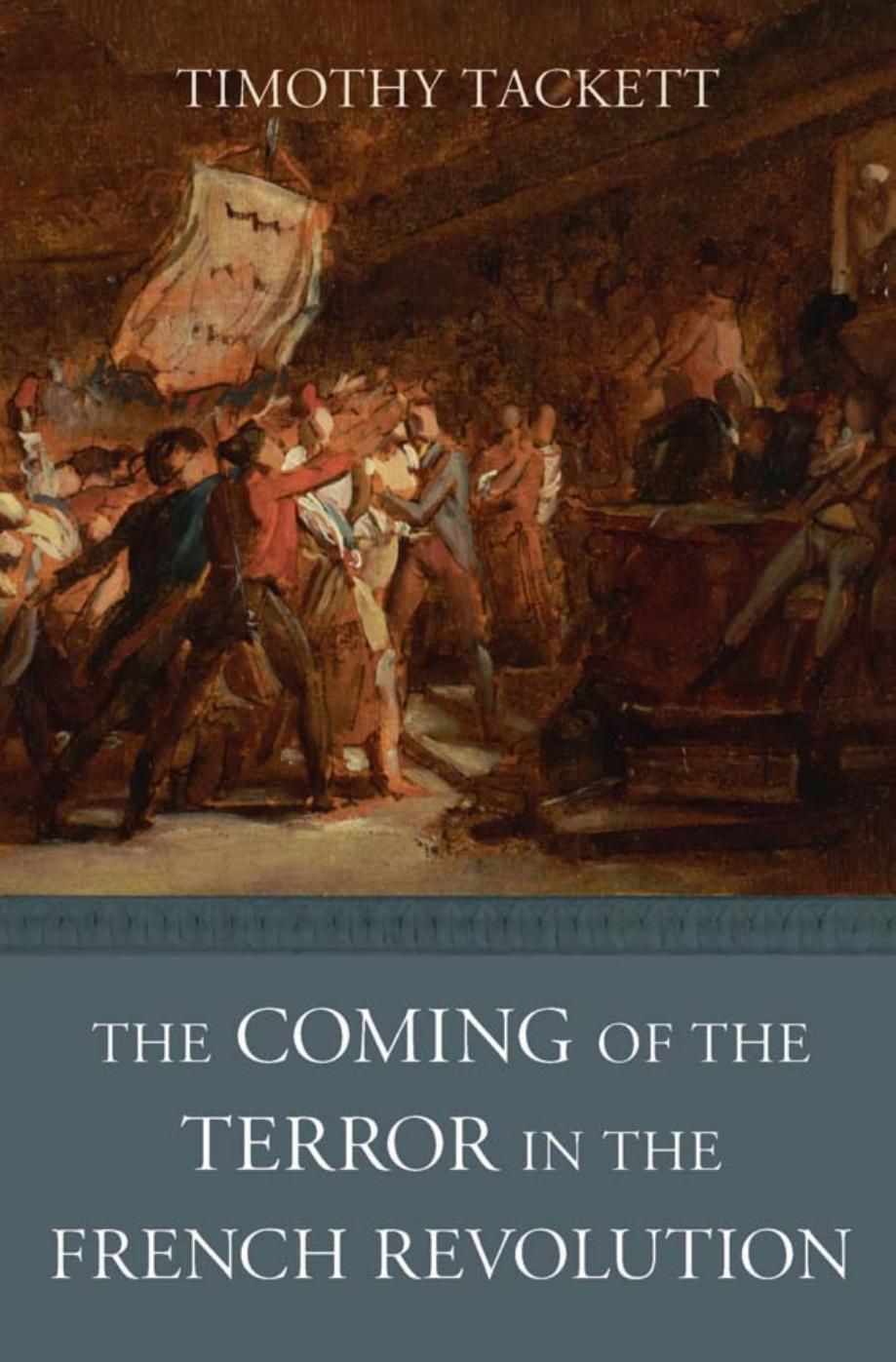
The Coming of the Terror in the French Revolution by Timothy Tackett
Author:Timothy Tackett
Language: eng
Format: epub, pdf
Publisher: Harvard University Press
A Point of No Return?
In his annual New Year’s message to his brother, Roubaud reflected back on the year 1792: “What year has ever lasted so long and been so filled with events as that which has just come to an end? What year will so go down in history? And now that it is finally over, should we cheer or lament?”97
Roubaud did not specify the events of the year that stood out most in his mind. But he must have reflected back on the previous summer, so filled with violence and terror. He must also have considered the first four months of the new National Convention. The abolition of the monarchy and the creation of a Republic were signal moments in the history of France, achievements that would have been scarcely conceivable just three years earlier. The weeks that followed had seen a remarkable series of victories over the combined forces of Prussia and Austria, with sweeping advances by the Republican armies through Germany, Belgium, Switzerland, and Savoy. The sudden turn of events had thrilled virtually all the patriots—including Roubaud himself—regardless of their political positions. It had led to an almost millenarian vision of the imminent liberation of the whole of Europe and the demise of kings and “tyrants” everywhere. It had also influenced their perception of their own king and the rhetoric deployed in describing him. It confirmed their suspicions that it was Louis’ treachery that had previously prevented the French forces from advancing. It had thus been a significant factor—though not the only factor—in the decision aggressively to pursue the judgment of “Louis Capet.”
The condemnation and execution of the king soon after the new year began was not the first case of capital punishment imposed by the government for a political crime. Several “counterrevolutionaries” had been guillotined in the summer of 1792 during the First Terror. But the killing of a king had a vastly greater symbolic import and emotional impact. The French monarch had long been a quasi-mythical figure. Even if most elites in the eighteenth century no longer believed he had supernatural powers, he had maintained the image of a father figure, an image that may even have been strengthened during the early Revolution—at least until the fiasco of his flight to Varennes.98
Many Conventionnels undoubtedly hoped—in the words of Jean Debry—“that the tomb of the tyrant will be that of our hatreds, that the death of the king will bring the death of all factions.” But the execution of January 21 seemed only to exacerbate those animosities and make them more toxic. If one could justify the killing of a father-king, could one not justify the killing of almost anyone of whose evil intentions one had become convinced? The regicide of 1793 was “a traumatic and unprecedented shock,” an event that would help obliterate the previously conceived threshold of political violence and extend the boundaries of what was morally acceptable and thinkable.99 With the king eliminated, the conspiracy obsession would now focus more than ever before on potential enemies among the patriots themselves.
Download
The Coming of the Terror in the French Revolution by Timothy Tackett.pdf
This site does not store any files on its server. We only index and link to content provided by other sites. Please contact the content providers to delete copyright contents if any and email us, we'll remove relevant links or contents immediately.
| Africa | Americas |
| Arctic & Antarctica | Asia |
| Australia & Oceania | Europe |
| Middle East | Russia |
| United States | World |
| Ancient Civilizations | Military |
| Historical Study & Educational Resources |
Cecilia; Or, Memoirs of an Heiress — Volume 1 by Fanny Burney(32549)
Cecilia; Or, Memoirs of an Heiress — Volume 2 by Fanny Burney(31948)
Cecilia; Or, Memoirs of an Heiress — Volume 3 by Fanny Burney(31932)
The Secret History by Donna Tartt(19058)
Sapiens: A Brief History of Humankind by Yuval Noah Harari(14371)
Leonardo da Vinci by Walter Isaacson(13319)
The Radium Girls by Kate Moore(12019)
Sapiens by Yuval Noah Harari(5366)
How Democracies Die by Steven Levitsky & Daniel Ziblatt(5216)
The Wind in My Hair by Masih Alinejad(5092)
Homo Deus: A Brief History of Tomorrow by Yuval Noah Harari(4909)
Endurance: Shackleton's Incredible Voyage by Alfred Lansing(4769)
Man's Search for Meaning by Viktor Frankl(4586)
The Silk Roads by Peter Frankopan(4526)
Millionaire: The Philanderer, Gambler, and Duelist Who Invented Modern Finance by Janet Gleeson(4469)
The Rape of Nanking by Iris Chang(4203)
Joan of Arc by Mary Gordon(4103)
The Motorcycle Diaries by Ernesto Che Guevara(4090)
Stalin by Stephen Kotkin(3958)
