How Was It Possible?: A Holocaust Reader by Peter Hayes
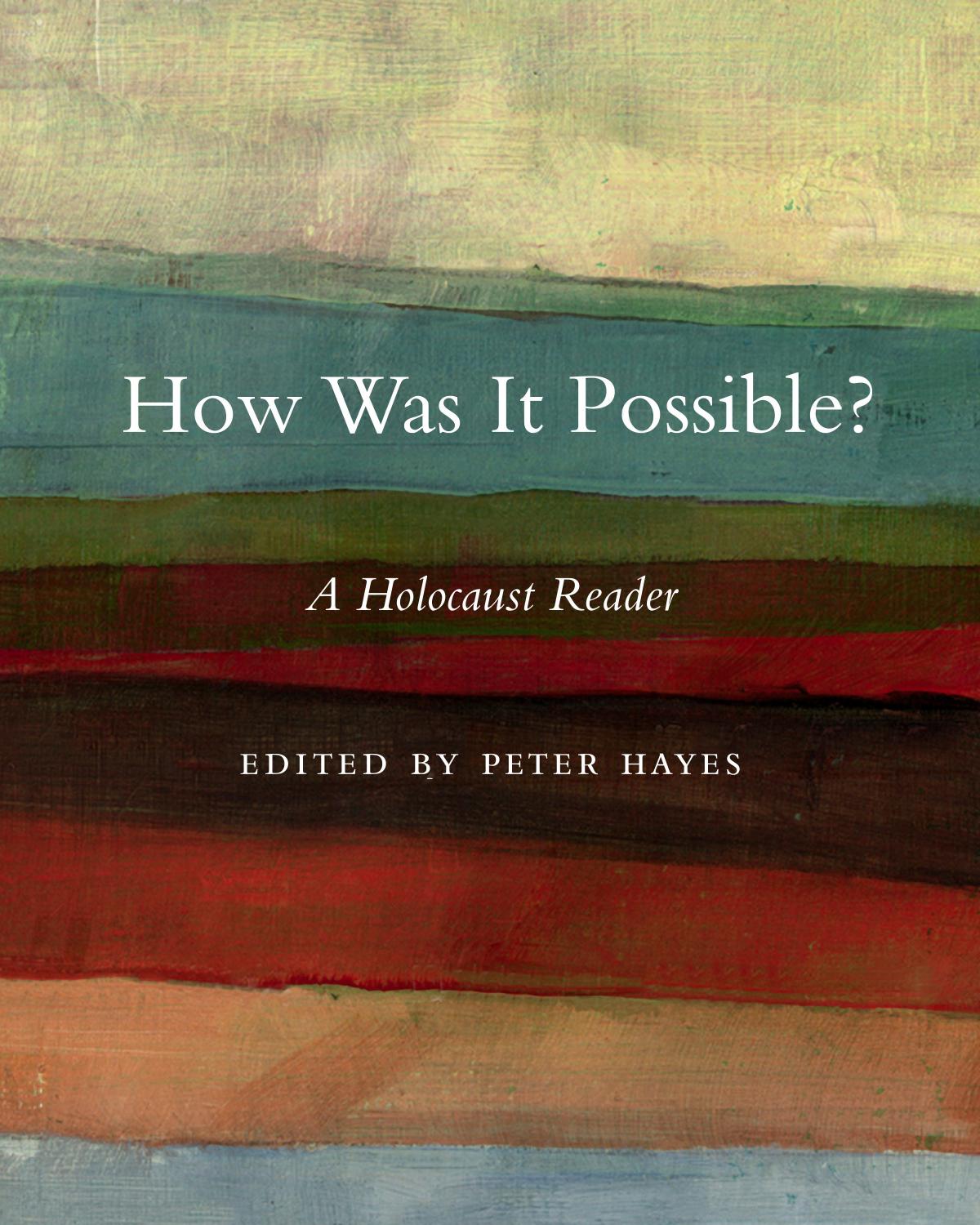
Author:Peter Hayes [Hayes, Peter]
Language: eng
Format: epub, pdf
Tags: Jewish Studies, Germany, Europe, History, Jewish, Social Science, World War II, Military, Discrimination & Race Relations, HIS043000 History / Holocaust, Holocaust
ISBN: 9780803274693
Google: XmPuBgAAQBAJ
Amazon: 0803274696
Publisher: U of Nebraska Press
Published: 2015-04-01T05:58:23.128548+00:00
By his own admission, Stahlecker’s Einsatzgruppe organized the early Lithuanian pogroms.34 Why were locals in the western territories of the Soviet Union willing to do the SS’s dirty work? Personal aggrandizement and enrichment, long-standing antisemitism, private scores to settle, jealousy and currying favor for national independence (a forlorn hope) were primary reasons, but “the more recent terror exerted by the Communists” was also a significant factor, especially in Lithuania and the Ukraine, where the SS’s pogrom efforts were most successful.
“When Lithuanian and Latvian forces were attached to the execution units,” Stahlecker wrote of the areas under his authority, “the first to be chosen were those who had had members of their families and relatives killed or deported by the Russians.”35 The deportations in particular had poisoned Jewish-Gentile relations in Lithuania. Jews were significantly underrepresented in the Lithuanian NKVD, not surprising given Russian antisemitism and Communist Party hostility to religion: of 279 Lithuanian NKVD senior officers, 148 were Russians and 111 were ethnic Lithuanians; the remaining 20 included Jews as well as other nationalities.36 One week before Barbarossa, on the night of July 14, the NKVD had seized and deported to the Russian gulag some 35,000 Lithuanian citizens. Slightly more than half of the deportees were ethnic Lithuanians, the other half Jews and Poles, but the Lithuanian nationalists had blamed the deportations on the “Bolshevik” Jews.37 On the night before Barbarossa, William Mishell and his friend Nahum Shoham had stayed up late discussing the impact of these deportations on the Kaunas Jewish community: “Our conversation inevitably turned to the deportations. It worried us, because these deportations had suddenly created enormous strains on the Lithuanian society and increased very perceptibly the antisemitic feelings.”38
Despite the deportations, Barbarossa surprised the NKVD, whose jails and prisons in the invaded western territories were crowded with political prisoners. Rather than release their prisoners as they hastened to retreat during the first week of the war, the Soviet secret police had simply slaughtered them. NKVD prisoner executions in the first week after Barbarossa totaled some ten thousand in the western Ukraine and more than nine thousand in Vinnitsa, eastward toward Kiev; comparable numbers of prisoners were executed in eastern Poland, Byelorussia, Lithuania, Latvia, and Estonia.39 These areas had already sustained losses numbering in the hundreds of thousands from the Stalinist purges of 1937–38. “It was not only the numbers of the executed,” historian Yury Boshyk writes of the evacuation murders, “but also the manner in which they died that shocked the populace. When the families of the arrested rushed to the prisons after the Soviet evacuation, they were aghast to find bodies so badly mutilated that many could not be identified. It was evident that many of the prisoners had been tortured before death; others were killed en masse.”40 In some cases, cells crowded with prisoners had been dynamited, badly mutilating the remains.
The conquering Germans opened up the prisons and jails and invited the communities to collect their dead, organizing the events to implicate local Jewish citizens in the murders.
Download
How Was It Possible?: A Holocaust Reader by Peter Hayes.pdf
This site does not store any files on its server. We only index and link to content provided by other sites. Please contact the content providers to delete copyright contents if any and email us, we'll remove relevant links or contents immediately.
| Africa | Americas |
| Arctic & Antarctica | Asia |
| Australia & Oceania | Europe |
| Middle East | Russia |
| United States | World |
| Ancient Civilizations | Military |
| Historical Study & Educational Resources |
Cecilia; Or, Memoirs of an Heiress — Volume 1 by Fanny Burney(32561)
Cecilia; Or, Memoirs of an Heiress — Volume 2 by Fanny Burney(31958)
Cecilia; Or, Memoirs of an Heiress — Volume 3 by Fanny Burney(31944)
The Secret History by Donna Tartt(19097)
Sapiens: A Brief History of Humankind by Yuval Noah Harari(14392)
Leonardo da Vinci by Walter Isaacson(13339)
The Radium Girls by Kate Moore(12033)
Sapiens by Yuval Noah Harari(5374)
How Democracies Die by Steven Levitsky & Daniel Ziblatt(5221)
The Wind in My Hair by Masih Alinejad(5100)
Homo Deus: A Brief History of Tomorrow by Yuval Noah Harari(4921)
Endurance: Shackleton's Incredible Voyage by Alfred Lansing(4785)
Man's Search for Meaning by Viktor Frankl(4608)
The Silk Roads by Peter Frankopan(4537)
Millionaire: The Philanderer, Gambler, and Duelist Who Invented Modern Finance by Janet Gleeson(4481)
The Rape of Nanking by Iris Chang(4217)
Joan of Arc by Mary Gordon(4116)
The Motorcycle Diaries by Ernesto Che Guevara(4105)
Stalin by Stephen Kotkin(3970)
