Hegemony and Education Under Neoliberalism by Mayo Peter;
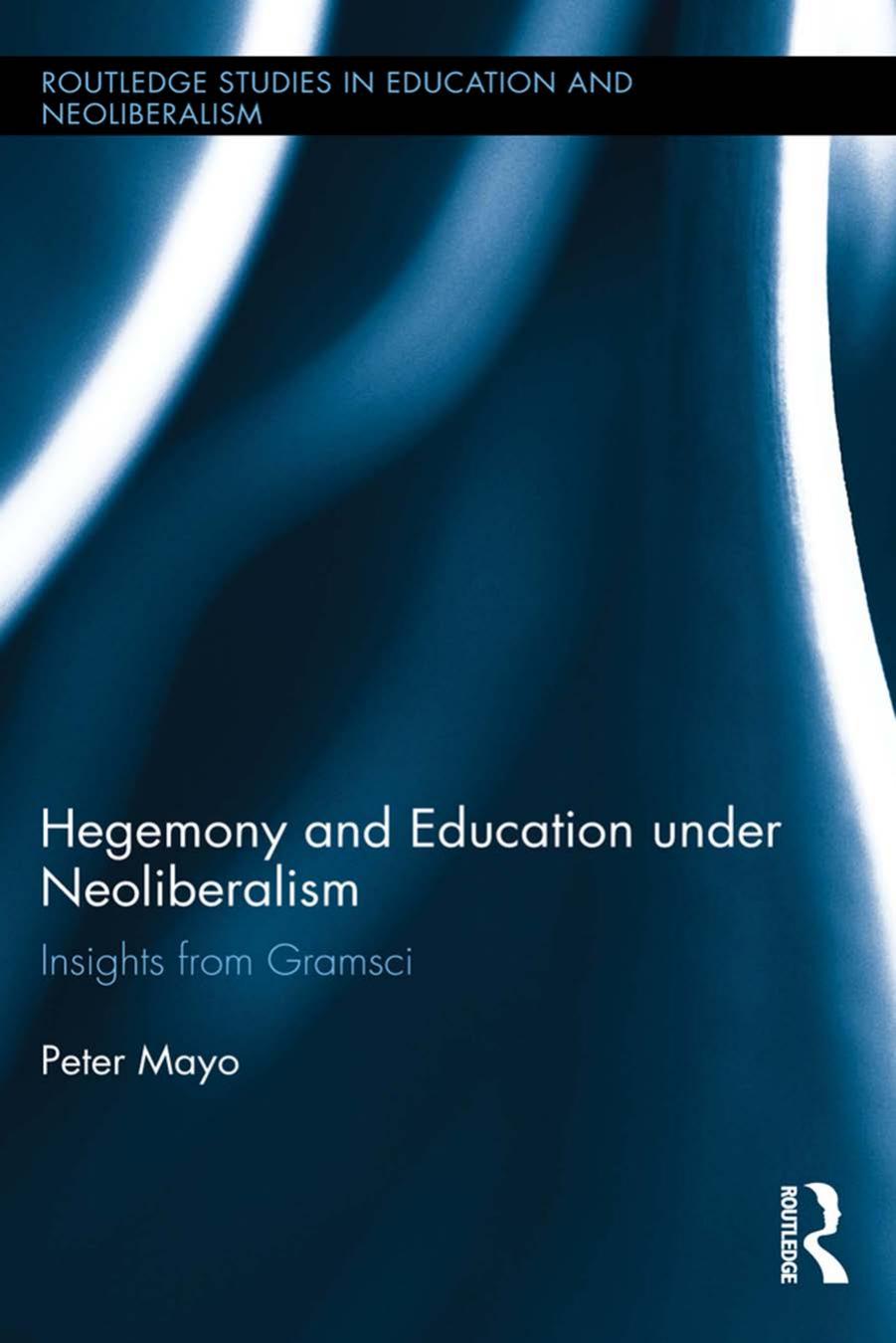
Author:Mayo, Peter; [Peter Mayo]
Language: eng
Format: epub, pdf
ISBN: 1987306
Publisher: Taylor and Francis
Although, for Gramsci, it is better to provide children with information than encourage them to engage in dialogue in a vacuum, he nevertheless regards the teacher who engages in this process, one of instruction, as “mediocre” and one who does not help the children become “better educated”, a point made in the earlier discussion on adult educators but which is worth reiterating for the purpose of this argument. And Gramsci seems to have had little time for the mediocre in his life, especially mediocre teachers. He holds some of those who taught him at the liceo responsible, through their mediocre teaching, for his moving away, when allowed the choice, from the ‘exact sciences’ and Mathematics, for which he had a predilection as a boy, towards Greek (Borg et al., 2002b, p. 4).
The association between straightforward instruction and mediocrity reflects Gramsci’s views concerning ‘banking education’. After all, this is a writer who, elsewhere in his writings of the same period, advocated a reciprocal dialogical relationship between intellectuals and masses. It should be a relationship in which “every teacher is always a pupil and every pupil a teacher” (Gramsci, 1971a, pp. 349, 350). He repudiates the Leninist notion of a ‘top-down’ ‘vanguard’ transmission style and emphasises the reciprocal basis of consent.
The issue concerning the merits of Greek and Latin also warrants consideration. Here is another paradox and a point of contrast with a position associated with Lorenzo Milani’s pupils from the school of Barbiana. The Barbiana students preferred the learning of a contemporary history (say post-First World War) to the learning of a history concerning earlier periods (School of Barbiana, 1996, p. 26) in that they found in this history a much greater connection with life (ibid., p. 27). And here we have Gramsci apparently advocating the study of two dead languages for the rigour involved in bringing a corpse to life. But is he explicitly advocating the study of Greek and Latin? Alternatively, as part of an inquiry into how the bourgeoisie creates its own intellectuals, is he exploring the benefits this knowledge offered those who studied the two languages? In highlighting what he considers to have been the merits of the two subjects, Gramsci is merely making the point that there is need for an area or areas in the curriculum which would instill in the pupils a sense of rigour, the sort of rigour which will stand working-class children in good stead when in control of their own environment. This should not, of course, be taken to mean that Gramsci literally advocates the inclusion of Latin and Greek in a curriculum intended to be beneficial to the working class. On the contrary, he clearly states:
It will be necessary to replace Latin and Greek as the fulcrum of the formative school, and they will be replaced. But it will not be easy to deploy the new subject or subjects in a didactic form which gives equivalent results in terms of education and general personality-formation, from early childhood to the threshold of the adult choice of career.
Download
Hegemony and Education Under Neoliberalism by Mayo Peter;.pdf
This site does not store any files on its server. We only index and link to content provided by other sites. Please contact the content providers to delete copyright contents if any and email us, we'll remove relevant links or contents immediately.
The Art of Coaching Workbook by Elena Aguilar(51151)
Trainspotting by Irvine Welsh(21632)
Twilight of the Idols With the Antichrist and Ecce Homo by Friedrich Nietzsche(18617)
Fangirl by Rainbow Rowell(9225)
Periodization Training for Sports by Tudor Bompa(8247)
Change Your Questions, Change Your Life by Marilee Adams(7732)
This Is How You Lose Her by Junot Diaz(6869)
Asking the Right Questions: A Guide to Critical Thinking by M. Neil Browne & Stuart M. Keeley(5751)
Grit by Angela Duckworth(5593)
Red Sparrow by Jason Matthews(5462)
Paper Towns by Green John(5174)
Room 212 by Kate Stewart(5102)
Ken Follett - World without end by Ken Follett(4718)
Housekeeping by Marilynne Robinson(4434)
The Sports Rules Book by Human Kinetics(4377)
Double Down (Diary of a Wimpy Kid Book 11) by Jeff Kinney(4257)
Papillon (English) by Henri Charrière(4251)
The Motorcycle Diaries by Ernesto Che Guevara(4082)
Exercise Technique Manual for Resistance Training by National Strength & Conditioning Association(4054)
