Class Struggle in the New Testament by Robert J. Myles;
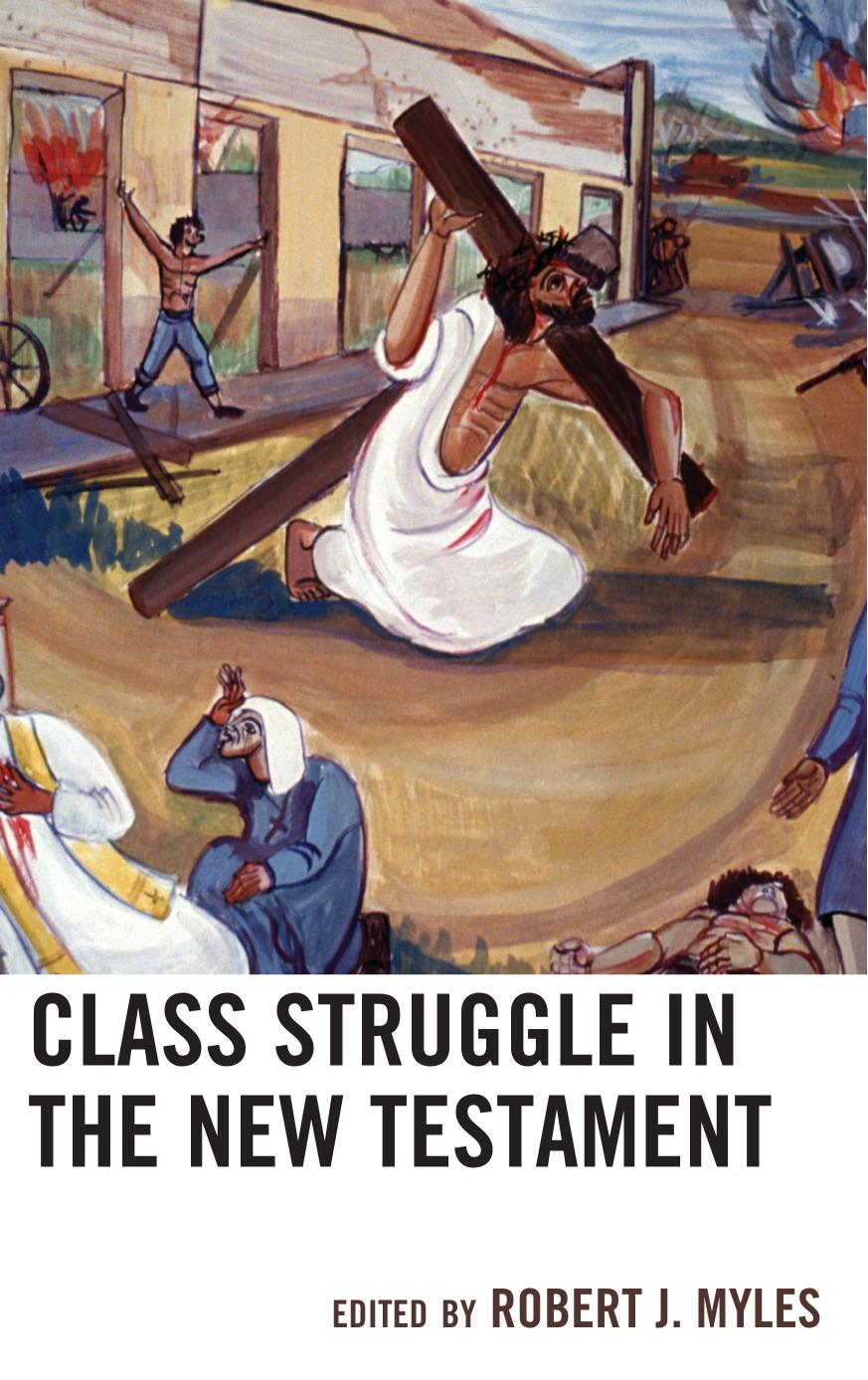
Author:Robert J. Myles; [Myles, Robert J.]
Language: eng
Format: epub, pdf
Publisher: Rowman & Littlefield Publishing
Published: 2018-12-11T16:00:00+00:00
Chapter Seven
Hand of the Master
Of Slaveholders and the Slave-Relation
Roland Boer and Christina Petterson
Since the work of G. E. M. de Ste. Croix,1 the question as to whether one can speak of class in the ancient Greco-Roman world should not be an issue. Nevertheless, at a recent annual meeting of the Society of Biblical Literature, there were several panels devoted to the topic of class, with many scholars dismissing it as a useless and reductive term in the name of a liberalist focus on the individual. Interestingly, several presentations began with a reference to an unnamed scholarly trend which had for a while disassociated class from its understanding as relations of production, and a given class’s relationship to the means of production, from which point the presenter then could go on to dismiss class for being unsophisticated in terms of its “lumping everyone together in one class.” Here, of course, we have the nub of the problem, because class as a socioeconomic concept receives its fundamental meaning from the relation of a given group to the means of production and their position in the relations of production. Once this framework disappears, class loses its point of reference. What we explore in this chapter addresses the question of how class is manifested in collections of ancient texts like the New Testament. That such literature does not simply provide a reflection or a window onto class should be obvious, for literature is an oblique lens, mediating its context in unexpected ways. We thus do not subscribe to the vulgarization of class to signify identity or status, but rather to a concept revealing socioeconomic relations, such as property, exploitation, and struggle.
With these points in mind, we begin by examining slaves in the Gospel parables, with a specific interest in the way slavery is abstracted so as to “interpellate”—or constitute as subjects—all believers as slaves. Our next step is to Paul, not so much his well-known slave metaphors but the material reality of slave-owning and slave deployment in the missionary activity of Paul and others. But how are we to understand Paul as slave-owner? This requires an examination of Roman law and practice, in which the slave—as thing (res)—lacks potestas and thereby agency, becoming the hand of the master.2
Download
Class Struggle in the New Testament by Robert J. Myles;.pdf
This site does not store any files on its server. We only index and link to content provided by other sites. Please contact the content providers to delete copyright contents if any and email us, we'll remove relevant links or contents immediately.
The Five People You Meet in Heaven by Mitch Albom(3575)
The Secret Power of Speaking God's Word by Joyce Meyer(3235)
Real Sex by Lauren F. Winner(3027)
Name Book, The: Over 10,000 Names--Their Meanings, Origins, and Spiritual Significance by Astoria Dorothy(2989)
The Holy Spirit by Billy Graham(2961)
0041152001443424520 .pdf by Unknown(2850)
How The Mind Works by Steven Pinker(2821)
ESV Study Bible by Crossway(2782)
Ancient Worlds by Michael Scott(2693)
Churchill by Paul Johnson(2590)
The Meaning of the Library by unknow(2579)
The ESV Study Bible by Crossway Bibles(2554)
The Gnostic Gospels by Pagels Elaine(2537)
MOSES THE EGYPTIAN by Jan Assmann(2419)
Jesus by Paul Johnson(2366)
City of Stairs by Robert Jackson Bennett(2360)
The Complete Dead Sea Scrolls in English (7th Edition) (Penguin Classics) by Geza Vermes(2293)
The Nativity by Geza Vermes(2234)
Ancient Near Eastern Thought and the Old Testament by John H. Walton(2227)
