Fasting and Eating for Health by Joel Fuhrman; Neal D. Barnard
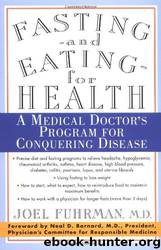
Author:Joel Fuhrman; Neal D. Barnard [Barnard, Joel Fuhrman; Neal D.]
Language: eng
Format: epub
Tags: Fasting, Health & Fitness, Nutrition, Diets, Medical, Diet Therapy, Therapeutic Use
ISBN: 9780312187194
Publisher: St. Martin's Press
Published: 1998-04-27T21:00:00+00:00
Chapter 6
Recovery from Diabetes Through Optimal
Nutrition
One in 20 people has diabetes in this country. Diabetes, our seventh leading cause of death, is also a nutritionally related disease, one that is both preventable and reversible through nutritional methods. Like many other chronic diseases, diabetes is increasing in prevalence in the United States.
There are basically two types of diabetes: type I, or childhood-onset diabetes, and type II, or adult-onset diabetes. In type I, which generally occurs earlier in life, children incur damage to the pancreas, the organ that produces and secretes insulin, so they have an insulin deficiency. In type II, the individual still produces near-normal levels of insulin, but the body is resistant to it, so the level of blood sugar, or glucose, rises. The end result is the same in both types of the disease: the individual has a high glucose level in the blood.
Both types of diabetes accelerate the aging of our bodies. Having diabetes greatly speeds up the development of atherosclerosis, or cardiovascular disease. Diabetes also ages and destroys the kidney and other body systems.
Forty thousand amputations per year are due to complications of diabetes. It is the leading cause of blindness in adults and of kidney failure.
Diabetics, regardless of the type, have abnormal blood lipids, meaning they have higher levels of triglycerides and lower levels of HDL (the "good"
cholesterol) in their blood than the general population. The overproduction of triglycerides in particular is probably related to the increased flux of glucose and fatty acid substrates to the liver.1 Unfortunately, at any given cholesterol or triglyceride level, diabetics have a much higher risk of coronary heart disease, compared to the nondiabetic population.
In both types of diabetes, the high glucose level in the blood damages the body. In conjunction with blood lipids, it inevitably causes a significant acceleration of the atherosclerotic process, hardening and narrowing the blood vessels: Atherosclerosis accounts for 80 percent of all diabetic deaths. Diabetics have more than four times as many heart attacks as nondiabetics. One third of all patients with insulin-dependent diabetes die of heart attacks before age 50.2
Diabetics should be made aware that they can protect themselves from becoming part of these morbid statistics. But diabetics are typically given the wrong recommendation by the professionals caring for them. You would expect that any dietary recommendations designed for diabetics would attempt to reduce the risk of a heart attack, stroke, or other cardiovascular event.
Unfortunately, this is not the case. In fact, the typical dietary recommendations suggested to diabetics by their doctors and dieticians have been shown to allow the advancement of athersclerosis in normal patients, let alone diabetics.3,4
99
Both interventional studies and large epidemiologic (population-based) studies have shown conclusively that certain diets promote cardiovascular disease and diabetes, and that other nutritional practices can prevent and reverse them.
The Lifestyle Heart Trial is just one of several studies that document that the standard recommendations (utilizing a diet in which 30 percent of calories come from fat) allow the progression of heart disease even in nondiabetic patients. These
Download
This site does not store any files on its server. We only index and link to content provided by other sites. Please contact the content providers to delete copyright contents if any and email us, we'll remove relevant links or contents immediately.
| Administration & Medicine Economics | Allied Health Professions |
| Basic Sciences | Dentistry |
| History | Medical Informatics |
| Medicine | Nursing |
| Pharmacology | Psychology |
| Research | Veterinary Medicine |
Dynamic Alignment Through Imagery by Eric Franklin(4305)
Body Love by Kelly LeVeque(3103)
Barron's AP Calculus by David Bock(1887)
EMT Exam For Dummies with Online Practice by Arthur Hsieh(1727)
The Juice Lady's Remedies for Asthma and Allergies by Cherie Calbom(1684)
Fitness Walking For Dummies by Liz Neporent(1611)
Flight by Elephant(1573)
Extremes: Life, Death and the Limits of the Human Body by Fong Kevin(1569)
McGraw-Hill Nurses Drug Handbook by Patricia Schull(1548)
The Natural First Aid Handbook by Brigitte Mars(1495)
Tell by Major Margaret Witt(1470)
Skin by Unknown(1463)
Seeing Voices by Oliver Sacks(1456)
The Yoga Bible by Christina Brown(1364)
Born to Walk by James Earls(1339)
Cracking the Nursing Interview by Jim Keogh(1332)
The Way to Divine Knowledge by William Law(1294)
First Aid for Colleges and Universities (10th Edition) by Mistovich Joseph J. & Limmer Daniel J. & Karren Keith J. & Hafen Brent Q(1293)
The Advantage by Lencioni Patrick M(1257)
