Capitalism's Last Stand? by Walden Bello
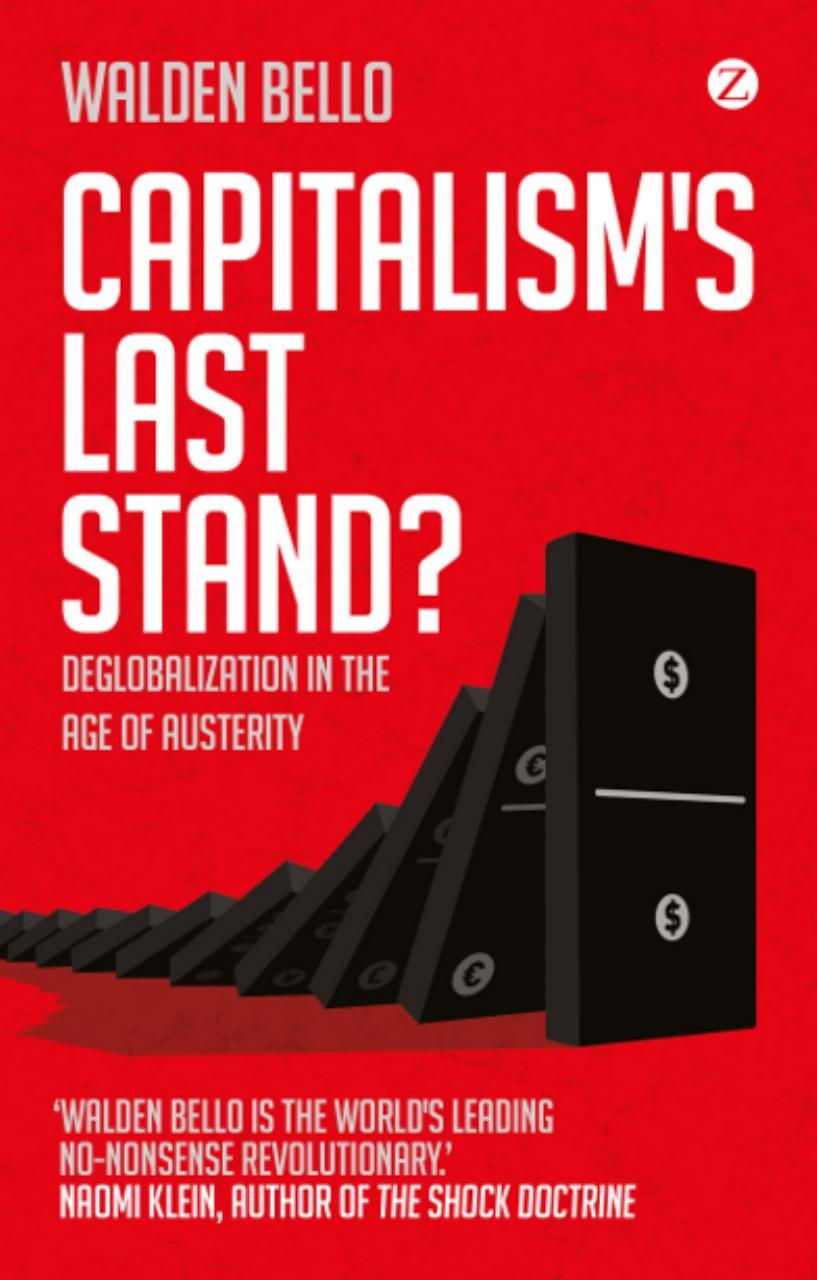
Author:Walden Bello [Bello, Walden]
Language: eng
Format: mobi, pdf
Publisher: Zed Books
Published: 2013-06-12T16:00:00+00:00
The role of trade
Compounding the negative impact of adjustment were unfair trade practices on the part of the EU and the United States. Trade liberalization allowed low-priced subsidized EU beef to enter and drive many West African and South African cattle raisers to ruin. With their subsidies legitimized by the WTO’s Agreement on Agriculture, US cotton growers offloaded their cotton on world markets at 20–55 percent of the cost of production, bankrupting West African and Central African cotton farmers in the process.28
These dismal outcomes were not accidental. As then-US agriculture secretary John Block put it at the start of the Uruguay Round of trade negotiations in 1986, ‘the idea that developing countries should feed themselves is an anachronism from a bygone era. They could better ensure their food security by relying on U.S. agricultural products, which are available, in most cases, at lower cost.’29
What Block did not say was that the lower cost of US products stemmed from subsidies that were becoming more massive each year, despite the fact that the WTO was supposed to phase out all forms of subsidy. From $367 billion in 1995, the first year of the WTO, the total amount of agricultural subsidies provided by developed-country governments rose to $388 billion in 2004. Subsidies now account for 40 percent of the value of agricultural production in the European Union (EU) and 25 percent in the United States.
The social consequences of structural adjustment cum agricultural dumping were predictable. According to Oxfam, the number of Africans living on less than a dollar a day more than doubled to 313 million people between 1981 and 2001 — or 46 percent of the whole continent. The role of structural adjustment in creating poverty, as well as severely weakening the continent’s agricultural base and consolidating import dependency, was hard to deny. As the World Bank’s chief economist for Africa admitted, ‘We did not think that the human costs of these programs could be so great, and the economic gains would be so slow in coming.’30
That was, however, a rare moment of candor. What was especially disturbing was that, as Oxford University political economist Ngaire Woods pointed out, the ‘seeming blindness of the Fund and Bank to the failure of their approach to sub-Saharan Africa persisted even as the studies of the IMF and the World Bank themselves failed to elicit positive investment effects.’31
Download
This site does not store any files on its server. We only index and link to content provided by other sites. Please contact the content providers to delete copyright contents if any and email us, we'll remove relevant links or contents immediately.
International Integration of the Brazilian Economy by Elias C. Grivoyannis(111078)
The Radium Girls by Kate Moore(12036)
Turbulence by E. J. Noyes(8057)
Nudge - Improving Decisions about Health, Wealth, and Happiness by Thaler Sunstein(7712)
The Black Swan by Nassim Nicholas Taleb(7137)
Rich Dad Poor Dad by Robert T. Kiyosaki(6646)
Pioneering Portfolio Management by David F. Swensen(6305)
Man-made Catastrophes and Risk Information Concealment by Dmitry Chernov & Didier Sornette(6029)
Zero to One by Peter Thiel(5808)
Secrecy World by Jake Bernstein(4756)
Millionaire: The Philanderer, Gambler, and Duelist Who Invented Modern Finance by Janet Gleeson(4483)
The Age of Surveillance Capitalism by Shoshana Zuboff(4310)
Skin in the Game by Nassim Nicholas Taleb(4257)
The Money Culture by Michael Lewis(4212)
Bullshit Jobs by David Graeber(4197)
Skin in the Game: Hidden Asymmetries in Daily Life by Nassim Nicholas Taleb(4012)
The Dhandho Investor by Mohnish Pabrai(3776)
The Wisdom of Finance by Mihir Desai(3754)
Blockchain Basics by Daniel Drescher(3586)
