Borderland Generation by Koerber Jeffrey;
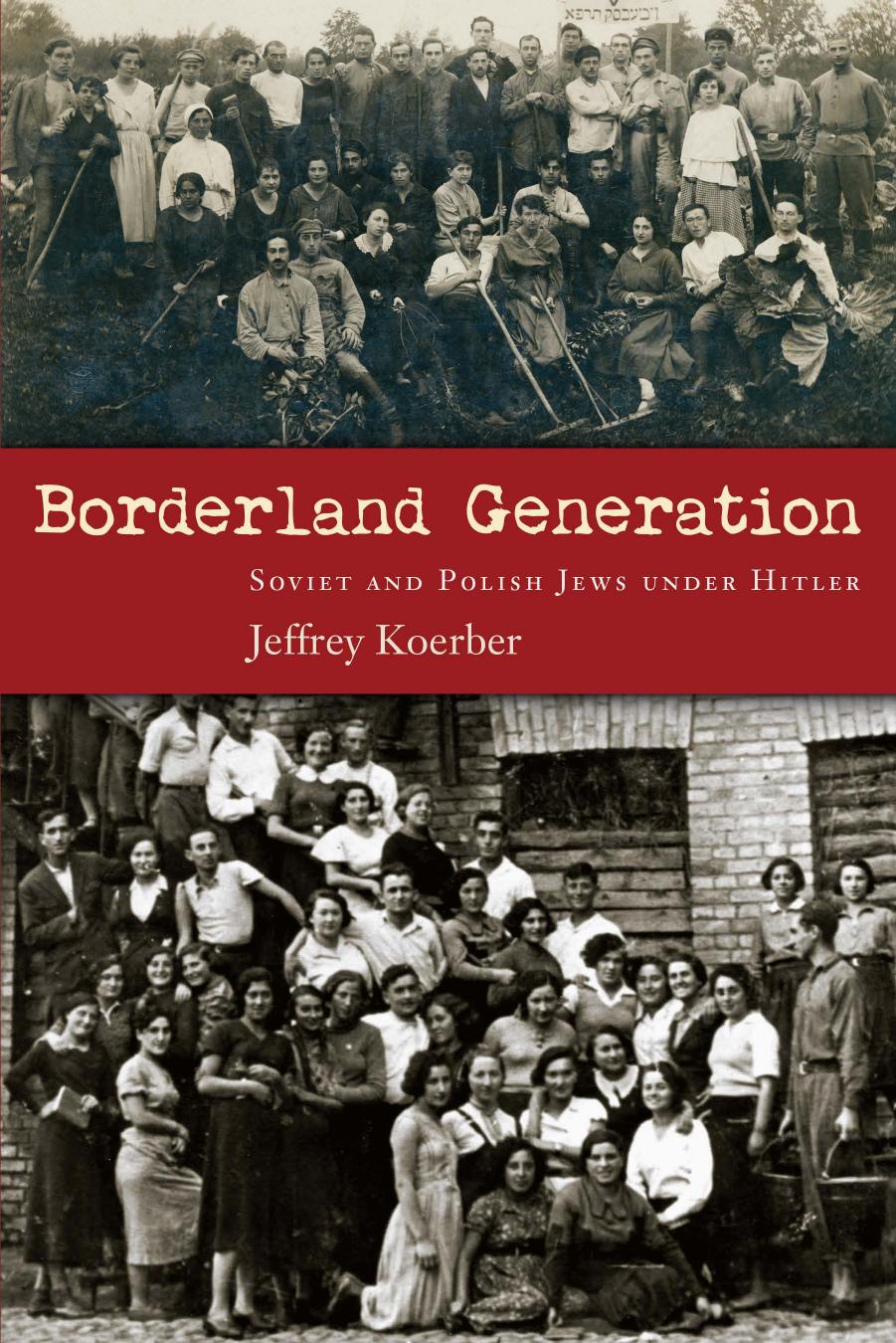
Author:Koerber, Jeffrey; [Неизв.]
Language: eng
Format: epub, pdf
ISBN: 9780815654650
Publisher: Syracuse University Press
Published: 2020-01-19T20:00:00+00:00
7
Survival
1942 to 1948
In 1942, Sarah Fishkinâs family began their observance of Passover, the holiday of deliverance, on 1 April. Their Seder was short. They skipped the Four Questions in the Haggadahâthat night in the Rubiezewicze ghetto was not different from any other. Lying in bed afterward, Sarah recalled joyous holiday observances before the war. Her hopes lay flattened under the weight of the Nazi genocide. On that first night of Passover, the tempered optimism expressed in her diary entries a few months earlier had vanished. Now she wrote, âWe live without any future; we have no thought of goals, of achievement.â1
The Nazis sought to degrade and destroy millions of European Jews such as Sarah Fishkin by overturning their social order, entrapping and dividing their families, and humiliating and murdering each individual. A few weeks after Sarah wrote about her familyâs last Passover, her father and one of her younger brothers were deported to a slave-labor camp. Sarah was transported to another camp soon thereafter. Guards shot her when they liquidated the camp on 28 December 1942.2
As 1942 ended, the Germansâ genocidal campaign was well advanced. Sarah Fishkin was unable to escape their trap, but chance presented other young Jews with fleeting opportunities for survival. No longer in familiar surroundings, these lucky few found themselves in camps, in hiding, or in resistance groups. Young Jews from Vitebsk and Grodno responded to their situations in sharply contrasting ways. Polish Jews, even when they posed as Gentiles, retained significant aspects of their prewar identities and attendant social ties. Soviet Jews, however, submerged into other selves, expertly mimicking other nationalities. Disparate circumstances shaped the survival of both groups during the Holocaust; distinct, too, were the responses they generated.
SURVIVAL PATHS
The experiences of Holocaust survivorsâthat is, those still alive at Nazi Germanyâs defeat in 1945âfall into a number of patterns. Following initial exposure to increasing degrees of persecution, those whom the Germans selected for slave labor were deported to camps and suffered through abusive conditions until liberation. Departures from this pattern include Jews who escaped from a ghetto or camp and lived in hiding, usually with the help of Gentiles or, particularly in the wilderness expanses of eastern Europe, with partisan fighters. Some Jews eluded capture altogether and took a false identity, maintaining their cover in territory under Nazi rule or occupation. The lives of these targets of genocide were constantly at risk. Capricious SS officers sent the sick and emaciated or those who appeared so to the gas chambers. Neighbor suspected neighbor of harboring Jews. False papers fell under close scrutiny. Many of the Holocaust survivorsâ paths from Grodno and Vitebsk follow these patterns, even as German exploitation and annihilation policies transported the survivors across the European continent (figure 24).
Download
This site does not store any files on its server. We only index and link to content provided by other sites. Please contact the content providers to delete copyright contents if any and email us, we'll remove relevant links or contents immediately.
| Africa | Americas |
| Arctic & Antarctica | Asia |
| Australia & Oceania | Europe |
| Middle East | Russia |
| United States | World |
| Ancient Civilizations | Military |
| Historical Study & Educational Resources |
The Dawn of Everything by David Graeber & David Wengrow(1707)
The Bomber Mafia by Malcolm Gladwell(1622)
Facing the Mountain by Daniel James Brown(1553)
Submerged Prehistory by Benjamin Jonathan; & Clive Bonsall & Catriona Pickard & Anders Fischer(1455)
Wandering in Strange Lands by Morgan Jerkins(1427)
Tip Top by Bill James(1416)
Driving While Brown: Sheriff Joe Arpaio Versus the Latino Resistance by Terry Greene Sterling & Jude Joffe-Block(1376)
Red Roulette : An Insider's Story of Wealth, Power, Corruption, and Vengeance in Today's China (9781982156176) by Shum Desmond(1359)
Evil Geniuses: The Unmaking of America: A Recent History by Kurt Andersen(1352)
The Way of Fire and Ice: The Living Tradition of Norse Paganism by Ryan Smith(1336)
American Kompromat by Craig Unger(1315)
F*cking History by The Captain(1303)
It Was All a Lie by Stuart Stevens;(1300)
American Dreams by Unknown(1285)
Treasure Islands: Tax Havens and the Men who Stole the World by Nicholas Shaxson(1272)
Evil Geniuses by Kurt Andersen(1257)
White House Inc. by Dan Alexander(1211)
The First Conspiracy by Brad Meltzer & Josh Mensch(1174)
The Fifteen Biggest Lies about the Economy: And Everything Else the Right Doesn't Want You to Know about Taxes, Jobs, and Corporate America by Joshua Holland(1126)
