Why We Lie About Aid by Yanguas Pablo
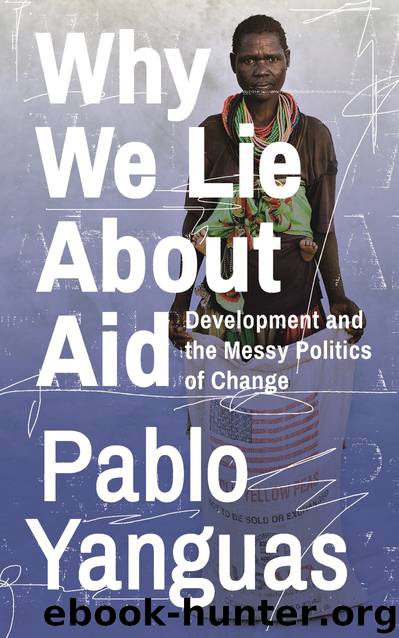
Author:Yanguas, Pablo
Language: eng
Format: epub
Publisher: Book Network Int'l Limited trading as NBN International (NBNi)
Published: 2017-12-15T14:51:39+00:00
The reds are coming
Until 2005, the G-15 had dealt with relatively predictable presidents, representative of the powerful elites at the centre of Honduran politics. Carlos Roberto Flores, who was president when Hurricane Mitch hit the country, had attended the American School of Tegucigalpa and then Louisiana State University. Ricardo Maduro, his successor from January 2002, had graduated from the posh Lawrenceville preparatory school in New Jersey before going to Stanford. The elections of 27 November 2005 brought Flores’s Liberal Party back to power, but the man who assumed the presidency favoured looking South, not North, for political inspiration. Manuel ‘Mel’ Zelaya was heir to a successful family business, and a career politician of the Liberal Party: in theory, just another member of the country’s elite. He had even run for party leader under a relatively centre-right platform called Movimiento Esperanza Liberal (MEL, which stands for Liberal Hope Movement). Once in office, however, he confronted internal challenges to his power by aligning himself with Venezuela’s Hugo Chávez in a remarkable ‘right-to-left switch’21.
Consistent with his peers within the Bolivarian Alternative for the Americas (ALBA in its Spanish acronym), Zelaya started to espouse a more participatory and direct form of policymaking that put social development at the centre. He had at best a limited commitment to and understanding of the PRS he had inherited, and the people he brought in had limited experience dealing with international assistance. All of this left G-15 donors dismayed22. Under Zelaya’s presidency, the National Congress of Honduras passed an unprecedented amendment to the national budget, mandating that part of the PRS funds of each government department be executed through municipalities. The decision could have been easily construed as either high-minded decentralisation or flagrant patronage. It put donors in a difficult position, because many of their bilateral aid agreements were predicated on the objectives and processes covered by the PRS. It also caused civil society to walk out of the PRS Consultative Council, forcing the G-15 to once again assume a mediating role between Congress, the government, and NGOs. This task was further hindered by the fact that the sector-level mesas had stopped working as a deliberation mechanism since the arrival of the new government23.
In late 2006, SIDA commissioned a report titled ‘Honduras: what happened to the ERP?’, which described the ‘slow and tortuous pace’ with which the new administration was implementing and updating the PRS24. Part of the explanation lies with the fact that Zelaya was more interested in policy programmes that were more clearly aligned with his party’s poverty reduction philosophy, such as a free tuition programme, which ensured access to education for 200,000 youths; the PRS Decentralization Fund, which transferred funds to local councils; and the Red Solidaria, a cash transfer programme that targeted families and individuals afflicted by extreme poverty, and was headed by the First Lady. In October 2008, Zelaya sought to formally institutionalise these programmes through the creation of a new Social Development Department. By that time, the government had belatedly agreed to update the original PRS, but without really committing to it through clear budgetary priorities.
Download
This site does not store any files on its server. We only index and link to content provided by other sites. Please contact the content providers to delete copyright contents if any and email us, we'll remove relevant links or contents immediately.
| Anthropology | Archaeology |
| Philosophy | Politics & Government |
| Social Sciences | Sociology |
| Women's Studies |
The Secret History by Donna Tartt(19476)
The Social Justice Warrior Handbook by Lisa De Pasquale(12297)
Thirteen Reasons Why by Jay Asher(9129)
This Is How You Lose Her by Junot Diaz(7060)
Weapons of Math Destruction by Cathy O'Neil(6479)
Zero to One by Peter Thiel(5953)
Beartown by Fredrik Backman(5949)
The Myth of the Strong Leader by Archie Brown(5631)
The Fire Next Time by James Baldwin(5592)
How Democracies Die by Steven Levitsky & Daniel Ziblatt(5333)
Promise Me, Dad by Joe Biden(5237)
Stone's Rules by Roger Stone(5196)
A Higher Loyalty: Truth, Lies, and Leadership by James Comey(5091)
100 Deadly Skills by Clint Emerson(5032)
Rise and Kill First by Ronen Bergman(4907)
Secrecy World by Jake Bernstein(4892)
The David Icke Guide to the Global Conspiracy (and how to end it) by David Icke(4854)
The Doomsday Machine by Daniel Ellsberg(4627)
The Farm by Tom Rob Smith(4614)
