Urban Culture in Pre-War Japan by Adam Thorin Croft
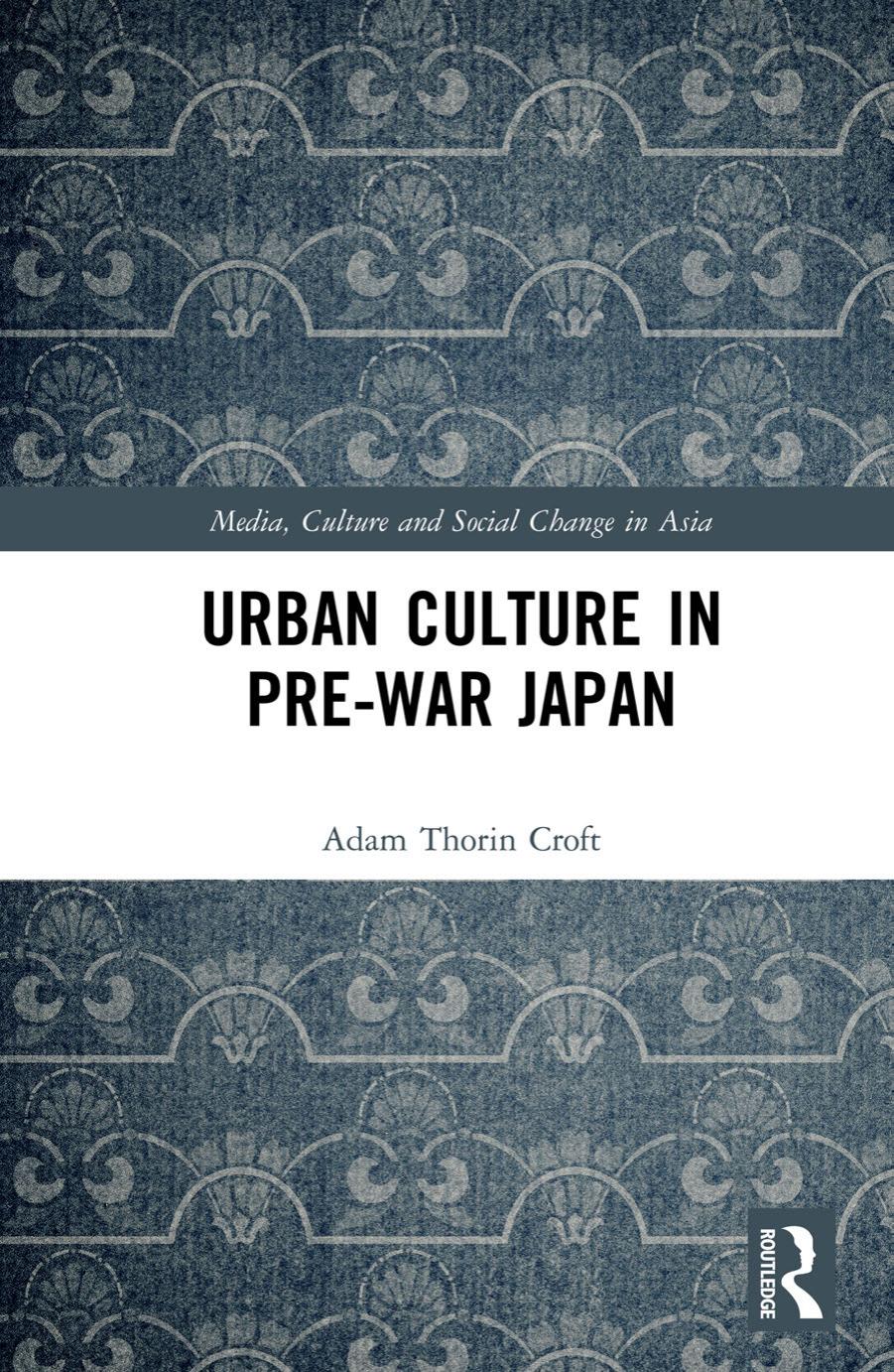
Author:Adam Thorin Croft [Croft, Adam Thorin]
Language: eng
Format: epub, pdf
ISBN: 9781138392014
Barnesnoble:
Publisher: Taylor & Francis
Published: 2019-05-31T00:00:00+00:00
Regional (il)literacy
By the end of the Meiji period (1868â1912), Japanese society had achieved a state of near universal literacy. However, regional discrepancies in educational standards caused by the terakoya (temple and shrine school) system carried over into the first quarter of the 20th century. For instance, in 1899, a national survey of educational attainment amongst conscripts revealed that the provincial city of Sendai (Miyagi prefecture) was the best performing regional centre with an illiteracy rate of seven per cent. Conversely, the same survey found opposite extremes that were shocking. In the newly acquired island prefecture of Okinawa, 76.3 per cent of recruits were deemed by the Meiji Government to have no reading or writing abilities whatsoever (Rubinger 2000, p. 179).
We must be cautious when interpreting such data, however. To whom the Meiji Governmentâs new criteria was applied, and how, would certainly have affected these figures, as would the individual attitudes of examiners charged with carrying out the survey. In the case of the local inhabitants of the RyÅ«kyÅ«s (and the colony of HokkaidÅ), there would likely have been some form of cultural resistance to an imposed assessment of any kind by an authority administered from outside the local area.1
Driven by a sense of national aspiration, bureaucrats in the Meiji Government were deeply suspicious of the populationâs ability to thrive without its strong leadership. Nevertheless, hoping to find modern solutions to long-standing and emerging social problems, officials frequently misinterpreted and misapplied foreign concepts and theories in the name of progress. The general pattern of state education prescribed by the MonbushÅ (Ministry of Education) is explored more fully in the following chapter, but some general points that pertain directly to the issue of literacy and schooling in Japan are worth introducing here.
Less than five years into its administration, the educational and military interests of the Meiji Government were brought into alignment under the auspices of the DajÅkan (Chief Executive Office). The Gakusei (Education System Order, 1872) and the ChÅheirei (Conscription Order, 1873) were complementary pieces of legislation designed to create a modern fighting force capable of defending the Meiji nation state. Illiteracy was an obstacle to this end. In 1905, in collaboration with the Imperial Japanese Army, the MonbushÅ sought reliable data on the efficacy of Japanâs modernised teaching system. Although county inspectors could already investigate such matters under the revised ShÅgakurei (Elementary School Order, 1900), the MonbushÅ raised their profile in an attempt to combat the problems of non-attendance hampering state development (Rubinger 2000, pp. 171â172).
The introduction of stringent assessment measures for illiteracy helped the government implement effective reforms, but the survey revealed that the overall standard of literacy in the west of Japan remained inadequate. Again, there were exceptions. Shiga had relatively good attainment levels in schooling. Its municipal council was progressive in promoting education for women, offering free tuition and textbooks to those without sufficient income. Nonetheless, the financial disadvantages of having children out of work, especially in rural settings where communities relied heavily on one another during times of harvest, did little to persuade impoverished families that the risk of education was worthwhile.
Download
Urban Culture in Pre-War Japan by Adam Thorin Croft.pdf
This site does not store any files on its server. We only index and link to content provided by other sites. Please contact the content providers to delete copyright contents if any and email us, we'll remove relevant links or contents immediately.
| Anthropology | Archaeology |
| Philosophy | Politics & Government |
| Social Sciences | Sociology |
| Women's Studies |
Born to Run: by Christopher McDougall(7120)
The Leavers by Lisa Ko(6945)
iGen by Jean M. Twenge(5408)
Sapiens by Yuval Noah Harari(5365)
Spare by Prince Harry The Duke of Sussex(5176)
The Kite Runner by Khaled Hosseini(5168)
Machine Learning at Scale with H2O by Gregory Keys | David Whiting(4292)
Bullshit Jobs by David Graeber(4179)
Never by Ken Follett(3937)
Goodbye Paradise(3798)
Livewired by David Eagleman(3764)
Fairy Tale by Stephen King(3370)
A Dictionary of Sociology by Unknown(3073)
Harry Potter 4 - Harry Potter and The Goblet of Fire by J.K.Rowling(3060)
The Social Psychology of Inequality by Unknown(3018)
The Club by A.L. Brooks(2919)
Will by Will Smith(2908)
0041152001443424520 .pdf by Unknown(2843)
People of the Earth: An Introduction to World Prehistory by Dr. Brian Fagan & Nadia Durrani(2727)
