Unseen by S. L. Stoner
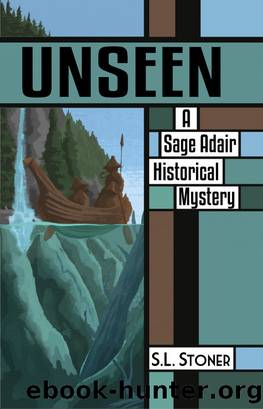
Author:S. L. Stoner
Language: eng
Format: epub
Tags: indian reservations, racism fiction, indian boarding school, progressive history, mystery historical indian, pacific nw history early 1900s
Publisher: S. L. Stoner
Far to the north, in what is now Canada, there lived a great chief on the southern shores of a giant lake, called Great Slave Lake. His band was part of the Athapascan tribe and that was the language they spoke. This chiefâs wife gave birth to two twin boys. That tribe believed twins were a very bad omen and so twins were always killed at birth. The chiefâs wife knew this so she ran away with her babies to Indian people living far away on the oceanâs edge. Only when the chief was dead, and her boys were young men, did she return.
But there was a problem. In the Athapascan tradition, a chiefâs eldest son became chief upon his death. But standing before the tribal council were two sons, born at the same time. What was the tribe to do?
One of the chiefâs sons stepped forward and said he would leave the tribe and travel southward. Other young men, eager for adventure, said that they and their families would go with him. And so a band of Athapascan people began traveling south. Everywhere they went, they could not stay because other Indians had already claimed the land. Mostly, the Athapascans were allowed to pass peacefully. That ended when they reached the land of the Chehalis tribe in southern Washington. The Chehalis would not let them pass and made war on the Athapascans. Many died on both sides and many were injured.
The Athapascans who survived reached the Columbia River and traveled to its mouth. There they were taken in, nursed, and made healthy by the people of the Chinook tribe. Once the Athapascans were healed, the Chinooks gave them canoes and a guide. He led them upriver to land on the riverâs south shore.
The chief of the Clapsop band of the Chinooks came to drive them out of his territory.
As is the Indian way, the two tribes talked before battling. During this discussion, the chief noticed the Athapascansâ very fine flint arrowheads. He was so impressed with the arrowheads that he offered to let the Athapascans live inland from the river, provided they gave the Clapsop people one hundred flint arrowheads each year.
This agreement was reached and the Athapascans moved into the hills above the river, to the place where we are right now. Later they became known as the Clatskanie. They were great hunters. The Clatskanie remained friends with the Clatsops who were famous fisher folk. The Clatsops would send their young Clatsop boys to learn from them about how to hunt in the Athapascan way.
Download
This site does not store any files on its server. We only index and link to content provided by other sites. Please contact the content providers to delete copyright contents if any and email us, we'll remove relevant links or contents immediately.
Twisted Games: A Forbidden Royal Bodyguard Romance by Ana Huang(4129)
Den of Vipers by K.A Knight(2755)
The Push by Ashley Audrain(2742)
Win by Harlan Coben(2724)
Echo by Seven Rue(2286)
A Little Life: A Novel by Hanya Yanagihara(2280)
Baby Bird by Seven Rue(2258)
Beautiful World, Where Are You: A Novel by Sally Rooney(2234)
Iron Widow by Xiran Jay Zhao(2167)
Leave the World Behind by Rumaan Alam(2133)
Midnight Mass by Sierra Simone(2067)
Bridgertons 2.5: The Viscount Who Loved Me [Epilogue] by Julia Quinn(1834)
Undercover Threat by Sharon Dunn(1815)
The Four Winds by Hannah Kristin(1798)
Sister Fidelma 07 - The Monk Who Vanished by Peter Tremayne(1734)
The Warrior's Princess Prize by Carol Townend(1658)
Snowflakes by Ruth Ware(1630)
Dark Deception by Rina Kent(1627)
Facing the Mountain by Daniel James Brown(1609)
