The Great Decoupling by Inkster Nigel;
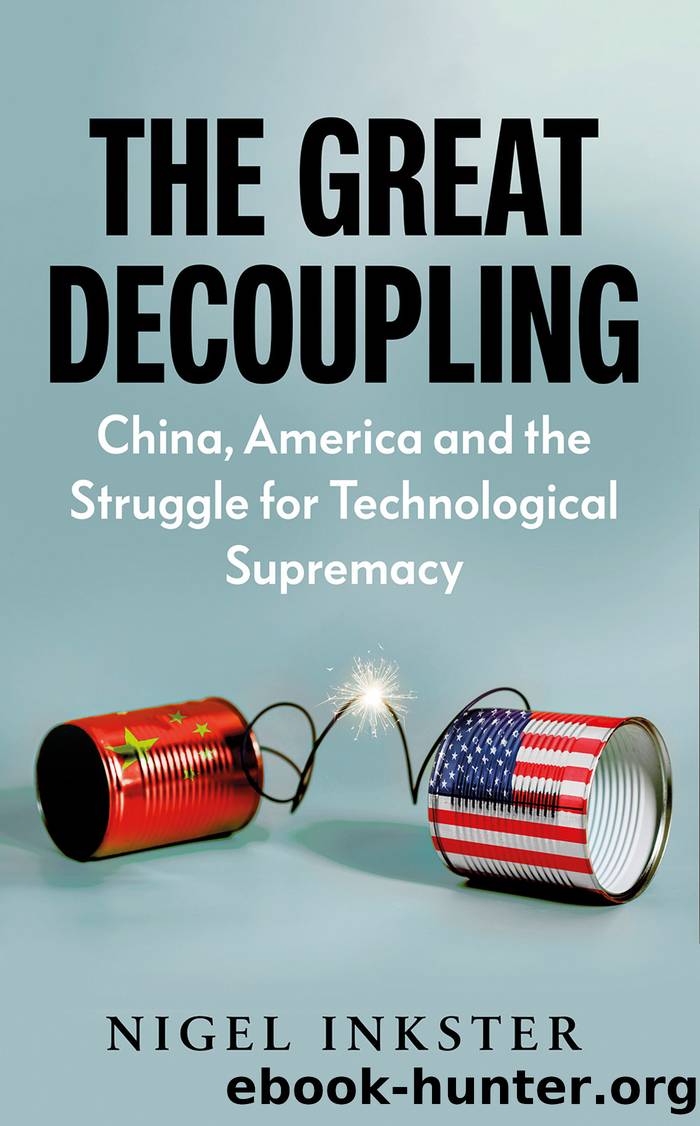
Author:Inkster, Nigel;
Language: eng
Format: epub
Publisher: Hurst Publishers
Published: 2021-08-15T00:00:00+00:00
Discourse Power and Chinaâs âGlass Heartâ
A key component of Chinaâs foreign policy strategy is the development of Chinaâs discourse powerâhuayuquan. At present the Chinese Party-state perceives that global discourse is dominated by Western media organisations and Western concepts such as universal values that are anathema to the CCP. China therefore needs to become proactive in making its own message globally predominant using the same propaganda techniques that have been and remain central to its exercise of domestic political and social control. The aim of what Xi Jinping has termed âtelling Chinaâs story wellâ18 is to pre-empt threats to the Party-stateâs hold on power by suppressing critical commentary and challenges to the CCPâs ideology while seeking to shape the international discourse on issues of governance and values in ways favourable to China. It also aims to nurture an already entrenched nationalist sentiment in Chinaâs population and to demonstrate that only the Party-state can promote the Chinese peopleâs interests and defend their dignity. This involves the mobilisation of comprehensive national power, with the effort spearheaded by two Party organisations: the Central Propaganda Department, whose role is self-explanatory; and the United Front Work Department (UFWD), described by Mao Zedong as one of the CCPâs three âmagic weaponsââthe others being Party-building and the PLA.19 The role of the UFWD is to engage with influential non-Party elites and opinion formers both in and outside China and encourage them to lend support to the CCP.
For many years the influence of the CCP Propaganda Department outside China was nugatory. Few foreigners were interested in reading turgid, jargon-laden and poorly translated outputs of Chinaâs state-controlled media. And all too often aspects of Chinese culture with genuine soft power attraction, such as the early films of the cineaste Zhang Yimou, were effectively disowned by the Party for sending the âwrongâ messages. But as Nikita Khrushchev once observed, quantity has a quality of its own. In recent years China has engaged in a broad-spectrum effort to put out Chinaâs message at an estimated cost of US$ 10 billion a year. This includes a new London-based international news channel, China Global Television Network, employing experienced Western journalists at salaries far above what they could earn elsewhere; marketing Chinese news broadcasts and Chinese TV programmes throughout Africa and Latin America at prices that undercut competitors such as BBC and Al Jazeera; paying prestigious Western media outlets such as the Washington Post and the Telegraph to carry supplements such as China Dailyâa credible candidate for most boring newspaper on the planet; purchasing media outlets such as the Hong Kong-based South China Morning Post; and hiring at inflated salaries lobbyists and members of national elites to advocate for China in their own countriesâa process known as elite capture. It is impossible to estimate the impact of this sustained onslaught but its cumulative impact over time cannot lightly be disregarded.
The primary focus of the UFWD is on Chinese diaspora communities, particularly in countries where these diasporas are well-represented in the political, cultural and commercial life of their host countries.
Download
This site does not store any files on its server. We only index and link to content provided by other sites. Please contact the content providers to delete copyright contents if any and email us, we'll remove relevant links or contents immediately.
| Anthropology | Archaeology |
| Philosophy | Politics & Government |
| Social Sciences | Sociology |
| Women's Studies |
The Secret History by Donna Tartt(19320)
The Social Justice Warrior Handbook by Lisa De Pasquale(12228)
Thirteen Reasons Why by Jay Asher(9011)
This Is How You Lose Her by Junot Diaz(6965)
Weapons of Math Destruction by Cathy O'Neil(6373)
Zero to One by Peter Thiel(5876)
Beartown by Fredrik Backman(5859)
The Myth of the Strong Leader by Archie Brown(5554)
The Fire Next Time by James Baldwin(5509)
How Democracies Die by Steven Levitsky & Daniel Ziblatt(5280)
Promise Me, Dad by Joe Biden(5193)
Stone's Rules by Roger Stone(5138)
A Higher Loyalty: Truth, Lies, and Leadership by James Comey(5021)
100 Deadly Skills by Clint Emerson(4975)
Rise and Kill First by Ronen Bergman(4842)
Secrecy World by Jake Bernstein(4807)
The David Icke Guide to the Global Conspiracy (and how to end it) by David Icke(4777)
The Doomsday Machine by Daniel Ellsberg(4559)
The Farm by Tom Rob Smith(4557)
