The God Biographers by Witham Larry;
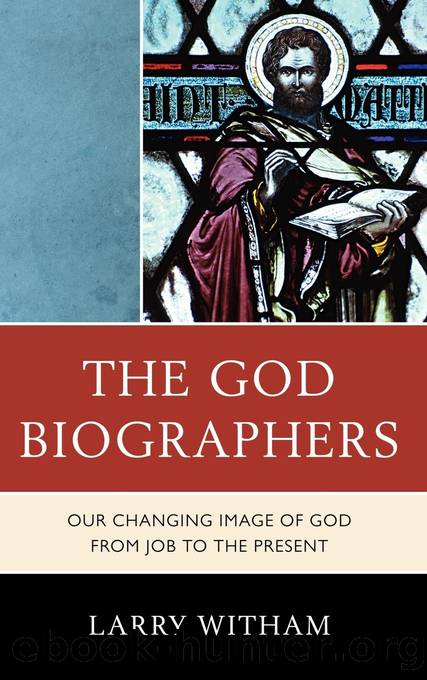
Author:Witham, Larry;
Language: eng
Format: epub
Publisher: Lexington Books/Fortress Academic
Published: 2010-08-15T00:00:00+00:00
Analytic Philosophy and God
In the same period that process philosophy found its footing in Christian thought, the analytic philosophers were also addressing God questions. To a degree, Hartshorneâs 1940s writings were a rebuttal of analytic philosophy in its atheistic form. But a full-blown theistic response to analytic philosophy in the West had to wait until the 1950s, and a bit later in the case of North America. These developments began in England, where, between the two wars, analytic and linguistic philosophy had dominated nearly all the universities. After the Second World War, the encounter between analytics and theology was typified by the Socratic Club, founded at the University of Oxford by C. S. Lewis, the famous Christian author. The club became the scene of contentious arguments between Christian belief, on the one side, and linguistic philosophy and scientific positivism on the other. By one account, this debate produced âa flood of energy and creativity in philosophy such as had not been seen in Oxford since the Middle Ages.â21
Amid this flurry of debate, two short papers would come to represent the atheistic challenge. That challenge was this: according to the analytic philosphers, the idea of a perfect, all-knowing God is not logical, given the evil in the world. In the Socratic Club, the then-atheist Anthony Flew offered his famous paper âTheology and Falsification.â Another famous article of the period came from Australian atheist philosopher J. L. Mackie, titled âEvil and Omnipotence.â In sum, the work of Flew and Mackie revived David Humeâs trilemma argument, traditionally used, we recall, to make a perfect God in an evil world an illogical concept. Pointedly, Mackie said that evil simply disproves Godâs existence. This claim, made on the basis of obvious evil in the world, naturally began to preoccupy contempoary God biographers. It became known as the âproblem of evil,â since only if one presumes a good God is evil really a philosophical and logical problem.
The works of Flew and Mackie were published in a small 1955 book by an Anglican publishing house in England. Modestly titled New Essays in Philosophical Theology, it was nevertheless the little book that troubled Christian philosophers. One of them was Alvin Plantinga, a Reformed (Calvinist) philosopher, who recalls that it âset the tone and topics for philosophy of religion for the next decade or more.â22 Indeed, in the face of such analytic challenges, Plantinga says, many Christians began âhandwringingâ over whether any Christian doctrine could still be proved in an age of science. The followers of Whitehead, by their cosmology, could sidestep the problem of Godâs power over evil, but the followers of Augustine, Aquinas, and Calvin could not so easily. For them, Godâs omnipotence and omniscience in a world of evil had to be defended.
That defense spawned a revival of Christian philosophy in the United States. The telling of that story begins with another outstanding student of Hartshorne, the philosopher William Alston, and in turn, two of his students, Alvin Plantinga and Nelson Pike. Thus begins a genetic branching of religious philosophyâbeginning with Alston.
Download
This site does not store any files on its server. We only index and link to content provided by other sites. Please contact the content providers to delete copyright contents if any and email us, we'll remove relevant links or contents immediately.
Professional Troublemaker by Luvvie Ajayi Jones(29668)
Empire of the Sikhs by Patwant Singh(23089)
Twilight of the Idols With the Antichrist and Ecce Homo by Friedrich Nietzsche(18638)
Plagued by Fire by Paul Hendrickson(17416)
The Sun and Her Flowers by Rupi Kaur(14526)
Norse Mythology by Gaiman Neil(13372)
A Journey Through Charms and Defence Against the Dark Arts (Harry Potter: A Journey Throughâ¦) by Pottermore Publishing(9276)
Fangirl by Rainbow Rowell(9259)
Adultolescence by Gabbie Hanna(8929)
Wonder by R.J. Palacio(8584)
Tools of Titans by Timothy Ferriss(8402)
Becoming Supernatural by Dr. Joe Dispenza(8223)
How to Bang a Billionaire by Alexis Hall(8160)
Wonder by R. J. Palacio(8115)
Crystal Healing for Women by Mariah K. Lyons(7933)
The Road Less Traveled by M. Scott Peck(7605)
The Lost Art of Listening by Michael P. Nichols(7507)
The Witchcraft of Salem Village by Shirley Jackson(7277)
The Institute by Stephen King(7043)
