Starved for Science: How Biotechnology Is Being Kept Out of Africa by Robert Paarlberg
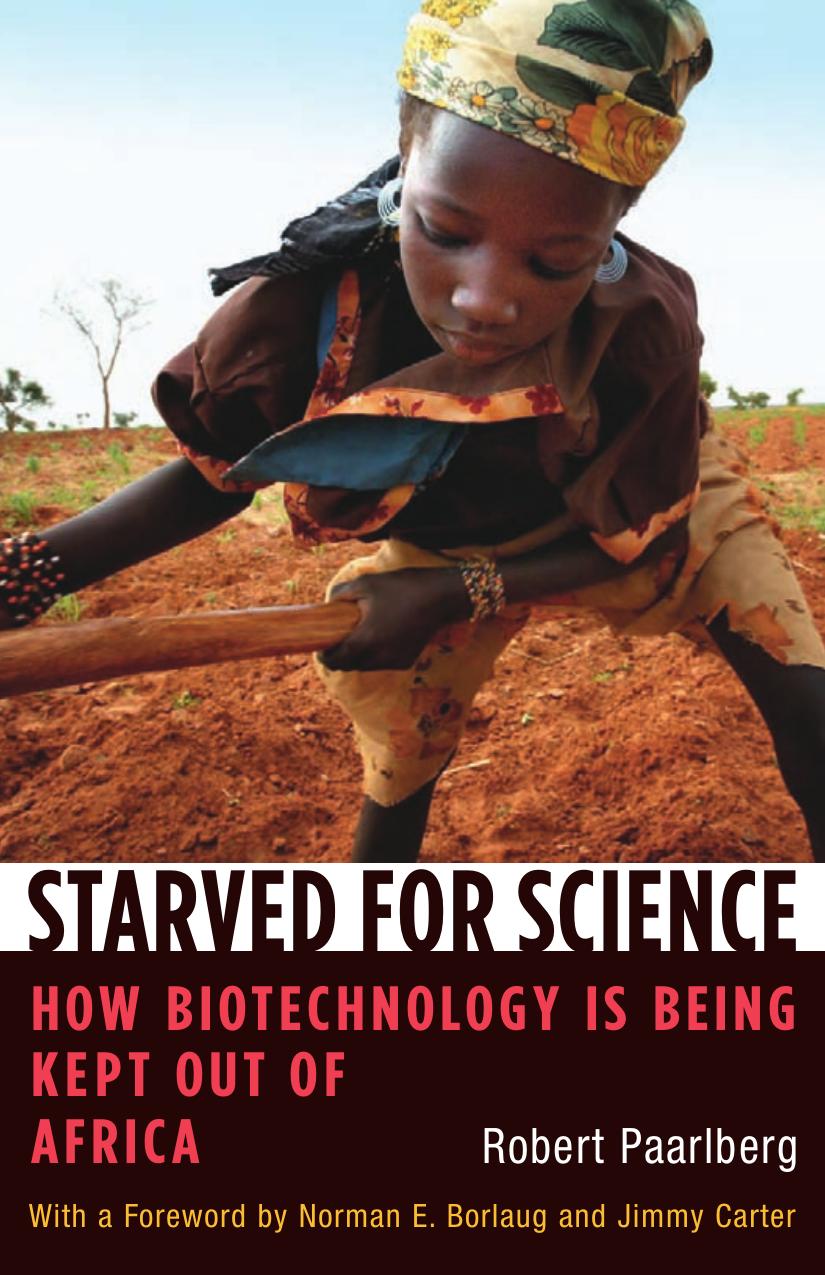
Author:Robert Paarlberg
Language: eng
Format: epub, pdf
Publisher: Harvard University Press
Uncertain Support from Philanthropic Foundations
Independently endowed philanthropic foundations—such as the Rockefeller and Ford Foundations—played an essential role in launching Asia’s Green Revolution almost half a century ago. Times have changed. The Ford Foundation moved away from promoting scientific innovations in agriculture in poor countries not long after the Green Revolution succeeded, and the Rockefeller Foundation may now be following suit.
The Ford Foundation is a private, nonprofit, grant-making institution with more than $10 billion in assets, a New York headquarters, and three African regional offices in Lagos, Nairobi, and Johannesburg. The foundation’s priorities once included farm science to increase productivity, but no longer; its few remaining agricultural grants today promote “alternative agriculture,” and one of its favorite grantees is IATP. Ford now refers to the original Green Revolution it helped launch in Asia as only a limited success, and one that brought unintended negative environmental impacts linked to “the large amounts of fertilizer and pesticides needed to grow the high-yielding crop varieties” (Ford Foundation 2006, p. 38). One recent Ford grantee in India is a local organization devoted to convincing large landowners in Uttar Pradesh to convert to organic farming.
Whereas the Ford Foundation abandoned funding technological solutions to low farm productivity quite early, the smaller ($3.4 billion endowment) Rockefeller Foundation remained faithful to this vision right up through 2005. Rockefeller was led between 1998 and 2005 by Gordon Conway, an agricultural ecologist who promoted what he called a “doubly green revolution,” one that would be based on the best agricultural science supplemented by new attention to environmental effects. During Conway’s term as president the Rockefeller Foundation spent a total of nearly $150 million promoting agricultural development specifically in Africa, bringing a significant scientific focus to the problem through the work of twenty-five different plant-breeding teams producing food-crop varieties with higher yields and greater disease resistance (Rodin 2006).
When Conway left in 2005, the Rockefeller Foundation began looking for a way to hand off its traditional lead role in agriculture and found that way in 2006 when the Bill and Melinda Gates Foundation, with an endowment ten times as large, made an important move into the agricultural development field. In September 2006, the Rockefeller Foundation announced it was entering into a $150 million joint venture with the Gates Foundation ($50 million from the Rockefeller Foundation, $100 million from the Gates Foundation) that would be called an Alliance for a Green Revolution in Africa (AGRA). Kofi Annan agreed in June 2007 to serve as AGRA’s first chairman. Existing Rockefeller programs would provide the basis of the effort, but Gates Foundation money would provide a substantial boost to the scale of activities. The main thrust would be an across-the-board effort to improve the variety and availability of seeds capable of producing higher yields in the harsh conditions of sub-Saharan Africa. Bill Gates himself explained the importance of introducing African farmers to modern agricultural science:In Africa today, the great majority of poor people, many of them women with young children, depend on agriculture for food and income and remain impoverished and even go hungry.
Download
Starved for Science: How Biotechnology Is Being Kept Out of Africa by Robert Paarlberg.pdf
This site does not store any files on its server. We only index and link to content provided by other sites. Please contact the content providers to delete copyright contents if any and email us, we'll remove relevant links or contents immediately.
Craft Beer for the Homebrewer by Michael Agnew(18306)
Marijuana Grower's Handbook by Ed Rosenthal(3732)
Barkskins by Annie Proulx(3418)
Project Animal Farm: An Accidental Journey into the Secret World of Farming and the Truth About Our Food by Sonia Faruqi(3265)
The Plant Messiah by Carlos Magdalena(2995)
Red Famine: Stalin's War on Ukraine by Anne Applebaum(2986)
0041152001443424520 .pdf by Unknown(2909)
Organic Mushroom Farming and Mycoremediation by Tradd Cotter(2736)
In the Woods by Tana French(2662)
Between Two Fires by Christopher Buehlman(2579)
Beer is proof God loves us by Charles W. Bamforth(2504)
7-14 Days by Noah Waters(2465)
Borders by unknow(2384)
Reservoir 13 by Jon McGregor(2349)
Meathooked by Marta Zaraska(2296)
The Art of Making Gelato by Morgan Morano(2294)
Birds, Beasts and Relatives by Gerald Durrell(2264)
The 7 Habits of Highly Effective People: Powerful Lessons in Personal Change (25th Anniversary Edition) by Covey Stephen R(2237)
The Lean Farm Guide to Growing Vegetables: More In-Depth Lean Techniques for Efficient Organic Production by Ben Hartman(2168)
