Red Memory by Tania Branigan
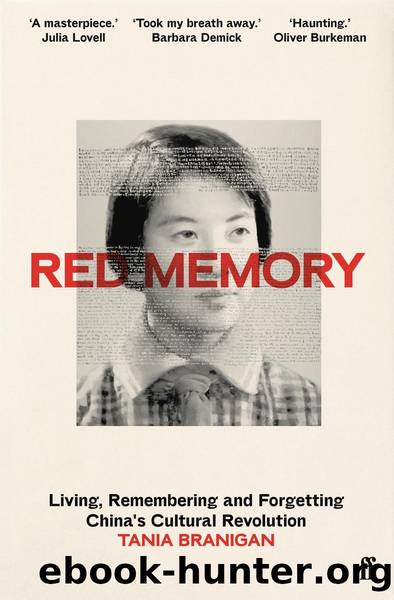
Author:Tania Branigan
Language: eng
Format: epub
Publisher: Faber & Faber
Published: 2023-02-15T00:00:00+00:00
As strange as Boâs exploitation of the Cultural Revolution was the enthusiasm it met in Chongqing. He had lost his mother to the movement; the city had lost so many of its youth. But the appetite for Maoism had never been wholly extinguished. People were not just bullied into it: they chose it. And when it died, they mourned it. They missed belonging to a shared endeavour. They missed an age where officials had been poor, and had struggled to serve the people. The millions thrown out of work by reforms to state-owned enterprises missed their jobs, and money, and sense of certainty. The middle classes missed the confidence that they had no less than their neighbours. They missed public spaces, replaced by shopping malls. They missed not having to make decisions. They missed security. They missed the clarity of right and wrong. They missed the brief shining moment when the world had seemed new and everything possible.
For most, grief was balanced by the pleasures of their new life. They leaned towards Zheng Zhishengâs view: that Communist moderates had saved China, offering wealth and stability. But others believed that thieves had stolen their future. In a world without trust, many lived in permanent terror of cheats. Maoists saw Deng and other reformers as the biggest conmen of all: snatching the peopleâs birthright from them and dishing it out to their own families and cronies. The Cultural Revolution was not a perversion of the Communist cause but its zenith, and, like their late but eternal leader, the Maoists saw it as unfinished business. Some of them remembered the glory days when they were in the vanguard. To others it was a gleaming legend. A group of them founded a bookshop and website called Utopia. If the name implied that their destination might never be attained, they nonetheless garnered a growing band of travellers. Some organised trips to North Korea, to admire society as it should be. Another set up a rural commune for students. Many of them saw Boâs Chongqing â or at least its leftist elements â as a beacon.
Maoism is inherently an ideology of struggle, and the Maoists were true to the cause. They complained that the media, dominated by reformists â what they called the right â was blinkered and intolerant, ignoring the problems and voices of the poor. They believed they were a persecuted minority, though they did not suffer as democrats did: no one was jailed for urging a return to the good old days, as they might be for demanding multiparty elections. Maoists berated critics of the Cultural Revolution. They harangued reformists at lectures. Ten thousand people signed a petition demanding the arrest of Mao Yushi, a softly spoken octogenarian economist, for describing Chairman Mao as âthe backstage boss who wrecked the country and ruined the peopleâ. Others threatened him with violence. One Utopia co-founder, a professor, made headlines for slapping an eighty-year-old âtraitorâ who had dared to scoff at young Maoists.
Han, one of those
Download
This site does not store any files on its server. We only index and link to content provided by other sites. Please contact the content providers to delete copyright contents if any and email us, we'll remove relevant links or contents immediately.
| Arms Control | Diplomacy |
| Security | Trades & Tariffs |
| Treaties | African |
| Asian | Australian & Oceanian |
| Canadian | Caribbean & Latin American |
| European | Middle Eastern |
| Russian & Former Soviet Union |
The Secret History by Donna Tartt(19088)
The Social Justice Warrior Handbook by Lisa De Pasquale(12190)
Thirteen Reasons Why by Jay Asher(8910)
This Is How You Lose Her by Junot Diaz(6887)
Weapons of Math Destruction by Cathy O'Neil(6280)
Zero to One by Peter Thiel(5802)
Beartown by Fredrik Backman(5754)
The Myth of the Strong Leader by Archie Brown(5507)
The Fire Next Time by James Baldwin(5446)
How Democracies Die by Steven Levitsky & Daniel Ziblatt(5219)
Promise Me, Dad by Joe Biden(5153)
Stone's Rules by Roger Stone(5088)
A Higher Loyalty: Truth, Lies, and Leadership by James Comey(4964)
100 Deadly Skills by Clint Emerson(4925)
Rise and Kill First by Ronen Bergman(4789)
Secrecy World by Jake Bernstein(4753)
The David Icke Guide to the Global Conspiracy (and how to end it) by David Icke(4720)
The Farm by Tom Rob Smith(4512)
The Doomsday Machine by Daniel Ellsberg(4490)
