On War and Democracy by Kutz Christopher;
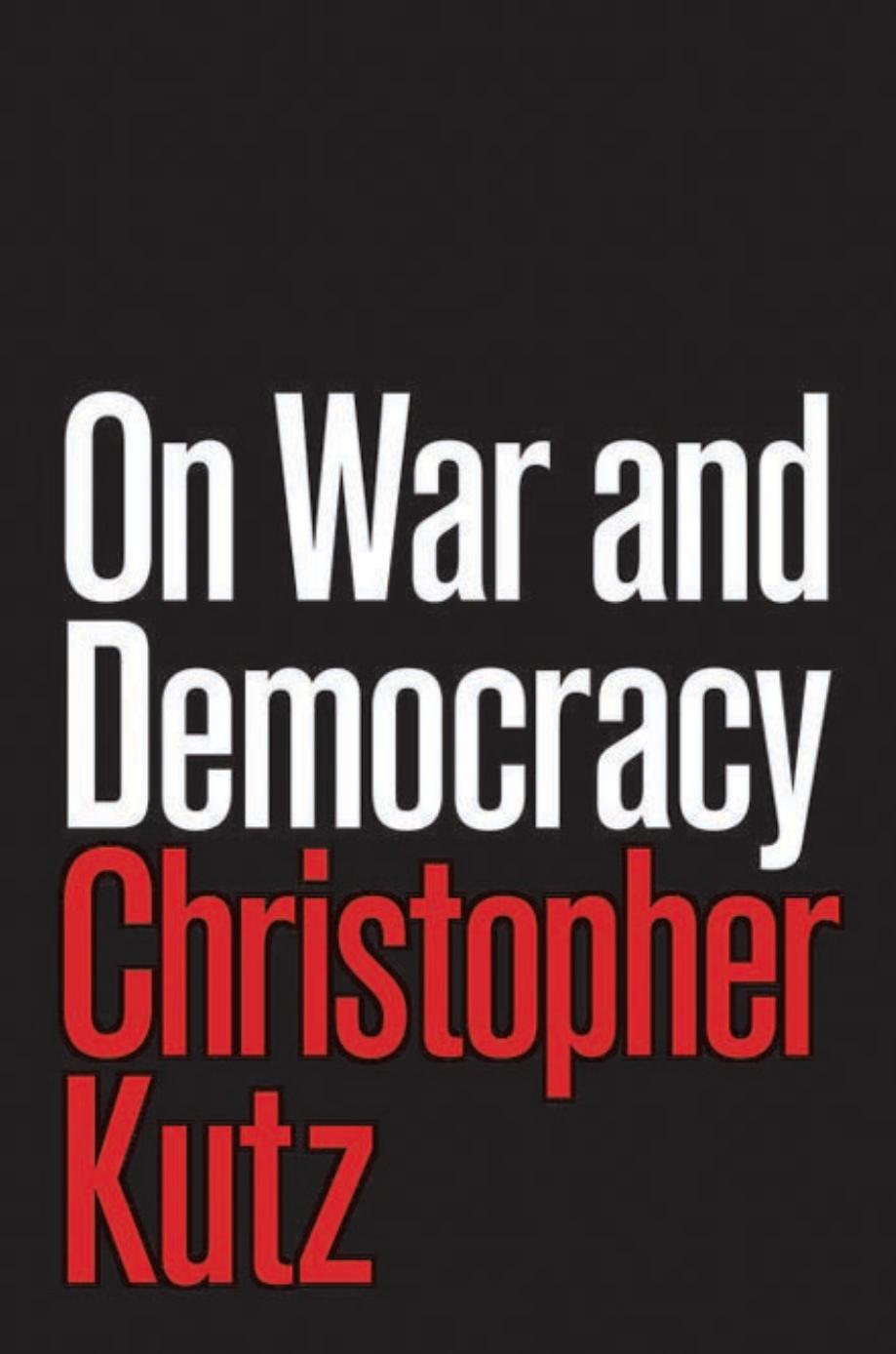
Author:Kutz, Christopher;
Language: eng
Format: epub, pdf
Publisher: Princeton University Press
Published: 2015-07-25T16:00:00+00:00
8.4. WALZER AND THE IMPORTANCE OF CULTURE VERSUS POLITICS
The argument I put forward here bears much in common with the interpretation put forward by Michael Walzer, in his essay “The Moral Standing of States.”13 Walzer was concerned to defend a mildly anti-interventionist position from such cosmopolitan writers as Charles Beitz and David Luban, who argued that a state’s lack of democratic legitimacy, or its failure to ensure the protection of liberal rights, opens that state to the permissible intervention by any other state if that intervention would improve the protection of the rights of the targeted state’s citizens.14 Walzer, by contrast, argued that even when a state fails an objective standard of democratic legitimacy, or is less than liberal in its institutions, intervention is only justifiable in cases of gross abuse. Like Mill’s, Walzer’s argument rests on an epistemic and a moral base. The primary, moral base is Walzer’s notion that a state can nonetheless reflect a people’s culture and values—its political accomplishments, as I have called it—even if the state is undemocratic.15 Instead, the acceptance and continuing cultural life of the community provides its own form of value. In turn, this value of authenticity makes it likely, ex ante, that a people will defend even non-democratic states from intervention.16 More precisely, Walzer emphasizes an epistemic point, that the presence or lack in a region of a state of normative integration is a matter for the members of the community to judge, not for outsiders, with one exception: no outside state is in a position to determine that a people must be liberated from the state, and so instead outside powers must behave “as if” the state has (something like) democratic legitimacy. The exception is, as with Mill, an internal revolution or movement of self-determination that provides the necessary evidence and so justifies outside intervention in support.
My argument parallels Walzer’s but locates value in agency rather than culture. In particular, I think Walzer’s prescription is correct, although his diagnosis is mistaken. I do not want to dispute whether cultures as such have intrinsic value—such a question seems hopelessly crude, given the difficulties in individuating and characterizing anything that might be called a unified culture in anything but a caricature of national complexity. More to the point, I think that if cultures have some common value, it is because they are expressions of collective activity—of the messy web of micro-bargains, social, economic, and political, through which we as individuals navigate a dangerous world on the rafts we make together. Like the joke about the dog playing the piano, the wonder is that we can do the thing at all, not that we do it especially well. We need not be Hobbesians to regard relatively peaceable collective life as a thing of wonder. A state’s political agency is manifest in its overall structure of organization, in the complexity of its systems of political, moral, labor, and military authority through which life within its territory is ordered. The process includes, fundamentally, the way
Download
This site does not store any files on its server. We only index and link to content provided by other sites. Please contact the content providers to delete copyright contents if any and email us, we'll remove relevant links or contents immediately.
| Anthropology | Archaeology |
| Philosophy | Politics & Government |
| Social Sciences | Sociology |
| Women's Studies |
The Secret History by Donna Tartt(19088)
The Social Justice Warrior Handbook by Lisa De Pasquale(12190)
Thirteen Reasons Why by Jay Asher(8910)
This Is How You Lose Her by Junot Diaz(6887)
Weapons of Math Destruction by Cathy O'Neil(6280)
Zero to One by Peter Thiel(5802)
Beartown by Fredrik Backman(5754)
The Myth of the Strong Leader by Archie Brown(5507)
The Fire Next Time by James Baldwin(5446)
How Democracies Die by Steven Levitsky & Daniel Ziblatt(5219)
Promise Me, Dad by Joe Biden(5153)
Stone's Rules by Roger Stone(5088)
A Higher Loyalty: Truth, Lies, and Leadership by James Comey(4964)
100 Deadly Skills by Clint Emerson(4925)
Rise and Kill First by Ronen Bergman(4789)
Secrecy World by Jake Bernstein(4753)
The David Icke Guide to the Global Conspiracy (and how to end it) by David Icke(4720)
The Farm by Tom Rob Smith(4513)
The Doomsday Machine by Daniel Ellsberg(4490)
