No Use by Nichols Thomas M.;
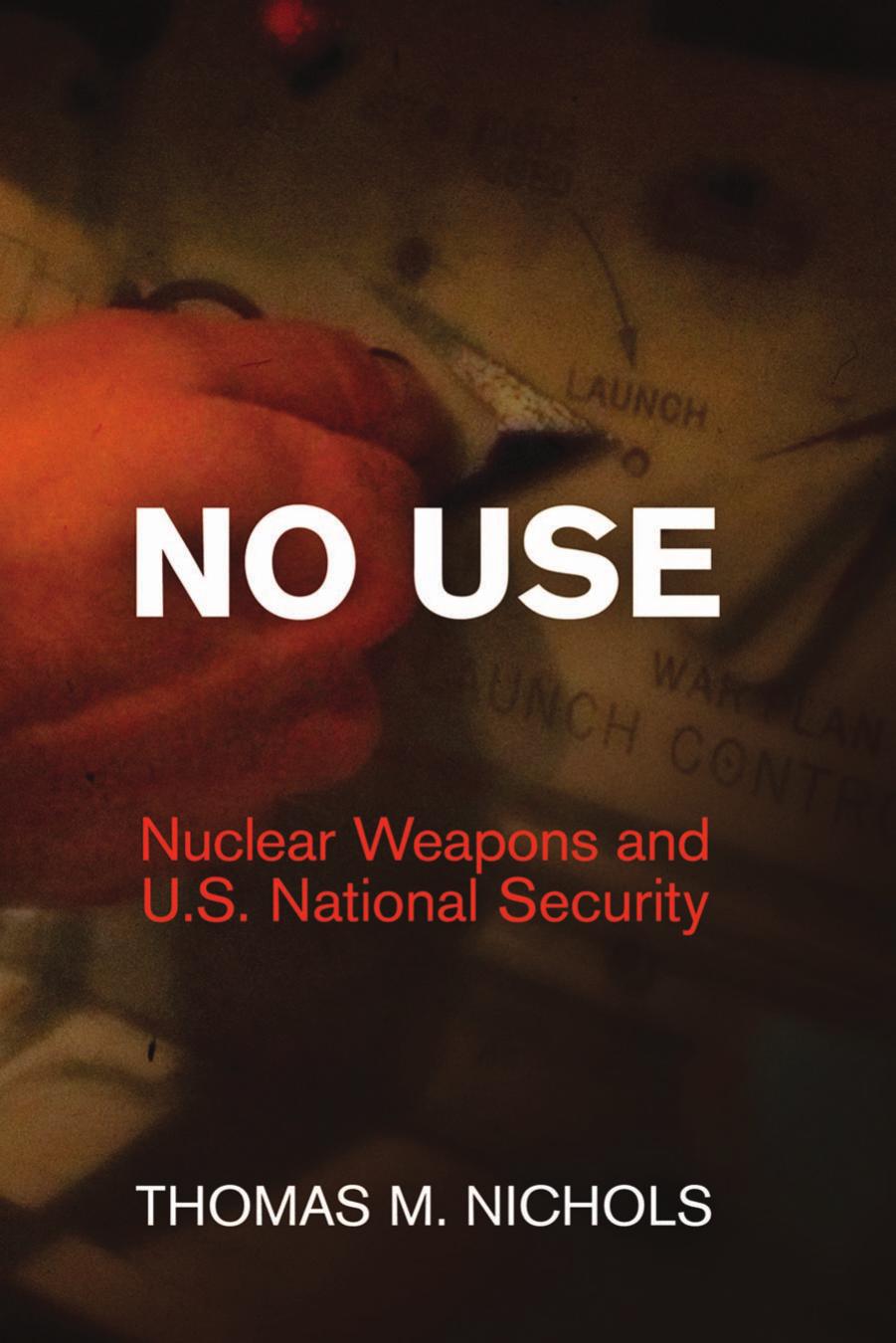
Author:Nichols, Thomas M.;
Language: eng
Format: epub, pdf
Publisher: Lightning Source Inc. (Tier 2)
Published: 2013-05-15T00:00:00+00:00
A New U.S. Strategic Deterrent
Despite American apprehension about minimum deterrence, other nations have been less reticent about accepting the concept. Since the end of the Cold War, the United Kingdom has openly referred to its strategic nuclear arsenal as a âminimumâ deterrent, meant only to deter âthe most destructive forms of aggression.â75 When France arrived as a nuclear power in the 1960s, Paris maintained a minimum deterrent on the assumption that the USSR would fear the great damage that could be leveled by a relatively modest arsenal. The French have since dismantled their small ICBM force, and a French scholar noted in 2007 that it is âunlikely that France would embark on a military nuclear weapons program today if it did not already have one.â76
The Chinese, although more aggressive in their public statements, have constructed a minimum nuclear force.77 India, Pakistan, and Israel together maintain arsenals that are a fraction of the American or Russian inventories, and the Indians, for their part, have made definitive statements about the meaning of their arsenal. âLetâs be quite clear on it,â General V. K. Singh, the chief of the Indian Army, said in early 2012. âNuclear weapons are not for warfighting. They have got a strategic significance and that is where it should end.â78 This leaves only the United States and Russia maintaining strategic triads capable of protracted nuclear exchanges.
A new U.S. nuclear deterrent would require several major changes. Some of these changes are already within reach, while others would require a significant reform of American foreign and defense policies. Material changes would include a unilateral reduction in the size of the U.S. nuclear arsenal and a restructuring of U.S. strategic nuclear forces to support a retaliation-only doctrine. Even more important, American leaders will have to undertake several politically challenging decisions, including declaring a public commitment to minimum deterrence, embracing a âno first useâ pledge, revising the policy of extended deterrence for our allies, and the cancellation of national missile defenses.
Critics will charge that these proposals amount to unilateral nuclear disarmament. Such a description would be correct. There is no point in trying to create a euphemism for disarmament, nor is there any need for one. Disarmament gained a bad name from the end of World War I to the end of the Cold War, not only because any practical application of the notion was limited by genuinely dire international circumstances, but also because of the way some of its adherents advocated it. Too often, nuclear disarmament efforts during the Cold War were the product of a synergy between sanctimony and hysteria, and showed no understanding of the real danger presented by the Soviet empire.79
In the twenty-first century, however, there is an opportunity to reclaim the concept of disarmament as a legitimate part of statecraft. Ridding the world of nuclear weapons is the stated goal of the U.S. government, and of a broad and bipartisan coalition that includes some of the most conservative and stoic figures in the nuclear history of the Cold
Download
This site does not store any files on its server. We only index and link to content provided by other sites. Please contact the content providers to delete copyright contents if any and email us, we'll remove relevant links or contents immediately.
| Arms Control | Diplomacy |
| Security | Trades & Tariffs |
| Treaties | African |
| Asian | Australian & Oceanian |
| Canadian | Caribbean & Latin American |
| European | Middle Eastern |
| Russian & Former Soviet Union |
The Secret History by Donna Tartt(19086)
The Social Justice Warrior Handbook by Lisa De Pasquale(12190)
Thirteen Reasons Why by Jay Asher(8909)
This Is How You Lose Her by Junot Diaz(6886)
Weapons of Math Destruction by Cathy O'Neil(6279)
Zero to One by Peter Thiel(5801)
Beartown by Fredrik Backman(5754)
The Myth of the Strong Leader by Archie Brown(5507)
The Fire Next Time by James Baldwin(5442)
How Democracies Die by Steven Levitsky & Daniel Ziblatt(5218)
Promise Me, Dad by Joe Biden(5153)
Stone's Rules by Roger Stone(5087)
A Higher Loyalty: Truth, Lies, and Leadership by James Comey(4962)
100 Deadly Skills by Clint Emerson(4925)
Rise and Kill First by Ronen Bergman(4788)
Secrecy World by Jake Bernstein(4753)
The David Icke Guide to the Global Conspiracy (and how to end it) by David Icke(4717)
The Farm by Tom Rob Smith(4507)
The Doomsday Machine by Daniel Ellsberg(4490)
