Dubai, the City as Corporation by Ahmed Kanna
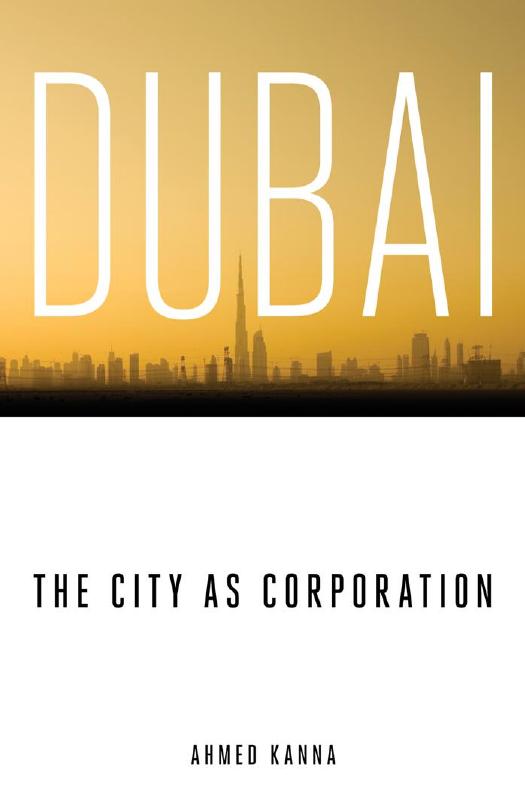
Author:Ahmed Kanna
Language: eng
Format: mobi, pdf
Tags: Anthropology, Urban, Cultural, Sociology, Social Science
ISBN: 9780816656318
Publisher: U of Minnesota Press
Published: 2011-06-08T21:00:00+00:00
CHAPTER 4
tHe CitY-CorPoration
Young Professionals and the Limits of the Neoliberal Response
HÄdhÄ« hÄdhÄ« Dâbai, hÄdhÄ« dÄr-ilḥayy, illÄ« trajjiâ al-shÄyib á¹£bayy. [This is Dubai, this is Dubai. This is the fountain of youth that turns the old man into a young boy.]
âPoem related by locally-based social scientist
If you donât keep up with the times, youâre considered not to exist. âEmirati manager at Majid Al Futtaim Corporation
W
hile they represent an influential tendency in UAE cultural criti - cism, the nostalgic, or what I have called neoorthodox, voices in the previous chapter are regarded as stifling and rigid by many
other Emiratis.1 It is not uncommon for younger Emiratis, especially from among the neoliberal managerial class, to orient themselves towards a perceived multinational modernity beyond the confines staked out by these voices. This is not to suggest that these more neoliberal Emiratis simply reject Emirati ways of identification and investing their lives with mean- ing, nor to imply that the neoliberal modernity with which they identify is a wholly foreign set of values imposed from outside. These managerial types, what I call (after Ong 1999 and Wilson) Dubaiâs âflexible citizens,â certainly would reject the types of nostalgia voiced in the previous chapter. They do not, however, reject Emirati and Muslim identities. They read them and attempt to live them in a different way. A facile rejection of the ascendant, state-led neoliberal modernity of the past two decades is not a possibility for them. Rather, they engage in an active, often creative alignment of Emirati and neoliberal values.
It is in the context of the most recent, 2008â9 world economic crisis that I began to more fully appreciate how intimately connected neoliberal ways of imagining the community and identifying oneself are among these flexible citizens. The crisis badly bruised Dubai, knocking it from the perch on which it had been set by many admirers during the past decade and even turning it, for many, into a reflection of the rot in the contemporary global financial and real estate economies (Kanna Forthcoming). As one friend, an expatriate now based in North America but who has lived for decades in Dubai, noted after a recent trip back, âIâm actually curious to see what will happen post-recession. I was there in February [2009] and 90 percent of the people I know there . . . lost their jobs. At least traffic is now bear- able!â Some of what is in store in the near future is anticipated by the UAE federal state, which has recently taken more interventionist measures, such as passing laws making it effectively impossible to fire nationals from the private sector. More ominously, foreigners applying for work visas must now demonstrate knowledge of âUAE cultureâ (Gulf News 2009; Issa).
A recent blog entry by a friend, an educated, multilingual Emirati currently studying for an MBA in the United States, is therefore striking. In an entry from June 2009, responding to questions posed by expatriates about Dubaiâs current economic challenges, he admitted that âour giddy property bubble popped, weâre
Download
Dubai, the City as Corporation by Ahmed Kanna.pdf
This site does not store any files on its server. We only index and link to content provided by other sites. Please contact the content providers to delete copyright contents if any and email us, we'll remove relevant links or contents immediately.
| Anthropology | Archaeology |
| Philosophy | Politics & Government |
| Social Sciences | Sociology |
| Women's Studies |
Born to Run: by Christopher McDougall(7121)
The Leavers by Lisa Ko(6945)
iGen by Jean M. Twenge(5408)
Sapiens by Yuval Noah Harari(5366)
Spare by Prince Harry The Duke of Sussex(5176)
The Kite Runner by Khaled Hosseini(5170)
Machine Learning at Scale with H2O by Gregory Keys | David Whiting(4292)
Bullshit Jobs by David Graeber(4179)
Never by Ken Follett(3937)
Goodbye Paradise(3799)
Livewired by David Eagleman(3764)
Fairy Tale by Stephen King(3370)
A Dictionary of Sociology by Unknown(3073)
Harry Potter 4 - Harry Potter and The Goblet of Fire by J.K.Rowling(3060)
The Social Psychology of Inequality by Unknown(3018)
The Club by A.L. Brooks(2919)
Will by Will Smith(2910)
0041152001443424520 .pdf by Unknown(2843)
People of the Earth: An Introduction to World Prehistory by Dr. Brian Fagan & Nadia Durrani(2727)
