American Dispatches: A Robert Parry Reader with a Foreword by Diane Duston; Edited and with an Afterword by Nat Parry by Robert Parry
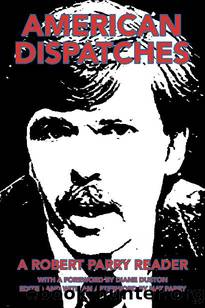
Author:Robert Parry [Parry, Robert]
Language: eng
Format: epub
Publisher: iUniverse
Published: 2022-06-21T00:00:00+00:00
Deeper Into the Big Muddy (Oct. 27, 2002)
Originally published at Consortium News
On the campaign trail this fall, George W. Bush has been selling his hardline foreign policy as a strategy for protecting Americans. But the opposite now appears to be true: Bushâs tough-guy rhetoric in the face of complex world problems is adding to the dangers confronting Americans.
The latest episode of Bushâs unintended consequences is North Koreaâs admission that it is pressing ahead to build nuclear weapons.
Bushâs supporters have tried to shift the blame for this unsettling development to President Clinton, by claiming that a 1994 agreement to stop North Koreaâs nuclear program was too weak. But the evidence now is that North Korea cast aside that agreement this year and sped up its quest for nuclear weapons in direct reaction to Bushâs threats and rhetoric.
The collision course with North Korea was set early in the Bush administration. In 2001, shortly after taking office, Bush cut off talks with North Korea and snubbed South Koreaâs President Kim Dae-Jung over his détente strategy. Kim Dae-Jung, a Nobel Peace Prize winner, found himself humiliated during a state visit to Washington.
After the Sept. 11 terror attacks on New York and Washington, Bush began counting North Korea as part of his âaxis of evil,â along with Iraq and Iran. Apparently, Bushâs reasoning for putting North Korea into the âaxisâ was to avoid fingering only Islamic countries. So his speechwriters added North Korea as a kind of politically correct multiculturalism in reverse.
More substantively, in late 2001, Bush sent to Congress a ânuclear posture review,â which laid out future U.S. strategy for deploying nuclear weapons. Leaked early this year, the so-called NPR put North Korea on a list of potential targets for U.S. nuclear weapons. In doing that, Bush reversed President Clintonâs commitment against targeting non-nuclear states with nuclear weapons. Clintonâs idea was that a U.S. promise not to fire nuclear weapons at non-nuclear states would reduce their incentives for joining the nuclear club.
But to Bushâs advisers, Clintonâs strategy was simply more âappeasement.â So Bush showed his toughness by aiming nuclear missiles at North Korea and other enemy states. As part of the nuclear review, the Bush administration also discussed lowering the threshold for the use of U.S. nuclear weapons by making low-yield tactical nukes available for some battlefield situations.
All of this may have played well with Bushâs conservative base and many of his neoconservative geopolitical enthusiasts. But North Koreaâs famously paranoid communist government went, as they say, ballistic.
âStrong Countermeasuresâ
Last March, Pyongyang signaled what would come next. The North Korean government warned of âstrong countermeasuresâ against Bushâs nuclear policy shifts. North Korea accused the Bush administration of âan inhuman plan to spark a global nuclear arms raceâ and vowed that it would ânot remain a passive onlookerâ after being included in the Pentagonâs list of prospective nuclear targets.
A commentary, issued by the official Korean Central News Agency, cited the threat from the Bush administration in the context of the U.S. nuclear bomb dropped on Hiroshima in 1945.
Download
This site does not store any files on its server. We only index and link to content provided by other sites. Please contact the content providers to delete copyright contents if any and email us, we'll remove relevant links or contents immediately.
| Anthropology | Archaeology |
| Philosophy | Politics & Government |
| Social Sciences | Sociology |
| Women's Studies |
Born to Run: by Christopher McDougall(7121)
The Leavers by Lisa Ko(6945)
iGen by Jean M. Twenge(5409)
Sapiens by Yuval Noah Harari(5366)
Spare by Prince Harry The Duke of Sussex(5179)
The Kite Runner by Khaled Hosseini(5170)
Machine Learning at Scale with H2O by Gregory Keys | David Whiting(4295)
Bullshit Jobs by David Graeber(4179)
Never by Ken Follett(3937)
Goodbye Paradise(3799)
Livewired by David Eagleman(3765)
Fairy Tale by Stephen King(3370)
A Dictionary of Sociology by Unknown(3074)
Harry Potter 4 - Harry Potter and The Goblet of Fire by J.K.Rowling(3061)
The Social Psychology of Inequality by Unknown(3018)
The Club by A.L. Brooks(2919)
Will by Will Smith(2911)
0041152001443424520 .pdf by Unknown(2843)
People of the Earth: An Introduction to World Prehistory by Dr. Brian Fagan & Nadia Durrani(2731)
