Cut to the Monkey by Roger Nygard;
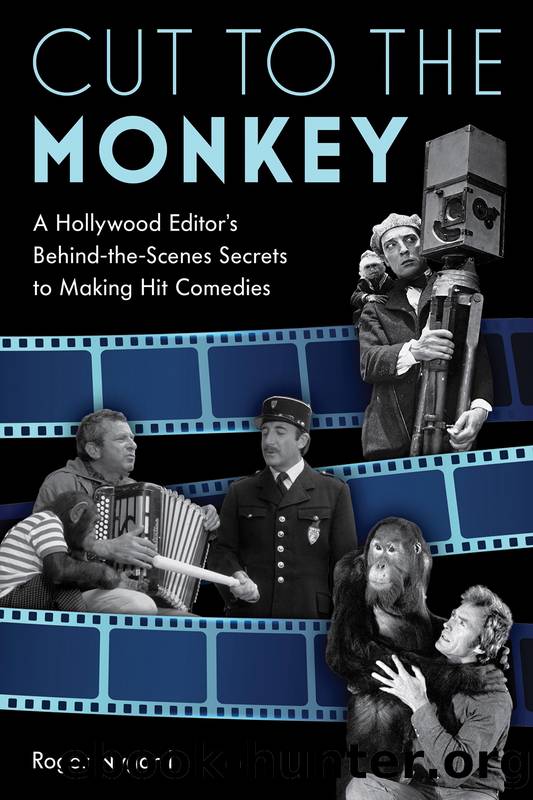
Author:Roger Nygard;
Language: eng
Format: epub
Publisher: Rowman & Littlefield Publishing
Published: 2021-09-06T00:00:00+00:00
Talent Is Discipline
While working on Starship Troopers, Edward Neumeier once commiserated to director Paul Verhoeven, âI wish I was more talented.â
Verhoeven replied, âYeah, we all do.â
Neumeier came to realize that talent is discipline. âYou cannot not write. Itâs easy to not write. You have to make yourself sit down and write. Thatâs talent.â Dedicate time to writing. When Iâm on an editing job, I set aside one day on the weekend to deal with various disasters, and the other day is for writing. I have to get in my hours, usually two before lunch, and four after. Thinking of a whole project is overwhelming, so I set an achievable goal, like a draft of a first-act outline, or five pages. Many writers talk about achieving a certain number of words per day. Stephen King puts his goal at two thousand words.2 Sometimes when I finish only one decent paragraph, itâs a celebration. The point is to keep chipping away.
If you are still protesting, âI canât write!â what about the hundreds of texts, e-mails, and social media posts you wrote today? For a few hours, shift your focus away from those time-wasters. Open a document. Think about a character, or a person you have known. Now ask, what is their fatal flaw? Maybe: âMy father canât let go of the past; he tries to control me with threats to stop paying my dorm rent.â Or, âMy sister acts like a jerk; sheâs in pain because sheâs been jealous since we were toddlers.â Or maybe think of yourself: âI canât say âI love youâ to anybody because my emotions have been crushed so many times.â Now describe that personâs most embarrassing moment theyâve ever experienced. Sit there until you write at least one paragraph. Itâs okay to write it badly at first. Just get something on the page. Later you can revise it. That first paragraph, a description of a character with a problem, that is the beginning of a story. And an embarrassing incident comes with a built-in punch line, an automatic ending, just like when you would tell the anecdote to your friends.
When Edward Neumeier analyzed hundreds of scripts, he realized stories are all about survival: âWe are pattern-seeking primates who came from the African savanna. Weâve been here a long time, but there have been a lot of people before us. And all they were trying to do was not get killed. Social survival is love stories. Physical survival is action adventure. Stories are an educational process for the audience: Here is how you survive this situation.â
Download
This site does not store any files on its server. We only index and link to content provided by other sites. Please contact the content providers to delete copyright contents if any and email us, we'll remove relevant links or contents immediately.
Kathy Andrews Collection by Kathy Andrews(11984)
The remains of the day by Kazuo Ishiguro(9094)
Spare by Prince Harry The Duke of Sussex(5268)
Paper Towns by Green John(5253)
The Body: A Guide for Occupants by Bill Bryson(5184)
Industrial Automation from Scratch: A hands-on guide to using sensors, actuators, PLCs, HMIs, and SCADA to automate industrial processes by Olushola Akande(5088)
Machine Learning at Scale with H2O by Gregory Keys | David Whiting(4379)
Be in a Treehouse by Pete Nelson(4099)
Never by Ken Follett(4042)
Harry Potter and the Goblet Of Fire by J.K. Rowling(3914)
Goodbye Paradise(3870)
The Remains of the Day by Kazuo Ishiguro(3474)
Into Thin Air by Jon Krakauer(3465)
Fairy Tale by Stephen King(3462)
The Cellar by Natasha Preston(3393)
The Genius of Japanese Carpentry by Azby Brown(3350)
120 Days of Sodom by Marquis de Sade(3319)
Reminders of Him: A Novel by Colleen Hoover(3284)
The Man Who Died Twice by Richard Osman(3136)
