Language, Vernacular Discourse and Nationalisms by Finex Ndhlovu
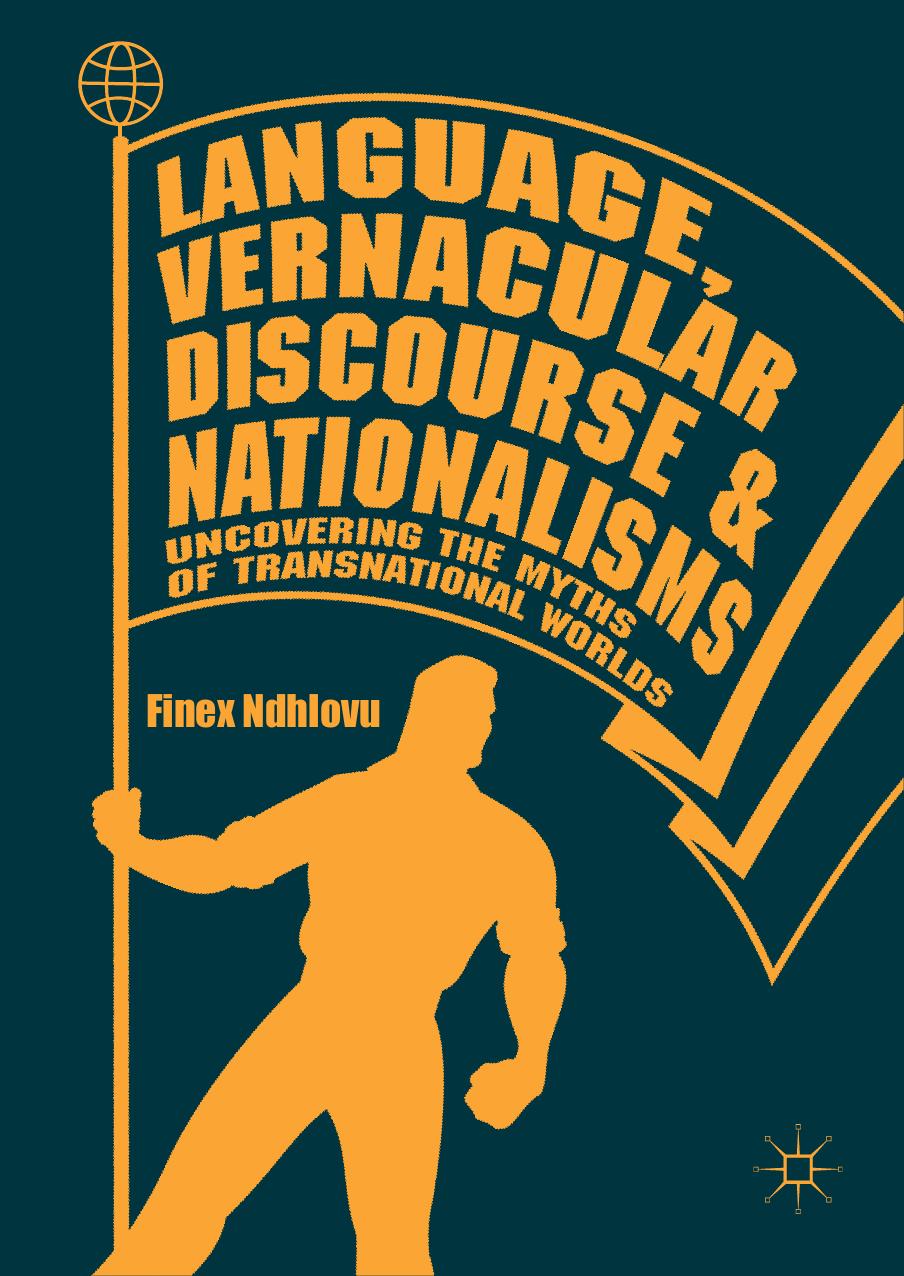
Author:Finex Ndhlovu
Language: eng
Format: epub, pdf
Publisher: Springer International Publishing, Cham
Essentially, the implication here is this: regardless of the fact that land dispossession was an indisputable historical event, measures for redress have to be implemented in the context of contemporary South African and global political, legal, economic and social realities. This entails abiding by the dictates of section 25 of the Constitution of the Republic of South Africa , which both guarantees secure property rights and obliges the state to âenable citizens to gain access to land on an equitable basisâ (Constitution of the Republic of South Africa 1996).
The second pillar of South Africa âs land reform programme is that of redistribution whose main goal is to create a new class of black commercial farmers who would inherit existing white commercial farms. A key underpinning premise of land redistribution in South Africa is the need to strike a balance between redress and sustainability, a point that was underscored by President Jacob Zuma in his 2014 State of the Nation speech: âThe programme of reversing land dispossession must be undertaken in a manner that corrects the injustice while also promoting agricultural stability and food securityâ. It is precisely for this reason that the South African government seems to have so far proceeded with a high degree of caution. Concerns about triggering higher and volatile food prices through a more radical land redistribution exercise seem to loom large in the South African approach (Africa Research Institute 2013). But at the same time, it is this cautionary approach that betrays the pre-eminence of neoliberal discourse over a language that pushes the agenda of redress and equality of opportunity in access to land . In particular, the neoliberal discourse has led to a situation where âclass is slowly becoming a more significant determinant of land ownership than before 1994â (Walker 2013). Therefore, as was the case with the restitution part, land redistribution has been dogged by systematic failures to deliver the envisaged redress and correction of the apartheid legacy of race-based land ownership patterns. This leads us to the third pillarâthat of land tenure .
Tenure reform in South Africa is a contested but neglected area of land reform policy (Department of Land Affairs, 2002). Legislation designed to improve tenure has so far been ineffective. Security of tenure has remained precarious for most rural South Africans (Lahiff 2009). For example, it is estimated that about 942,300 black farm workers were forcibly removed from commercial farms between 1994 and 2004 on grounds that this was private land (Lahiff 2009). The government then went on to create what came to be known as âagrivillagesâ for farm dwellers and also introduced in 2004 the Communal Land Rights Act (CLaRA) . Under CLaRA , the legal power for altering or determining land tenure arrangements in communal areas was transferred from the state to traditional authorities (Kepe 2009). This essentially erased the prospect of individual title to land in communal areas, thus falling back to the pre-1994 model of homeland boundaries in which power is vested in unelected local authorities.
Consequently,
Download
Language, Vernacular Discourse and Nationalisms by Finex Ndhlovu.pdf
This site does not store any files on its server. We only index and link to content provided by other sites. Please contact the content providers to delete copyright contents if any and email us, we'll remove relevant links or contents immediately.
Crazy Rich Asians by Kevin Kwan(9370)
Small Great Things by Jodi Picoult(7273)
Spare by Prince Harry The Duke of Sussex(5291)
Too Much and Not the Mood by Durga Chew-Bose(4415)
Machine Learning at Scale with H2O by Gregory Keys | David Whiting(4399)
Never by Ken Follett(4074)
Harry Potter 02 & The Chamber Of Secrets (Illustrated) by J.K. Rowling(3708)
I'll Give You the Sun by Jandy Nelson(3525)
Fairy Tale by Stephen King(3483)
Reminders of Him: A Novel by Colleen Hoover(3309)
The Ultimate Backcountry Survival Manual by Aram Von Benedikt; Editors of Outdoor Life;(3286)
The Man Who Died Twice by Richard Osman(3151)
Fantastic Beasts and Where to Find Them: Illustrated edition by J.K. Rowling & Newt Scamander(3056)
Will by Will Smith(3012)
The One Memory of Flora Banks by Emily Barr(2921)
Beautiful Disaster 01 by Jamie McGuire(2812)
Never Lie: An addictive psychological thriller by Freida McFadden(2810)
Harry Potter and the Deathly Hallows (7) by J.K. Rowling(2782)
Hooked: A Dark, Contemporary Romance (Never After Series) by Emily McIntire(2618)
