The Invisible History of the Rosicrucians by Tobias Churton
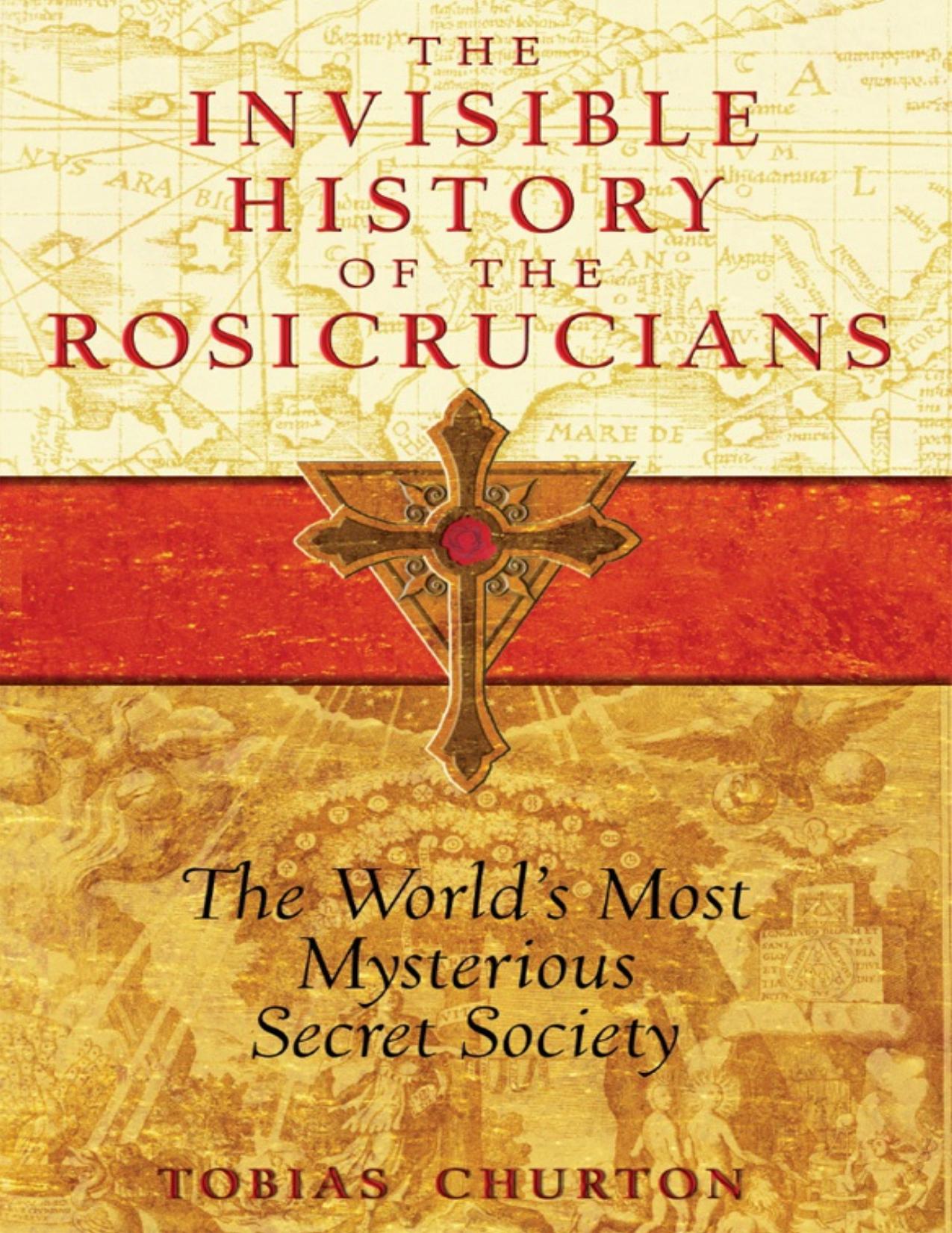
Author:Tobias Churton
Language: eng
Format: epub, pdf
Tags: History/Secret Societies
ISBN: 9781594779312
Publisher: Inner Traditions / Bear & Company
Published: 2010-10-16T04:00:00+00:00
JOACHIM MORSIUS
It is fitting that we have taken our story of the Invisibles to the icy coasts of the Baltic. For there, in the coastal ports, with their roads inward to Saxony, Poland, and all trading points north, south, east, and west, there would develop a strange community of itinerants with curious and fruitful connections at the courts of Holland, Denmark, Sweden, and England.
A “community of itinerants” sums up the situation rather well, since the men concerned always seem to have been on the move, keeping in touch with one another through letter, book, and pamphlet. One can only wonder if Francis Bacon had such a body in mind when, in his New Atlantis, he referred to the “Merchants of Light” who departed their island both to acquire and to impart knowledge.
Joachim Morsius of Lübeck (1593–1643) is almost the archetypal wanderer. There is something romantic about a figure who follows his dream, motivated by the spur of his inner life against all considerations of bourgeois comfort. His example points toward the romanticism that would erupt throughout Germany a century and a half later, when thinking people had tired somewhat of the Age of Reason.
Born in Hamburg and educated at the University of Rostock, Morsius excelled in theology and early on headed for the esoteric aspect of religion. He took up alchemy. At the age of twenty-one, he was struck by the appearance of the Rosicrucian manifestos; they seemed to have arrived just in time. Morsius packed his bag and went in search of the Rosicrucians.
In 1619 he was in England, trying for recognition as an international scholar. The University of Cambridge granted him an M.A. Morsius continued to edit and publish theosophical and alchemical works. His Theosophi eximii (Exceptional Theosophy) was published that year in Frankfurt. The work defended the Rosicrucians and, in particular, their secrecy. Also in that year, Morsius met the British satirical playwright Ben Jonson, author of the comedy The Alchemist, which presented Paracelsian alchemists in London as ludicrous dupes.
Jonson listened hard and incorporated what he had learned from Morsius and elsewhere in his court masque for James I, Fortunate Isles and Their Union. Jonson mocked the Rosicrucian order as a “company of players.” This was an acute judgment. In the previous year, Andreae had himself mocked the appearance of a new cast of “actors” playing new roles in the Rosicrucian furor. Andreae had designed the play; others were improvising the scripts.
By 1624, Morsius had a lively circle of contacts in Stockholm, Riga, and Amsterdam. These included Johannes Bureus (court antiquarian to the king of Sweden), Abraham von Franckenberg, Samuel Hartlib, and Johann Comensky (Comenius). According to Åkerman, Morsius and his friends represented “key ingredients in the transmission of Rosicrucian thought.” Much of this thought was concerned with mystical prophecies of the coming of the Lion and the golden age.
This would be a Protestant golden age, filled with the wisdom of Hermetic philosophy, and Hartlib and Comenius traveled to England, seeing it as a suitable launching pad
Download
The Invisible History of the Rosicrucians by Tobias Churton.pdf
This site does not store any files on its server. We only index and link to content provided by other sites. Please contact the content providers to delete copyright contents if any and email us, we'll remove relevant links or contents immediately.
Becoming Supernatural by Dr. Joe Dispenza(8225)
Crystal Healing for Women by Mariah K. Lyons(7936)
The Witchcraft of Salem Village by Shirley Jackson(7280)
Inner Engineering: A Yogi's Guide to Joy by Sadhguru(6800)
The Four Agreements by Don Miguel Ruiz(6770)
The Power of Now: A Guide to Spiritual Enlightenment by Eckhart Tolle(5790)
Secrets of Antigravity Propulsion: Tesla, UFOs, and Classified Aerospace Technology by Ph.D. Paul A. Laviolette(5374)
The Wisdom of Sundays by Oprah Winfrey(5168)
Room 212 by Kate Stewart(5130)
Pale Blue Dot by Carl Sagan(5013)
Fear by Osho(4743)
The David Icke Guide to the Global Conspiracy (and how to end it) by David Icke(4724)
Animal Frequency by Melissa Alvarez(4478)
Rising Strong by Brene Brown(4467)
How to Change Your Mind by Michael Pollan(4361)
Sigil Witchery by Laura Tempest Zakroff(4250)
Man and His Symbols by Carl Gustav Jung(4142)
Real Magic by Dean Radin PhD(4134)
The Art of Happiness by The Dalai Lama(4133)
