The Gods of War: Is Religion the Primary Cause of Violent Conflict? by Meic Pearse
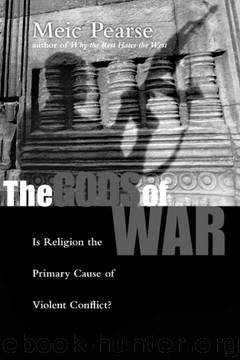
Author:Meic Pearse
Language: eng
Format: mobi, epub
Published: 2008-11-18T13:46:00+00:00
Among neoconservatives and liberals alike, Kant's view has become the new orthodoxy since the end of the Cold War. Francis Fukuyama was so convinced of it that in the early 1990s, he famously argued that all states were now embarking on capitalist liberal democracy and, in consequence, history (in the sense of violent upheavals) was coming to an end." To say that this analysis has not quite been borne out by subsequent events would be something of an understatement. Even so, President George W. Bush felt able to insist, in a speech at the White House on December 7, 2004, that "free nations are peaceful nations."16 Western liberals, it should be said, tend to focus on the big picture implied by the Kantian argument, neoconservatives on the particular details of the moment. The former emphasize that if all countries are liberal democracies, peace will be assured; the latter focus on the threat to freedom posed in the present moment by rogue states and are unafraid of using force to bring about regime change in order to democratize them. Both are mistaken.
THE RESTRAINTS ON WAR
That Kant wrote just as Europe was being embroiled in more than two decades of fighting, as a direct result of the French Revolution and its call for liberte, egalite and fraternite, was unfortunate. It also counts against Kant's thesis that it is precisely those states in the Muslim world today whose governments are most susceptible to popular pressure that are also the most belligerent.'' Populations that feel aggrieved, with whatever degree of justification, are likely to be kept pacific only if ruled by an individual or group with a vested interest in keeping the peace. In Kant's time, as now, it seems, the utmost violence is produced by the egalitarians' struggle to suppress the supposed historic causes of warfare. Neither is Kant's description of princes flippantly declaring war entirely uncontroversial; it may have fitted the eighteenth-century princelings who never personally went into battle. But in respect of some periods of history, it is little better than a caricature. If a medieval war was dynastic, princes stood to lose their thrones, their estates, their families and their lives. The fifteenth-century Wars of the Roses, for example, decimated the English nobility; the fighting mostly passed the peasant population by, unless they were unlucky enough to be in the path of an army
Download
The Gods of War: Is Religion the Primary Cause of Violent Conflict? by Meic Pearse.epub
This site does not store any files on its server. We only index and link to content provided by other sites. Please contact the content providers to delete copyright contents if any and email us, we'll remove relevant links or contents immediately.
The Lost Art of Listening by Michael P. Nichols(7578)
Why I Am Not A Calvinist by Dr. Peter S. Ruckman(4200)
The Rosicrucians by Christopher McIntosh(3557)
Wicca: a guide for the solitary practitioner by Scott Cunningham(3225)
Signature in the Cell: DNA and the Evidence for Intelligent Design by Stephen C. Meyer(3201)
Real Sex by Lauren F. Winner(3099)
The Holy Spirit by Billy Graham(3028)
To Light a Sacred Flame by Silver RavenWolf(2883)
The End of Faith by Sam Harris(2787)
The Gnostic Gospels by Pagels Elaine(2581)
Waking Up by Sam Harris(2512)
Jesus by Paul Johnson(2428)
Nine Parts of Desire by Geraldine Brooks(2421)
Devil, The by Almond Philip C(2392)
The God delusion by Richard Dawkins(2350)
Heavens on Earth by Michael Shermer(2322)
Kundalini by Gopi Krishna(2234)
Chosen by God by R. C. Sproul(2225)
The Nature of Consciousness by Rupert Spira(2160)
