The Essential Guide to Possession, Depossession, and Divine Relationships by Diana L. Paxson
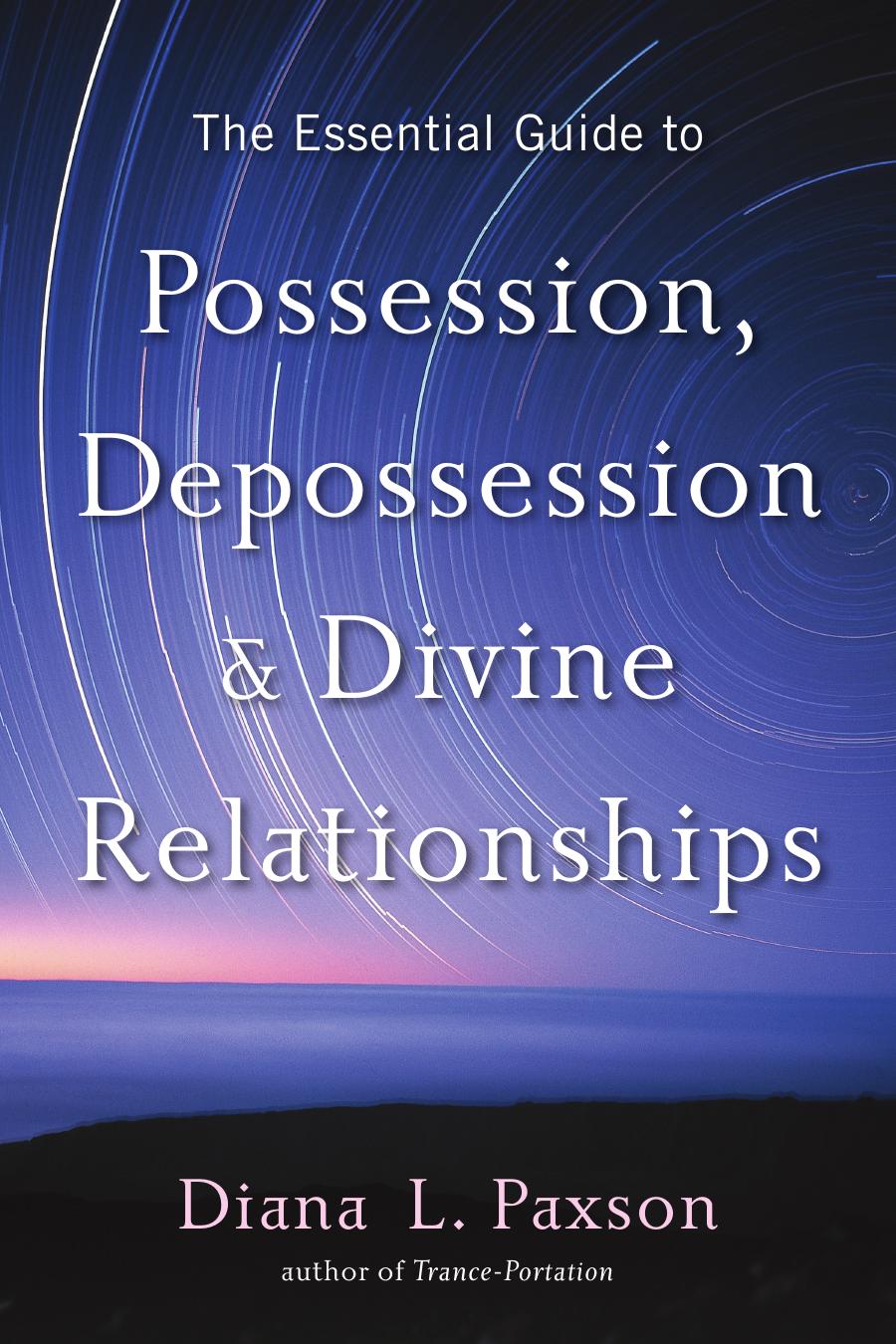
Author:Diana L. Paxson
Language: eng
Format: epub, pdf
ISBN: 9781609259211
Publisher: Red Wheel Weiser
Africa and Asia
In cultures that practice possession, the state is generally voluntarily provoked and eagerly desired by the possessed individual and his or her community. In his monumental work on possession, Possession: Demoniacal and Other, T. K. Oesterreich shared the general attitude of the educated European toward “primitive” peoples, and felt it necessary to point out that their “child-like autosuggestibility” is natural and not a symptom of pathological hysteria (Oesterreich 1930, 1966). He states that artificially provoked possessions differ from the spontaneous type in that their induction and progress are determined by the ceremonies that precede them. He identifies two varieties of trance—somnambulistic, in which consciousness is displaced completely and the medium remembers nothing of what has taken place afterward, and lucid possession, in which the host is to some extent aware of what is taking place but has little or no control over it.
Many of Oesterreich's examples are from Africa or Southeast Asia, and provide useful examples of how possessory states are handled in village cultures, as opposed to the tribal shamanism of Siberia and North America with which we are more familiar. Among the pygmy people of the Malay Peninsula, the ceremony involves burning specific incenses with traditional conjurations. The spirit descends, casts the poyaung into unconsciousness, and replies to questions. The Veddas of Ceylon call the spirit of a Yaku, or ghost, to possess the kapurale by singing a traditional song of invocation while the shaman dances around the offering:
As the charm is recited over and over again the shaman dances more and more quickly, his voice becomes hoarse and he soon becomes possessed by the yaka, and although he does not lose consciousness and can co-ordinate his movements, he nevertheless does not retain any clear recollection of what he says, and only a general idea of the movements he has performed . . .
Most sincere practitioners whom we interrogated in different localities agreed that although they never entirely lost consciousness, they nearly did so at times, and that they never fully appreciated what they said when possessed, while at both the beginning and end of possession they experienced a sensation of nausea and vertigo and the ground seemed to rock and sway beneath their feet. Some . . . said that they were aware that they shivered and trembled when they became possessed, and Handuna [his informant] heard booming noises in his ears as the spirit left him and full consciousness returned.
(Skeat, 133ff)
The possessing spirit may be recognized by self-identification, by its characteristic mannerisms, or by speaking in a particular tone or with an unusual vocabulary. Among the Bataks, for instance, “The incarnated spirit uses a peculiar language, the vocabulary of which is partly periphrastic and partly archaic” (Warneck 1909, 8). Batak begus are ancestral spirits who convince their hearers of their validity by giving details of the life of the dead man and taking on his mannerisms and appearance. Nonetheless, the information given is not always accurate—it is “‘like stones thrown at night’ (i.e. they sometimes hit and sometimes miss)” (Ibid.
Download
The Essential Guide to Possession, Depossession, and Divine Relationships by Diana L. Paxson.pdf
This site does not store any files on its server. We only index and link to content provided by other sites. Please contact the content providers to delete copyright contents if any and email us, we'll remove relevant links or contents immediately.
Becoming Supernatural by Dr. Joe Dispenza(8226)
Crystal Healing for Women by Mariah K. Lyons(7936)
The Witchcraft of Salem Village by Shirley Jackson(7282)
Inner Engineering: A Yogi's Guide to Joy by Sadhguru(6800)
The Four Agreements by Don Miguel Ruiz(6770)
The Power of Now: A Guide to Spiritual Enlightenment by Eckhart Tolle(5791)
Secrets of Antigravity Propulsion: Tesla, UFOs, and Classified Aerospace Technology by Ph.D. Paul A. Laviolette(5374)
The Wisdom of Sundays by Oprah Winfrey(5168)
Room 212 by Kate Stewart(5130)
Pale Blue Dot by Carl Sagan(5013)
Fear by Osho(4743)
The David Icke Guide to the Global Conspiracy (and how to end it) by David Icke(4724)
Animal Frequency by Melissa Alvarez(4478)
Rising Strong by Brene Brown(4468)
How to Change Your Mind by Michael Pollan(4362)
Sigil Witchery by Laura Tempest Zakroff(4250)
Man and His Symbols by Carl Gustav Jung(4143)
Real Magic by Dean Radin PhD(4134)
The Art of Happiness by The Dalai Lama(4133)
