Psychedelic Consciousness by Daniel Grauer
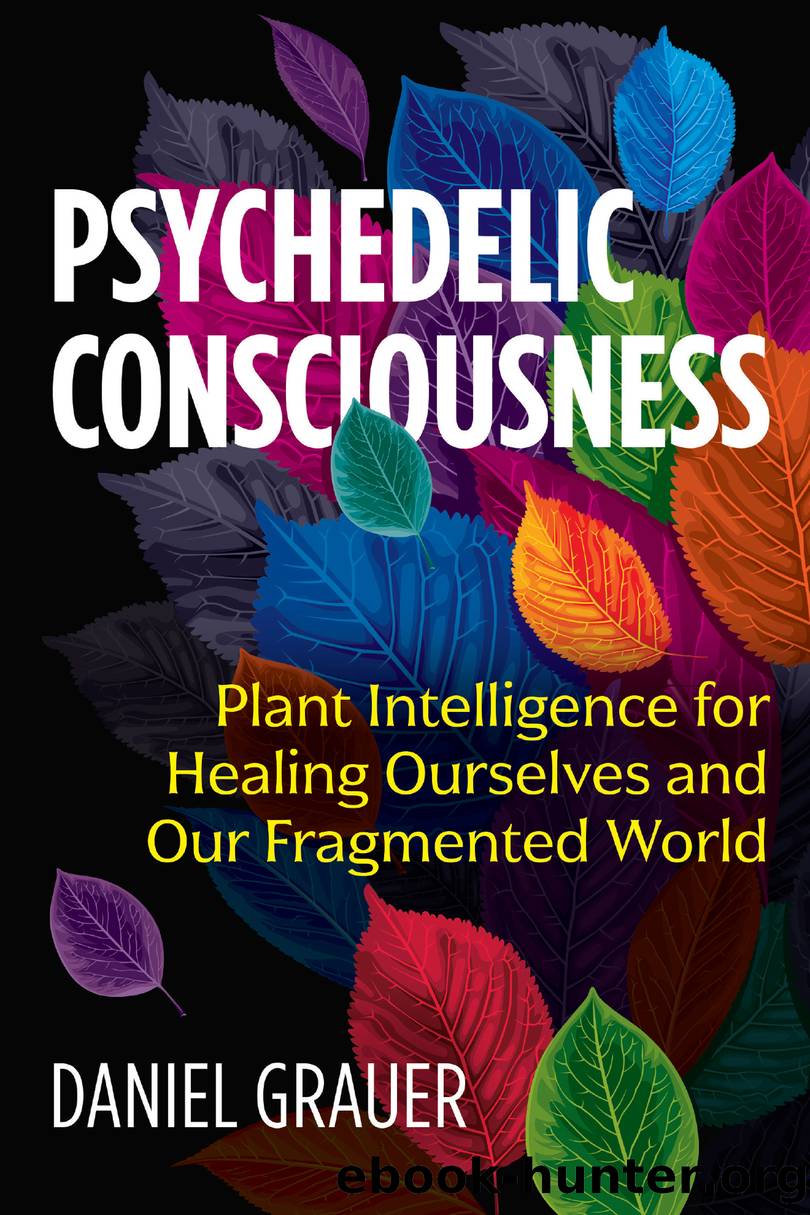
Author:Daniel Grauer
Language: eng
Format: epub
Tags: SPIRITUALITY/ENTHEOGENS
Publisher: Inner Traditions/Bear & Company
Published: 2020-05-20T00:00:00+00:00
The content of these first ecstatic experiences, although comparatively rich, almost always includes one or more of the following themes: dismemberment of the body, followed by a renewal of the internal organs and viscera: ascent to the sky and dialogue with the gods or spirits: descent to the underworld and conversations with spirits and the souls of dead shamans: various revelations, both religious and shamanic (secrets of the profession).2
Following this initiation, breaking of the threshold, and disruption, there is a period during which an experienced shaman instructs the neophyte, who masters the shaman’s mystical techniques and learns the religious and mythological traditions of the tribe. This process involves many trials and ordeals of a mystical or apparently physically impossible nature (journey). Once this transformation process is completed and the shaman is initiated, he or she can then use all of these same techniques to heal others (return), whether it be from spiritual crises, physical ailments, emotional distress, or any other form of disease or trauma, as well as to facilitate revelation or spiritual understanding. The shaman may use psychedelic plants/fungi, songs, mystical practices, or various other tools to not only bring himself or herself into nonordinary or holotropic states of consciousness but also patients. In such a scenario, the shaman enables patients to experientially access the phases of transformation and heal on their own.
This approach is drastically different from what we are used to in modern medicine. Instead of a symptom-and-response situation that is controlled by the doctor, it is an intuitive or self-directed type of healing that is facilitated by the healer. This is supported by the idea that the body or mind naturally wants to heal. For example, a doctor does not heal a broken arm; the doctor simply provides a structure or cast, and the body then heals itself. In shamanism, this process is facilitated on a psychosomatic level.
In this situation, the person who seeks healing leaves his or her regular state or body (a disruption in identity) to enter into an area beyond the ego. Here, the person is connected to the collective unconscious or the whole. And in this state of existence, the person is able to sense exactly what is missing or needs to be healed. Yet, how is that?
We can use our body as an example. When we are healthy and whole, it would be quite obvious if a body part were hurt. Similarly, when we access an egoless perspective, we experience a sense of unity and our sense of self expands to a larger whole. If there was then something hurting within this expanded self—be it a trauma, memory, emotion, or previously unidentified physical ailment—we would be able to tell immediately what that is. Once this hurting part is identified, our body-mind naturally begins to heal itself so that it can return to a dynamic state of equilibrium.
This is why psychedelics have such a profound potential to heal so many various mental and spiritual traumas. They facilitate a state of wholeness, which in turn allows us to see, feel, or experience exactly what needs healing.
Download
This site does not store any files on its server. We only index and link to content provided by other sites. Please contact the content providers to delete copyright contents if any and email us, we'll remove relevant links or contents immediately.
Becoming Supernatural by Dr. Joe Dispenza(8278)
Crystal Healing for Women by Mariah K. Lyons(7966)
The Witchcraft of Salem Village by Shirley Jackson(7339)
Inner Engineering: A Yogi's Guide to Joy by Sadhguru(6837)
The Four Agreements by Don Miguel Ruiz(6836)
The Power of Now: A Guide to Spiritual Enlightenment by Eckhart Tolle(5855)
Secrets of Antigravity Propulsion: Tesla, UFOs, and Classified Aerospace Technology by Ph.D. Paul A. Laviolette(5413)
The Wisdom of Sundays by Oprah Winfrey(5206)
Room 212 by Kate Stewart(5185)
Pale Blue Dot by Carl Sagan(5082)
Fear by Osho(4783)
The David Icke Guide to the Global Conspiracy (and how to end it) by David Icke(4772)
Rising Strong by Brene Brown(4512)
Animal Frequency by Melissa Alvarez(4512)
How to Change Your Mind by Michael Pollan(4404)
Sigil Witchery by Laura Tempest Zakroff(4298)
Man and His Symbols by Carl Gustav Jung(4197)
The Art of Happiness by The Dalai Lama(4170)
Real Magic by Dean Radin PhD(4168)
