Divination and Human Nature by Struck Peter T.;
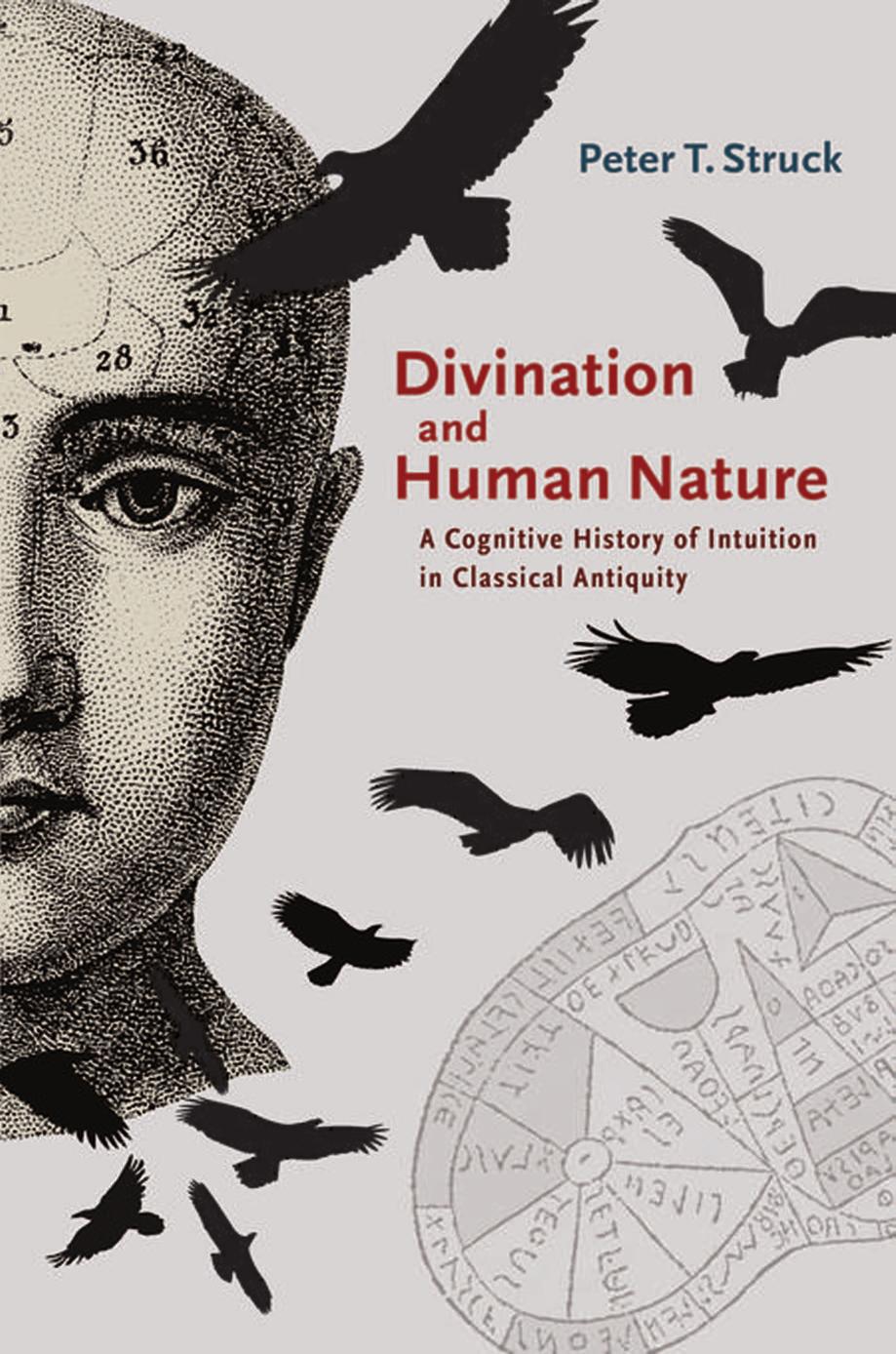
Author:Struck, Peter T.;
Language: eng
Format: epub, pdf
Publisher: Princeton University Press
PART 4: FROM EXTERNAL MOVEMENTS TO ANTICIPATORY IMAGES: A RETURN TO THE SENSITIVE-INSTRUMENT ARGUMENT
By this reading, Aristotle’s explanation of the strange case of consistent luckiness is a rare case of his appealing the notion of divine causation proposed by the impulse hypothesis to explain a specific phenomenon. Now, turning back to the treatise on predictive dreams, we have a new way to understand what Aristotle means in his claim that dreams are not “god-sent,” however, “they are demonic; for nature is demonic, but not divine.” The puzzle set out at the outset of this chapter centered on why he invokes the demonic. If Aristotle were mainly trying just to debunk divine causation, this category is left entirely without context. The work done up this point provides a solution to this crux of the On Divination during Sleep, as well as to the other problems of interpretation in the sections that follow it. With the claim that dreams and nature as a whole are demonic, Aristotle is claiming that natural objects tend to reach for what is good for them, even in cases where these substances lack higher-order discernment of what that good is, because it is ultimately the divine that continuously precipitates the move from potential to actual along a vector toward the good, always or for the most part. There will be manifold qualifications and delimitations to this general principle as we re-work our way through the second section of the treatise.
Moving to the sentence immediately following the formula, as we saw above, Aristotle educes a “proof” of his broad claim that dreams are not godsent but, rather, demonic. He tells us that very simple people are clairvoyant (προορατικοί) and have correct dreams (εὐθυόνειροι).91 We were struck earlier by the question of how such a proof was envisioned to work. Imagining it as just a debunking of the idea that dreams are godsent, and without reference to the demonic is ruled out by the logic of the subsequent sentences: he goes on to treat the correct dreamers as supersensitive instruments. He considers their profusion of dreams as genuine signs of future events and not as random fantasies. By reading through the gains made above, the logic by which the proof works now unfolds this way: the observable fact of clairvoyance among the empty-headed attests to an underlying process that must be steering it. Since such people are incapable of the distinctive higher-order human capacity of reason, they cannot achieve good outcomes that way (the way the rest of us do). They are closer to lower-order nature. And since they are, we need an explanation for why they nevertheless veer toward what is good for them. The demonic is invoked to refer to this underlying process.
We have seen in the impulse hypothesis a very general accounting for why substances tend to actualize the reach toward the better that is part of their natures. The divine is not a direct efficient cause, but it provides a precipitating impulse to actualize potential, to fulfill the good of each entity that nature sets out for it.
Download
Divination and Human Nature by Struck Peter T.;.pdf
This site does not store any files on its server. We only index and link to content provided by other sites. Please contact the content providers to delete copyright contents if any and email us, we'll remove relevant links or contents immediately.
The Lost Art of Listening by Michael P. Nichols(7506)
Why I Am Not A Calvinist by Dr. Peter S. Ruckman(4153)
The Rosicrucians by Christopher McIntosh(3521)
Wicca: a guide for the solitary practitioner by Scott Cunningham(3179)
Signature in the Cell: DNA and the Evidence for Intelligent Design by Stephen C. Meyer(3138)
Real Sex by Lauren F. Winner(3023)
The Holy Spirit by Billy Graham(2953)
To Light a Sacred Flame by Silver RavenWolf(2823)
The End of Faith by Sam Harris(2742)
The Gnostic Gospels by Pagels Elaine(2531)
Waking Up by Sam Harris(2461)
Nine Parts of Desire by Geraldine Brooks(2369)
Jesus by Paul Johnson(2363)
Devil, The by Almond Philip C(2333)
The God delusion by Richard Dawkins(2309)
Heavens on Earth by Michael Shermer(2285)
Kundalini by Gopi Krishna(2185)
Chosen by God by R. C. Sproul(2165)
The Nature of Consciousness by Rupert Spira(2108)
