Client Centricity by Jan U. Hagen/Ulrich Schürenkrämer
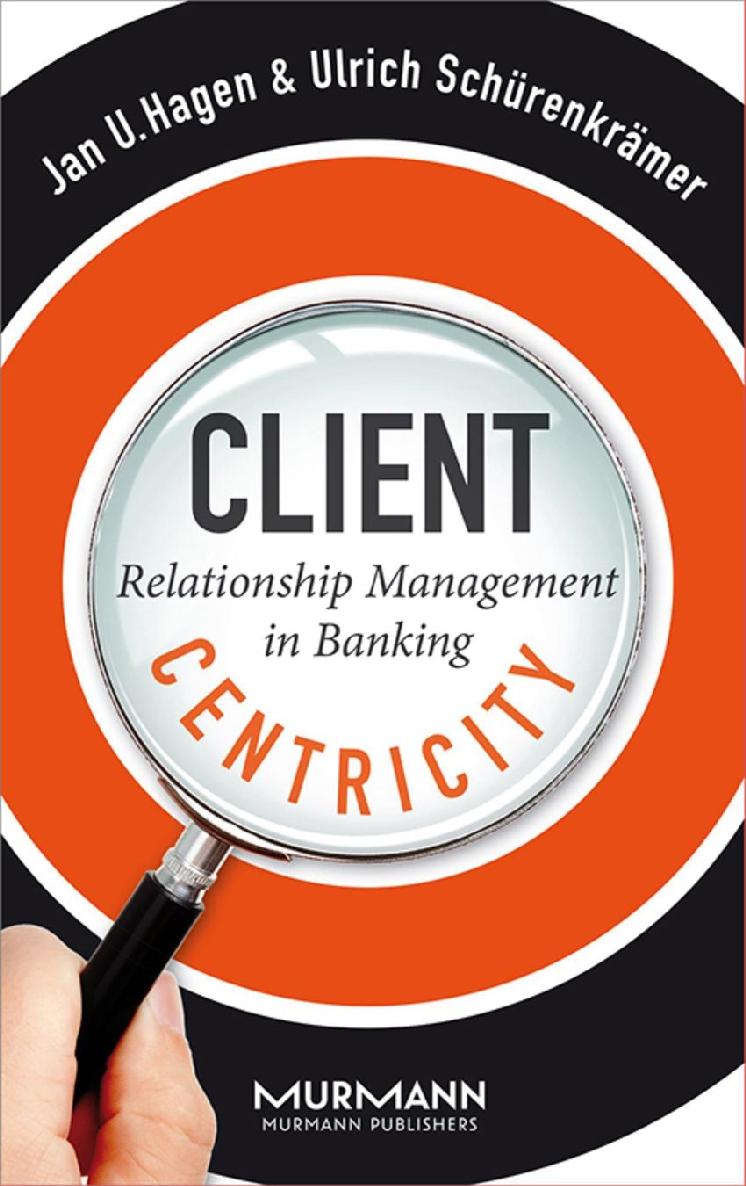
Author:Jan U. Hagen/Ulrich Schürenkrämer
Language: eng
Format: epub
ISBN: 9783867744836
Publisher: Murmann Publishers, Hamburg 2015
Published: 2015-06-10T00:00:00+00:00
Being good at several things is hard work. This is an important point about HumanSigma: It is better to be slightly above average on both CE 11 and Q 12 than exceptionally good on one but below average on the other. The 50 th percentile on both measures is just the starting point for an optimized workgroup. But clearly, the better a workgroup engages its customers and employees, the more effective it will be.
What the HumanSigma map clearly shows, however, is that to drive improvements across the enterprise, organizations must apply at least four – and often many more – different and targeted kinds of interventions corresponding to the different needs of units in each quadrant. This stands in stark contrast to the typical one-size-fits-all interventions commonly deployed in most change initiatives.
By presenting some case studies of the effect of applying these principles in international retail banks, the following sections will show how HumanSigma works in practice. The sections will also describe the effect the HumanSigma approach has on business and the measures and tools financial institutions can use to make improvements to drive high performance.
HumanSigma at a l arge bank in the Asia-Pacific region
The first case study is a large Asia-Pacific financial services company where the consequent and systematic use of the HumanSigma framework helped to understand and improve their branches’ performance. By contrasting different groups of branches in one company, Gallup had the opportunity to demonstrate the effectiveness of the HumanSigma approach under real conditions.
The starting point was a request to Gallup to survey the company’s employees and customers in 80 of its retail banking branches in one of the bank’s larger core markets. After taking a baseline measure, the company worked with Gallup to divide the branches into two equivalent groups: the test group and the control group. Branch managers in the test group were involved in a four-month, location-specific program of coaching, education, and training based on insights that HumanSigma provided. The control group received no interventions or insights into their HumanSigma engagement scores.
The program was structured this way so that Gallup could control the company’s other customer and employee activities, which covered rational rather than emotional elements. Isolating a group of branches that focused on emotional as well as rational drivers and comparing it with a control group would clearly show any impact resulting from a focus on emotional engagement.
Branch managers in the test group received local-level insights into what their employees and customers felt and needed. These insights included the results of the customer and employee engagement surveys, complete with unedited customer comments and feedback. Branch managers also received coaching that helped them translate those insights into behaviors that would increase both employee and customer engagement.
Test-group managers attended two workshops to deepen their understanding of HumanSigma concepts and their potential impact on performance. The first workshop focused on teaching the branch managers the principles of HumanSigma and emotional engagement. The key was to ensure that managers were
Download
This site does not store any files on its server. We only index and link to content provided by other sites. Please contact the content providers to delete copyright contents if any and email us, we'll remove relevant links or contents immediately.
Influence: The Psychology of Persuasion by Robert B. Cialdini(4760)
The Miracle Morning by Hal Elrod(4699)
The Hacking of the American Mind by Robert H. Lustig(4363)
Pre-Suasion: A Revolutionary Way to Influence and Persuade by Robert Cialdini(4208)
Unlabel: Selling You Without Selling Out by Marc Ecko(3644)
Ogilvy on Advertising by David Ogilvy(3593)
Hidden Persuasion: 33 psychological influence techniques in advertising by Marc Andrews & Matthijs van Leeuwen & Rick van Baaren(3543)
Purple Cow by Seth Godin(3188)
Who Can You Trust? by Rachel Botsman(3120)
Kick Ass in College: Highest Rated "How to Study in College" Book | 77 Ninja Study Skills Tips and Career Strategies | Motivational for College Students: A Guerrilla Guide to College Success by Fox Gunnar(3108)
The Marketing Plan Handbook: Develop Big-Picture Marketing Plans for Pennies on the Dollar by Robert W. Bly(3036)
This Is Marketing by Seth Godin(3013)
I Live in the Future & Here's How It Works by Nick Bilton(2979)
The Power of Broke by Daymond John(2958)
The Tipping Point by Malcolm Gladwell(2903)
Building a StoryBrand by Donald Miller(2886)
The 46 Rules of Genius: An Innovator's Guide to Creativity (Voices That Matter) by Marty Neumeier(2832)
Draw to Win: A Crash Course on How to Lead, Sell, and Innovate With Your Visual Mind by Dan Roam(2771)
Market Wizards by Jack D. Schwager(2689)
