Astounding Wonder: Imagining Science and Science Fiction in Interwar America by By John Cheng
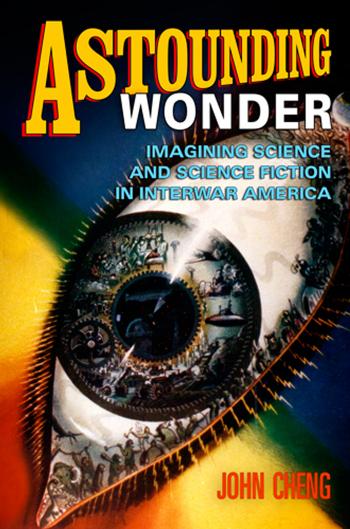
Author:By John Cheng
Format: pdf
Tags: When physicist Robert Goddard, whose career was inspired by H. G. Wells's War of the Worlds, published "A Method of Reaching Extreme Altitudes," the response was electric. Newspaper headlines across the country announced, "Modern Jules Verne Invents Rocket to Reach Moon," while people from around the world, including two World War I pilots, volunteered as pioneers in space exploration. Though premature (Goddard's rocket, alas, was only imagined), the episode demonstrated not only science's general popularity but also its intersection with interwar popular and commercial culture. In that intersection, the stories that inspired Goddard and others became a recognizable genre: science fiction. Astounding Wonder explores science fiction's emergence in the era's "pulps," colorful magazines that shouted from the newsstands, attracting an extraordinarily loyal and active audience.Pulps invited readers not only to read science fiction but also to participate init, joining writers and editors in celebrating a collective wonder for and investment in the potential of science. But in conjuring fantastic machines, travel across time and space, unexplored worlds, and alien foes, science fiction offered more than rousing adventure and romance. It also assuaged contemporary concerns about nation, gender, race, authority, ability, and progress—about the place of ordinary individuals within modern science and society—in the process freeing readers to debate scientific theories and implications separate from such concerns.Readers similarly sought to establish their worth and place outside the pulps. Organizing clubs and conventions and producing their own magazines, some expanded science fiction's community and created a fan subculture separate from the professional pulp industry. Others formed societies to launch and experiment with rockets. From debating relativity and the use of slang in the future to printing purple fanzines and calculating the speed of spaceships, fans' enthusiastic industry revealed the tensions between popular science and modern science. Even as it inspired readers' imagination and activities, science fiction's participatory ethos sparked debates about amateurs and professionals that divided the worlds of science fiction in the 1930s and after., Publisher:University of Pennsylvania Press, Published:2012, Related ISBN:9780812243833, Language:English, OCLC:793012728
Download
This site does not store any files on its server. We only index and link to content provided by other sites. Please contact the content providers to delete copyright contents if any and email us, we'll remove relevant links or contents immediately.
Personalized inhaled bacteriophage therapy for treatment of multidrug-resistant Pseudomonas aeruginosa in cystic fibrosis by unknow(181161)
CONSORT 2025 statement: updated guideline for reporting randomized trials by unknow(89589)
Critical evaluation of the ProfiLER-02 study design and outcomes by Vivek Subbiah & Razelle Kurzrock(89223)
Cardiac gene therapy makes a comeback by Oliver J. Müller & Susanne Hille & Anca Kliesow Remes(88947)
Whisky: Malt Whiskies of Scotland (Collins Little Books) by dominic roskrow(74452)
Unveiling the design rules for tunable emission in graphene quantum dots: A high-throughput TDDFT and machine learning perspective by Şener Özönder & Mustafa Coşkun Özdemir & Caner Ünlü(50904)
A yeast-based oral therapeutic delivers immune checkpoint inhibitors to reduce intestinal tumor burden by unknow(40275)
Covalent hitchhikers guide proteins to the nucleus by Alexander F. Russell & Madeline F. Currie & Champak Chatterjee(40220)
Meet the Authors: Christopher R. Mansfield and Emily R. Derbyshire by Christopher R. Mansfield & Emily R. Derbyshire(40103)
Alkaline-earth metals promote propane dehydrogenation with carbon dioxide through geometric effects: Altering the reaction pathway by unknow(32741)
Induced iron vacancies boosting FeOOH loaded on sustainable Fenton-like collagen fiber membrane for efficient removal of emerging contaminants by unknow(32522)
Efficient electric-field-assisted photochemical conversion of methane to n-propanol exclusively over penetrated TiO2Ti hollow fibers by Guanghui Feng(32460)
Bi2SiO5 nanosheets as piezo-photocatalyst for efficient degradation of 2,4-Dichlorophenol by Hangyu Shi & Yifu Li & Lishan Zhang & Guoguan Liu & Qian Zhang & Xuan Ru & Shan Zhong(32400)
A novel NDIPTA organic heterojunction photocatalyst with built-in electric field for efficient hydrogen production by Jiahui Yang & Baojun Ma & Yongfa Zhu(32371)
Enhanced conversion of methane to liquid-phase oxygenates via hollow ferrite nanotube@horseradish peroxidase based photoenzymatic catalysis by Jun Duan & Shiying Fan & Xinyong Li & Shaomin Liu(32337)
Ordered macroporous superstructure of defective carbon adorned with tiny cobalt sulfide for selective electrocatalytic hydrogenation of cinnamaldehyde by Xiao-Shi Yuan & Sheng-Hua Zhou & San-Mei Wang & Wenbo Wei & Xiaofang Li & Xin-Tao Wu & Qi-Long Zhu(32263)
What's Done in Darkness by Kayla Perrin(27155)
Topological analysis of non-conjugated ethylene oxide cored dendrimers decorated with tetraphenylethylene: Insights from degree-based descriptors using the polynomial approach by A Theertha Nair & D Antony Xavier & Annmaria Baby & S Akhila(26541)
Investigation of mechanical and self-healing properties of hydroxyl-terminated polybutadiene functionalized with 2-ureido-4-pyrimidinone by Mohsen Kazazi & Mehran Hayaty & Ali Mousaviazar(26467)
