Compilers: Principles, Techniques, and Tools, 2/e
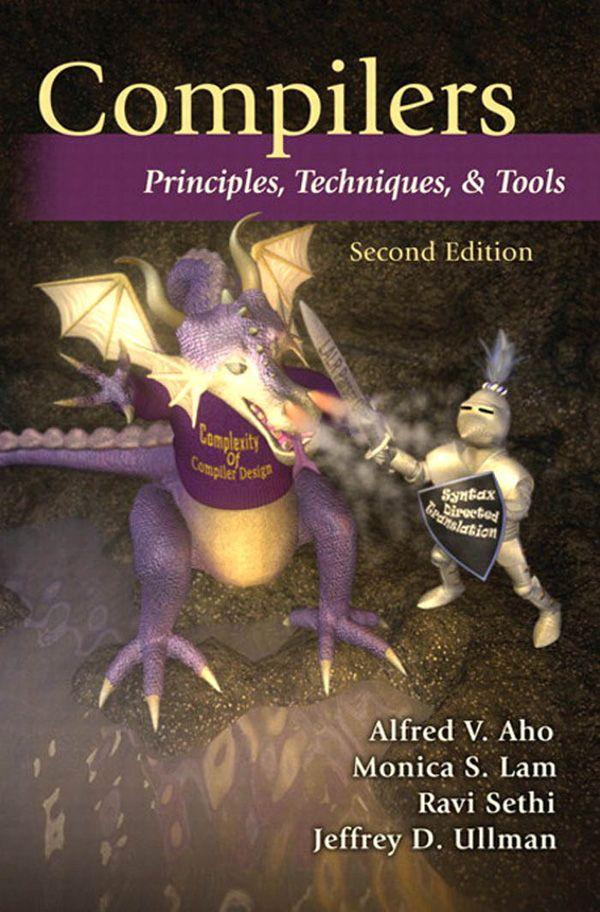
Author:Aho, Alfred V. & Monica S. Lam & Ravi Sethi & Jeffrey D. Ullman [Aho, Alfred V.]
Language: eng
Format: mobi
Publisher: Prentice Hall
Published: 2011-02-20T16:00:00+00:00
Partial garbage collectors are often implemented as copying garbage collectors. Noncopying collectors can also be implemented by using linked lists to keep track of the reachable objects. The “generational” scheme described below is an example of how copying may be combined with partial collection.
7.7.4 Generational Garbage Collection
Generational garbage collection is an effective way to exploit the property that most objects die young. The heap storage in generational garbage collection is separated into a series of partitions. We shall use the convention of numbering them 0, 1, 2, ..., n, with the lower-numbered partitions holding the younger objects. Objects are first created in partition 0. When this partition fills up, it is garbage collected, and its reachable objects are moved into partition 1. Now, with partition 0 empty again, we resume allocating new objects in that partition. When partition 0 again fills,5 it is garbage collected and its reachable objects copied into partition 1, where they join the previously copied objects. This pattern repeats until partition 1 also fills up, at which point garbage collection is applied to partitions 0 and 1.
Download
This site does not store any files on its server. We only index and link to content provided by other sites. Please contact the content providers to delete copyright contents if any and email us, we'll remove relevant links or contents immediately.
The Mikado Method by Ola Ellnestam Daniel Brolund(23577)
Hello! Python by Anthony Briggs(22713)
Secrets of the JavaScript Ninja by John Resig Bear Bibeault(21530)
Kotlin in Action by Dmitry Jemerov(20576)
Dependency Injection in .NET by Mark Seemann(20496)
The Well-Grounded Java Developer by Benjamin J. Evans Martijn Verburg(20392)
OCA Java SE 8 Programmer I Certification Guide by Mala Gupta(19541)
Algorithms of the Intelligent Web by Haralambos Marmanis;Dmitry Babenko(18339)
Grails in Action by Glen Smith Peter Ledbrook(17464)
Adobe Camera Raw For Digital Photographers Only by Rob Sheppard(16982)
Sass and Compass in Action by Wynn Netherland Nathan Weizenbaum Chris Eppstein Brandon Mathis(14874)
Secrets of the JavaScript Ninja by John Resig & Bear Bibeault(12837)
Test-Driven iOS Development with Swift 4 by Dominik Hauser(11249)
A Developer's Guide to Building Resilient Cloud Applications with Azure by Hamida Rebai Trabelsi(10604)
Jquery UI in Action : Master the concepts Of Jquery UI: A Step By Step Approach by ANMOL GOYAL(10490)
Hit Refresh by Satya Nadella(9141)
The Kubernetes Operator Framework Book by Michael Dame(8546)
Exploring Deepfakes by Bryan Lyon and Matt Tora(8373)
Robo-Advisor with Python by Aki Ranin(8319)
