The Irish amateur military tradition in the British Army, 1854â1992 by William Butler
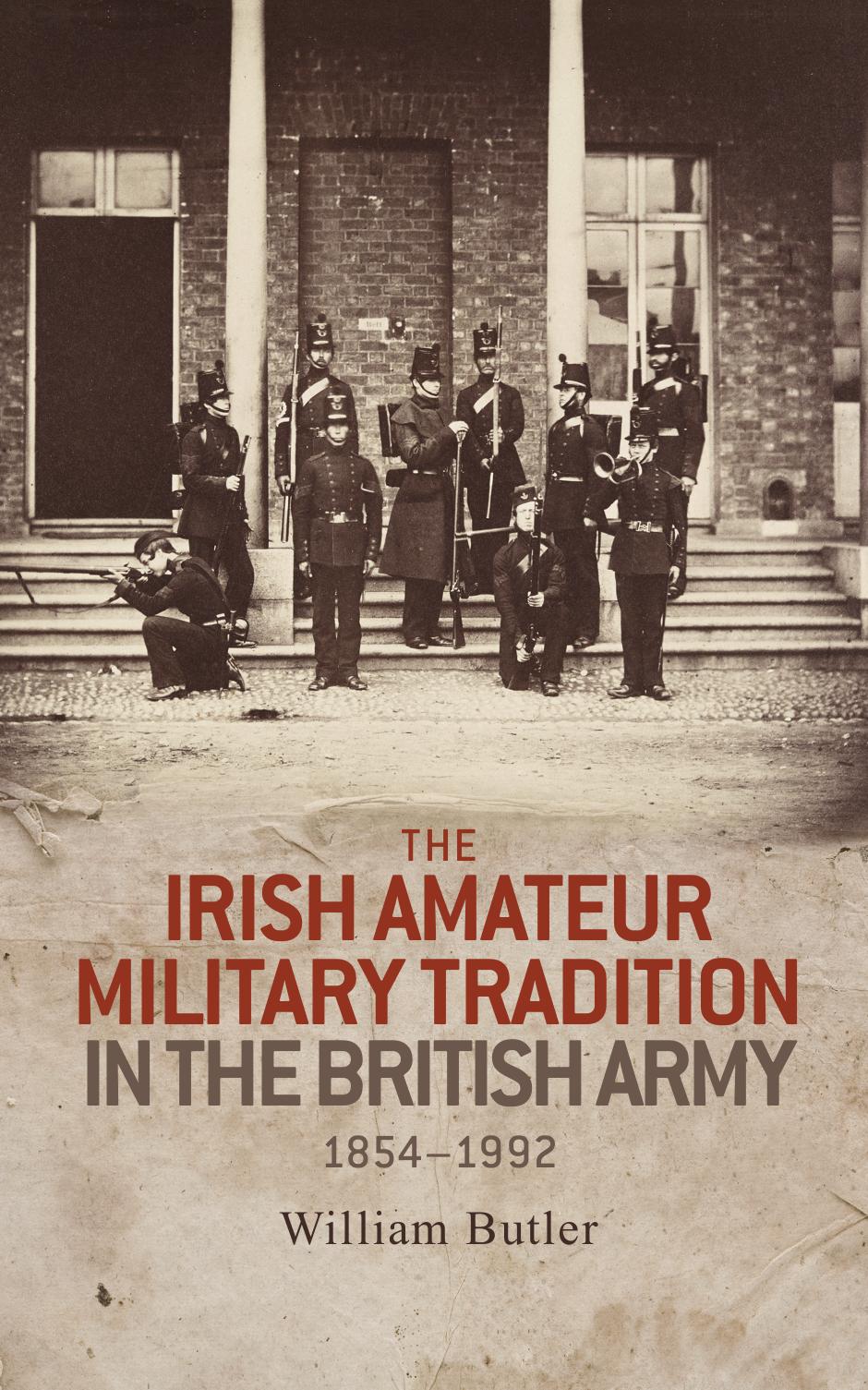
Author:William Butler [Butler, William]
Language: eng
Format: epub, pdf
Tags: History, Europe, Ireland, Military, General, Political Science, Imperialism, Great Britain, Colonialism & Post-Colonialism
ISBN: 9781526108470
Google: Sm-5DwAAQBAJ
Publisher: Manchester University Press
Published: 2016-10-30T22:10:49+00:00
Table 3.8 Religious composition of UDR applicants, March 1970, number and (%)
Roy Hattersley, at the time a Minister of State at the Ministry of Defence, commented in April 1970 that a âproper balanceâ in the regiment should be a priority and that Catholic participation should be as near to 30 per cent as possible. It was suggested that recruitment should continue irrespective of religion until the strength of the force reached four thousand. At that point a policy of preference should be implemented to ensure Catholic applicants had priority, unless an individual Protestant held military qualifications that made his membership of the UDR particularly desirable.124 Within the Ministry of Defence, these suggestions were not positively received, partly because it was feared that they would lead to Protestant discontent, so the situation remained unchanged.
By October 1972, a total of 18,963 had applied: of these 16,697 (88 per cent) were Protestant, leaving only 12 per cent Catholic. Of these, only 13,671 were approved by the Board after numerous vetting procedures (72.1 per cent). Of those who had been approved, 12,303 (90 per cent) were Protestant, the rest (10 per cent) being Catholic, demonstrating that after the vetting procedure slightly more Protestants were approved. Furthermore, a high proportion of those Catholics accepted did not take up their position after enrolment, further decreasing the number present within the force.125
In February 1973, at the 39th meeting of the UDR Advisory Council, it was stated that only four Catholic applications had been received in a three-month period and only one of these had resulted in an enrolment. It was also said that the total number of Catholics within the UDR was 315 (3.3 per cent), a decrease of fifteen in the same three months, and a drop of 378 in a year. It was stated that âuntil the situation in the Province improves it appears unlikely to be any marked increase in their membershipâ.126 Catholic antipathy towards the force, partly as a result of the policy of internment, had well and truly set in. Importantly though, there was certainly no suggestion that Catholics had been barred from joining the regiment at a local level, as there had been in the UHG.
By October 1975, it was estimated that only about 3 per cent of the UDR was Catholic.127 By 1978, the British government was a little more reluctant to divulge the percentages when questioned in Parliament, although when pressed on the matter James Wellbeloved, the Under-Secretary of State, indicated that the percentage of Catholics had remained steady at 3 per cent. However, 5.6 per cent of all applications had come from Catholics, indicating that they were being disproportionately rejected from the force.128 By the mid-1980s, the government had simply refused to provide an answer to any question over Catholic participation, stating that it would be too costly to find out the information.129 Very quickly then, despite attempts to change this, the UDR had come to resemble the Ulster Protestant volunteering tradition.
Occupational breakdowns are not available as they
Download
The Irish amateur military tradition in the British Army, 1854â1992 by William Butler.pdf
This site does not store any files on its server. We only index and link to content provided by other sites. Please contact the content providers to delete copyright contents if any and email us, we'll remove relevant links or contents immediately.
The Vikings: Conquering England, France, and Ireland by Wernick Robert(84451)
Ali Pasha, Lion of Ioannina by Eugenia Russell & Eugenia Russell(40345)
The Conquerors (The Winning of America Series Book 3) by Eckert Allan W(38244)
The Vikings: Discoverers of a New World by Wernick Robert(37028)
Cecilia; Or, Memoirs of an Heiress — Volume 1 by Fanny Burney(32677)
Cecilia; Or, Memoirs of an Heiress — Volume 2 by Fanny Burney(32036)
Cecilia; Or, Memoirs of an Heiress — Volume 3 by Fanny Burney(32019)
Empire of the Sikhs by Patwant Singh(23163)
The Secret History by Donna Tartt(19378)
Hans Sturm: A Soldier's Odyssey on the Eastern Front by Gordon Williamson(18683)
Cat's cradle by Kurt Vonnegut(15481)
Pimp by Iceberg Slim(14724)
Sapiens: A Brief History of Humankind by Yuval Noah Harari(14493)
Norse Mythology by Gaiman Neil(13493)
Talking to Strangers by Malcolm Gladwell(13481)
Leonardo da Vinci by Walter Isaacson(13436)
4 3 2 1: A Novel by Paul Auster(12554)
Underground: A Human History of the Worlds Beneath Our Feet by Will Hunt(12185)
The Radium Girls by Kate Moore(12126)
